Screen-Free Activities That Build Critical Thinking Skills
Key Takeaways
- ✓The average child spends over 7 hours a day on screens, making screen-free cognitive activities more valuable than ever.
- ✓Screen-free activities tend to be slower-paced, multi-sensory, self-directed, and socially rich — all qualities that build deeper thinking skills.
- ✓The American Academy of Pediatrics recommends consistent screen time limits for children ages 6 and older, with ample time for other activities.
- ✓Effective screen-free critical thinking tools include maze books, word searches, activity workbooks, guided journals, board games, outdoor challenges, and conversation games.
Engaging, offline activities that develop critical thinking in children — from activity books and board games to outdoor challenges and conversation games.
In a world where the average child spends over 7 hours a day on screens, screen-free activities that build real cognitive skills are more valuable than ever. The activities below require zero technology — just curiosity, a few simple materials, and a willingness to think.
Why Screen-Free Time Matters for Critical Thinking
Screens are not inherently bad. But passive screen consumption — watching videos, scrolling feeds, playing simple tap games — does not build the deep thinking skills children need. Screen-free activities tend to be:
- Slower-paced — allowing deeper processing and reflection
- Multi-sensory — engaging hands, eyes, and spatial awareness together
- Self-directed — requiring children to generate ideas rather than react to stimuli
- Socially rich — many involve conversation, collaboration, or competition with others
The American Academy of Pediatrics recommends that children ages 6 and older have consistent limits on screen time, with ample time for sleep, physical activity, and other activities essential to health.
Activity Books and Printables
The simplest screen-free critical thinking tool: a good activity book and a pencil.
Maze Books
Mazes build spatial reasoning, planning, persistence, and fine motor skills. Our ThinkQuest AI maze book collection features 12 themed books across 4 series — Amazing Animals, Space Explorers, Underwater Secrets, and Dinosaur Discovery — with 25 mazes each at three difficulty levels.
Word Search Books
Word searches develop vocabulary, pattern recognition, focus, and spelling. Themed word searches add a knowledge-building dimension. Browse our word search collection.
Critical Thinking Workbooks
Logic puzzles, brain teasers, analysis activities, and reasoning challenges designed by age group. Our activity workbooks cover ages 6–8, 9–11, and 12–14.
Guided Journals
Reflective writing builds metacognition — thinking about thinking. Our guided journals include prompts for gratitude, goal-setting, self-reflection, and creative thinking.
Educational Coloring Books
Coloring develops fine motor skills, focus, and creativity. Themed coloring books (like our Amazing Animals and Space Explorers series) add a learning dimension to the calming activity.
Board Games and Card Games
- Chess — Strategic planning, pattern recognition, thinking ahead
- Clue — Deductive reasoning, hypothesis testing, process of elimination
- Mastermind — Code-breaking through logical deduction
- SET — Visual pattern recognition at speed
- Blokus — Spatial reasoning and strategic blocking
- Rush Hour — Sequential problem-solving with physical puzzle pieces
- Dixit — Creative thinking, perspective-taking, communication
Outdoor Critical Thinking Activities
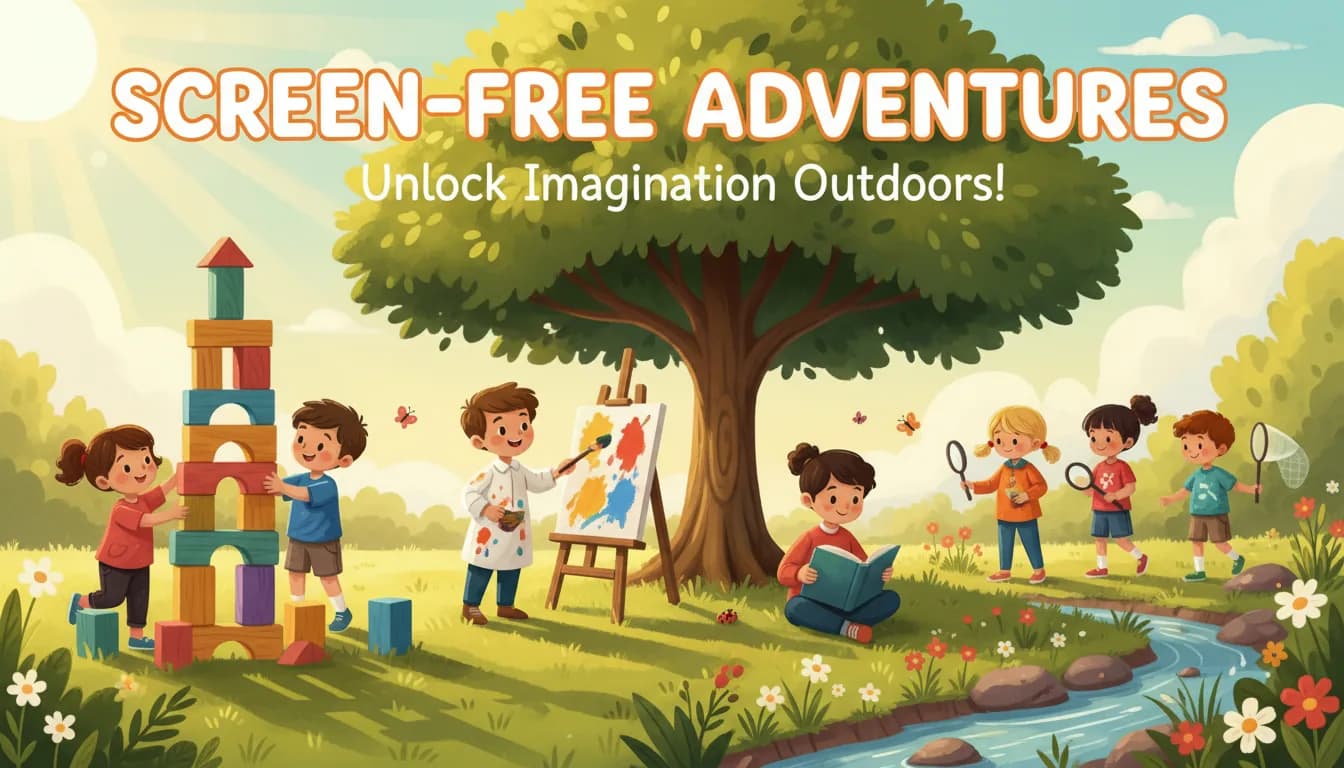
- Nature Scavenger Hunts — Create a list of items to find (something smooth, something that was alive, something smaller than your thumb). Requires observation and categorization.
- Build Challenges — Give a task (build a bridge from sticks that holds a rock) and limited materials. Engineering thinking in action.
- Orienteering — Use a map and compass to navigate. Spatial reasoning meets real-world application.
- Observation Walks — Walk a familiar route and try to notice 10 things you have never noticed before. Builds attention and perceptual awareness.
- Garden Science — Plant seeds in different conditions. Predict, observe, and record results. Scientific thinking without a screen.
Conversation Games (Zero Materials Required)
- 20 Questions — Categorization and elimination logic
- Would You Rather (With Reasons) — Argumentation and perspective-taking
- Two Truths and a Lie — Deception detection and evidence evaluation
- The Estimation Game — "How many blades of grass in the yard?" Logical reasoning with unknown quantities
- Story Chain — Each person adds one sentence to a story. Requires listening, creativity, and narrative logic
- What Changed? — One person changes something small about their appearance. Others spot the difference. Builds observation skills.
A Screen-Free Critical Thinking Day Plan
- Morning (10 min): Maze or word search from an activity book
- Midday (20 min): Board game or outdoor challenge
- Afternoon (15 min): Journal writing with a reflective prompt
- Evening (10 min): Dinner conversation game or logic puzzle
Build Your Screen-Free Toolkit
The best screen-free critical thinking activities are the ones within arm's reach when screens call. Stock your home with maze books, word searches, activity workbooks, guided journals, and coloring books so there is always an engaging alternative available.
And when screen time does happen, make it count: ThinkQuest AI's free online games build real critical thinking skills through active play — a world apart from passive scrolling.
Frequently Asked Questions
What are the best screen-free activities for building critical thinking?
The best screen-free critical thinking activities include maze books (spatial reasoning), word searches (pattern recognition), logic puzzles (deductive reasoning), board games like Chess and Clue (strategic thinking), outdoor build challenges (engineering thinking), and conversation games like 20 Questions (categorization and elimination).
Why is screen-free time important for child development?
Screen-free activities are slower-paced (allowing deeper processing), multi-sensory (engaging hands and spatial awareness), self-directed (requiring children to generate ideas), and socially rich. The American Academy of Pediatrics recommends consistent screen limits with ample time for sleep, physical activity, and other essential activities.
What are good conversation games that build thinking skills?
Zero-material conversation games include 20 Questions (categorization and elimination), Would You Rather with reasons (argumentation), Two Truths and a Lie (evidence evaluation), The Estimation Game (logical reasoning), and Story Chain where each person adds one sentence (narrative logic and listening).
How do I create a screen-free day plan for my child?
A simple plan: morning 10-minute maze or word search, midday 20-minute board game or outdoor challenge, afternoon 15-minute journal writing, evening 10-minute dinner conversation game or logic puzzle. This provides variety across thinking skills throughout the day.
Try our free critical thinking games!
Fun, colorful brain-building games for kids ages 6-14. No signup required.
Play Now