Polar Animal Facts for Kids: 24 Amazing Things About Arctic and Antarctic Wildlife
Key Takeaways
- ✓Polar animals live at Earth's two coldest ends — the Arctic in the north and the Antarctic in the south.
- ✓Polar bears live only in the Arctic; almost all penguins live in the Southern Hemisphere — so they never meet in the wild.
- ✓Thick blubber, dense fur or feathers, and small ears and tails help polar animals keep heat in.
- ✓Tiny shrimp-like krill are the food that most Antarctic animals depend on.
- ✓Many polar animals are threatened as sea ice melts, which is why scientists watch them closely.
Fact-checked polar animal facts for curious kids: how polar bears, penguins, seals and Arctic foxes survive the coldest places on Earth, grouped so you can find your favourites fast.
Polar animals are some of the toughest survivors on Earth — living in places so cold that most animals could not last a day. From the mighty polar bear to huddling emperor penguins, they have astonishing tricks for beating the freeze. Here are 24 fact-checked polar animal facts for curious kids, grouped so you can find your favourites fast.
Last updated 7 June 2026
What makes an animal a 'polar animal'?
Polar animals are the creatures that live in Earth's two coldest regions: the frozen Arctic around the North Pole and the icy Antarctic around the South Pole. To survive there, their bodies are specially built to keep heat in and find food on ice and in freezing seas. Temperatures can drop below -40°C, with howling winds and months of darkness — so every polar animal is a living survival machine (National Geographic Kids — Animals).
Two icy worlds: the Arctic and the Antarctic
Here is something that surprises almost everyone: the two polar regions are completely different. The Arctic in the north is mostly a frozen ocean ringed by land, and it is home to polar bears, Arctic foxes and walruses. The Antarctic in the south is a frozen continent surrounded by sea, and it is home to penguins and seals — but no polar bears. So the two ends of the Earth never share the same big animals.
Meet the polar animals
- Polar bear — the largest land meat-eater, a powerful Arctic swimmer and seal hunter.
- Emperor penguin — the biggest penguin, which breeds through the brutal Antarctic winter.
- Walrus — a huge tusked Arctic seal that hauls out on the ice in big groups.
- Narwhal — the 'unicorn of the sea,' with a long spiral tusk that is really a tooth.
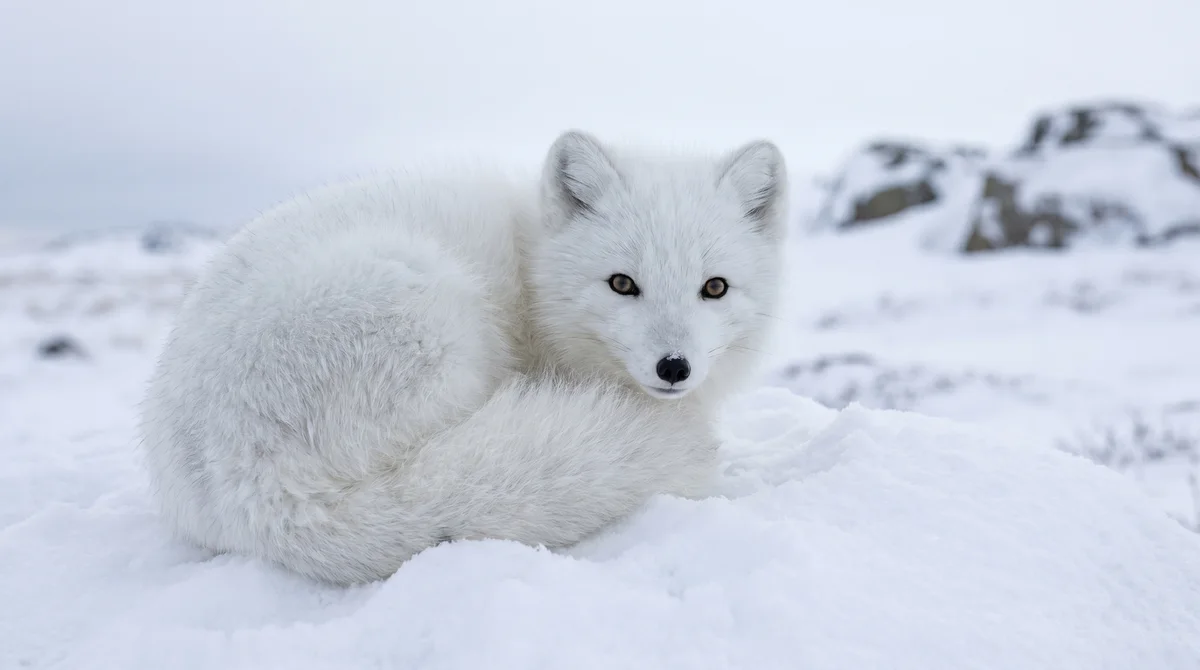
- Arctic fox — a small fox that turns snow-white in winter.
- Snowy owl — a white Arctic hunter with feathered feet like snow boots.
How polar animals stay warm
The number-one rule of polar life is: keep your heat in. Most polar animals carry a thick layer of fat called blubber under the skin, like a built-in duvet. On top of that they have dense fur or waterproof feathers that trap a layer of warm air. Penguins pack in around 100 feathers per square inch, and many animals huddle together in groups so the ones on the inside stay toasty. It is clever engineering, all made of fat and fluff.
Polar animals by the numbers
- Coldest home: Antarctica, below -60°C in winter
- Biggest land hunter: Polar bear (males 400+ kg)
- Biggest penguin: Emperor penguin (~1.2 m tall)
- Longest migration: Arctic tern, pole to pole
- Food web base: Krill (tiny shrimp-like animals)
- Polar bears in Antarctica: Zero — they live only in the Arctic
Dressed for snow: polar camouflage
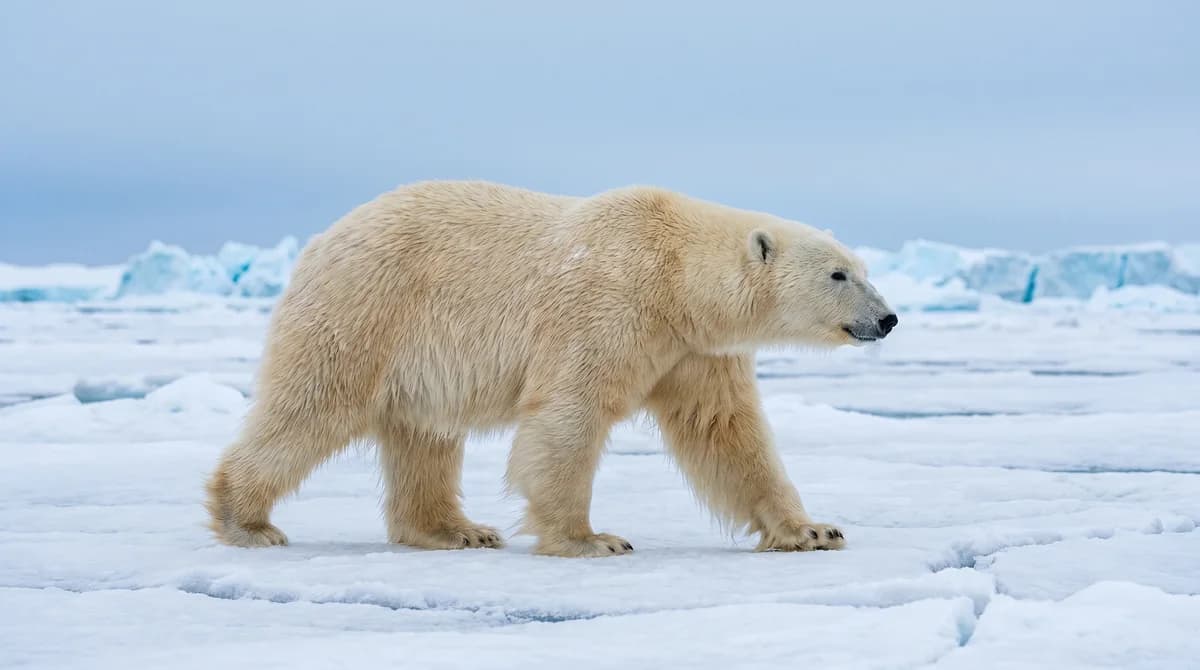
In a white world, the best disguise is white. The polar bear, Arctic hare and snowy owl are pale all year, helping hunters sneak up and prey hide. Some animals even change with the seasons — the Arctic fox swaps a brown summer coat for a snow-white winter one. Here is a fun secret: a polar bear's fur is not actually white at all. Each hair is see-through and hollow, and its skin underneath is black to soak up the sun's warmth (WWF — Polar Bear).
The polar bear: giant of the Arctic
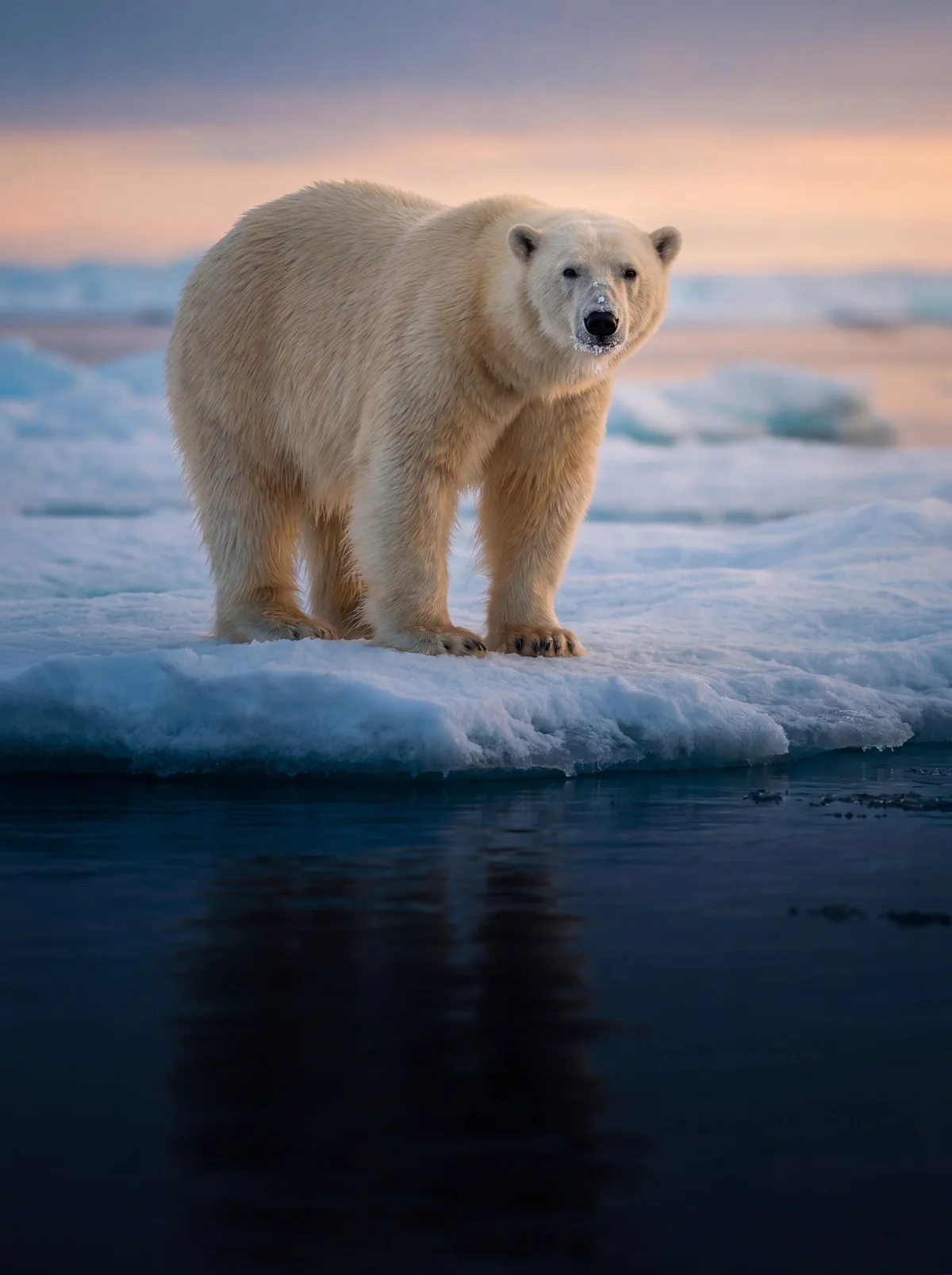
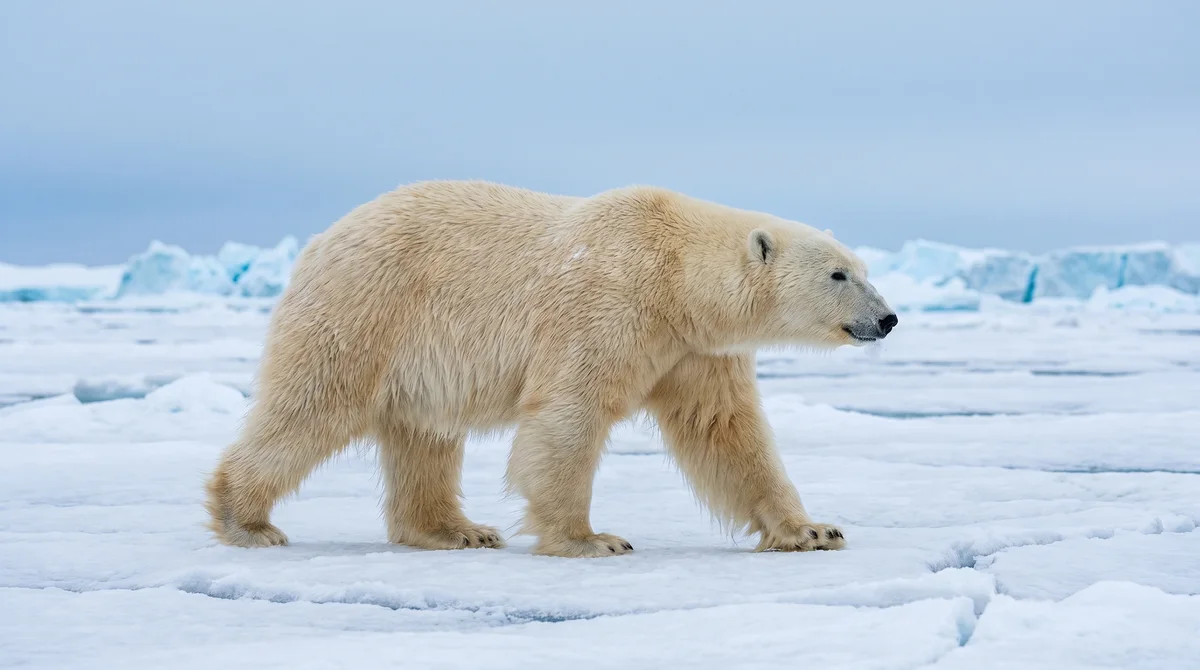
The polar bear is the largest meat-eating animal that lives on land, with big males weighing as much as five grown-ups. They are superb swimmers, using dinner-plate-sized paws to paddle for hours between ice floes, and a brilliant sense of smell that can sniff out a seal more than a kilometre away. They depend on sea ice as a platform to hunt — which is exactly why they are so affected when that ice melts (WWF — Polar Bear).
Penguins: champions of the cold
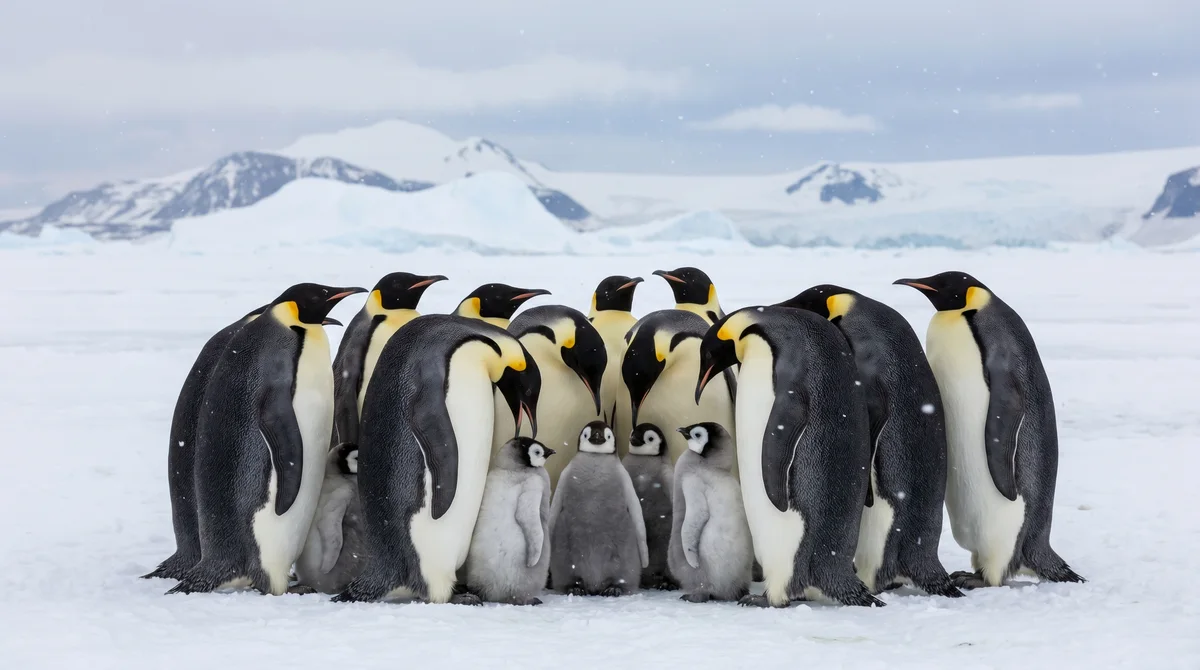
Penguins cannot fly through the air, but they 'fly' beautifully underwater, flapping their wings like flippers. The emperor penguin is the toughest of all: males spend the dark Antarctic winter balancing a single egg on their feet, huddling in tight groups while temperatures plunge below -60°C, going without food for around two months. When the chick hatches, the female returns with food. It is one of the most extreme parenting jobs in the animal kingdom (British Antarctic Survey).
Life in and under the ice
Some of the most amazing polar animals live in the freezing sea. Seals nap on ice floes and dive deep for fish. Narwhals and belugas are Arctic whales that spend their whole lives in cold water. And in the Antarctic, vast swarms of tiny krill turn the sea pink — these little creatures are the food that whales, seals, penguins and fish all depend on. Pull krill out of the picture and the whole polar food web would collapse.
The Arctic fox: a colour-changing survivor
The Arctic fox is a master of doing more with less. Its small ears, short legs and round body lose far less heat than a bigger animal would, and its thick fur is the warmest of any mammal. It changes colour with the seasons for camouflage, and in the depths of winter it can follow polar bears to scavenge leftovers. Small, smart and superbly insulated, it thrives where most animals would freeze.
What polar animals eat
Polar food chains are short but mighty. It often starts with tiny plant-like plankton in the sunlit sea, which feed the krill and small fish, which in turn feed penguins, seals and whales — and at the very top sit hunters like the polar bear and the leopard seal. Because food can be scarce and the cold burns energy fast, polar animals are built to feast when they can and survive long stretches in between.
Record-breaking polar animals
The poles are full of champions. The Arctic tern makes the longest migration of any animal, flying from the Arctic to the Antarctic and back each year — a round trip of around 70,000 km, like flying to the Moon and most of the way back over its life. The emperor penguin can dive over 500 metres deep and hold its breath for more than 20 minutes. And the bowhead whale, an Arctic giant, may live over 200 years (National Geographic Kids — Animals).
Surviving the long night and the midnight sun
Near the poles, the Sun barely rises for months in winter, then barely sets in summer. Animals have clever ways to cope: some, like many birds and whales, simply leave and migrate to sunnier places, while tough year-round residents like the polar bear and Arctic fox stay and tough it out. The endless summer daylight then brings a burst of plants, insects and chicks — a short, frantic season of plenty before the dark returns.
Polar animals in a warming world
Sadly, the poles are changing fast. As the climate warms, sea ice is melting earlier and forming later, which makes it harder for animals like polar bears and seals to hunt and raise young. Scientists watch polar wildlife closely because these animals are an early warning sign for the whole planet. The good news is that learning about them is the first step to helping protect them (IUCN Red List of Threatened Species).
Do polar bears ever meet penguins?
It is the question every polar fan asks — and the answer surprises a lot of people. In the wild, polar bears and penguins never meet, because they live at opposite ends of the Earth. We explain exactly why in do polar bears and penguins ever meet?
Explore the frozen worlds with Wild World: Polar Animals
Our 15-page science magazine for ages 8-14 covers polar bears, penguins, seals and narwhals — how they survive the cold, a Myth-Busters spread, puzzles and a draw-along.
Ready to teach it? See how to teach kids about polar animals.
Sources and further reading
Facts in this article were checked against the public, expert sources above. Spotted something out of date? Tell us and we will fix it.
Frequently Asked Questions
What animals live at the poles?
In the Arctic (north): polar bears, Arctic foxes, walruses, seals, narwhals, snowy owls and reindeer. In the Antarctic (south): penguins, seals, whales and huge swarms of tiny krill. The two regions have very different animals.
How do polar animals stay warm?
Most have a thick layer of fat called blubber, plus dense fur or waterproof feathers that trap warm air. Many also have small ears, short legs and round bodies to lose less heat, and some huddle together for warmth.
Do polar bears eat penguins?
No — and they never could in the wild. Polar bears live in the Arctic at the North Pole, while penguins live near the South Pole and the Southern Hemisphere. They live at opposite ends of the planet.
What is the biggest polar animal?
In the sea, great whales like the blue whale visit polar waters and are the largest animals ever. On land and ice, the polar bear is the largest meat-eating land animal, and the emperor is the largest penguin.
Why are polar animals in danger?
Many polar animals depend on sea ice to hunt, rest or raise young. As the climate warms and ice melts earlier each year, animals like polar bears find it harder to catch food, which puts some populations at risk.
What do penguins eat?
Penguins eat fish, squid and especially krill — tiny shrimp-like creatures that swarm in cold seas. They are excellent swimmers and catch their food underwater, using their wings like flippers to 'fly' through the sea.
Try our free critical thinking games!
Fun, colorful brain-building games for kids ages 6-14. No signup required.
Play Now