Do Polar Bears and Penguins Ever Meet? The Surprising Answer
Key Takeaways
- ✓Polar bears and penguins never meet in the wild — they live at opposite ends of the planet.
- ✓Polar bears live only in the Arctic (the far north); almost all penguins live in the Southern Hemisphere.
- ✓Not all penguins live in ice and snow — some live in warm places, even near the Equator.
- ✓The mix-up is so common because cartoons, cards and adverts often show them together.
- ✓Checking where animals actually live — on a map — is a simple, powerful critical-thinking habit.
Do polar bears eat penguins? A fact-checked, kid-friendly answer: why polar bears and penguins live at opposite ends of the Earth, where each really lives, and how to check a 'fact' like this for yourself.
Short answer: no — polar bears and penguins never meet in the wild. Polar bears live in the frozen north, and almost all penguins live far away in the south. The idea that they share a snowy home is one of the most common animal mix-ups there is — and untangling it is a brilliant way to practise thinking like a scientist.
Last updated 7 June 2026
Opposite ends of the Earth
The reason is simple geography. Polar bears live in the Arctic, the region around the North Pole. Penguins live in the Southern Hemisphere, including the Antarctic around the South Pole. Those two places are roughly 20,000 km apart — about as far apart as any two spots on Earth can be — with whole oceans and continents in between. No polar bear could ever swim or walk to a penguin, and no penguin could reach a polar bear.
Where polar bears really live
Every wild polar bear on Earth lives in the Arctic north: across Canada, Greenland, Russia, Alaska and Norway. They roam the sea ice that forms over the Arctic Ocean, using it as a floating platform to hunt seals. There are no polar bears in Antarctica, no polar bears in the rainforest, and none anywhere in the Southern Hemisphere. If you ever see a 'polar bear in Antarctica,' it is a mistake or a drawing — never real life (WWF — Polar Bear).
Where penguins really live (it's not all ice!)
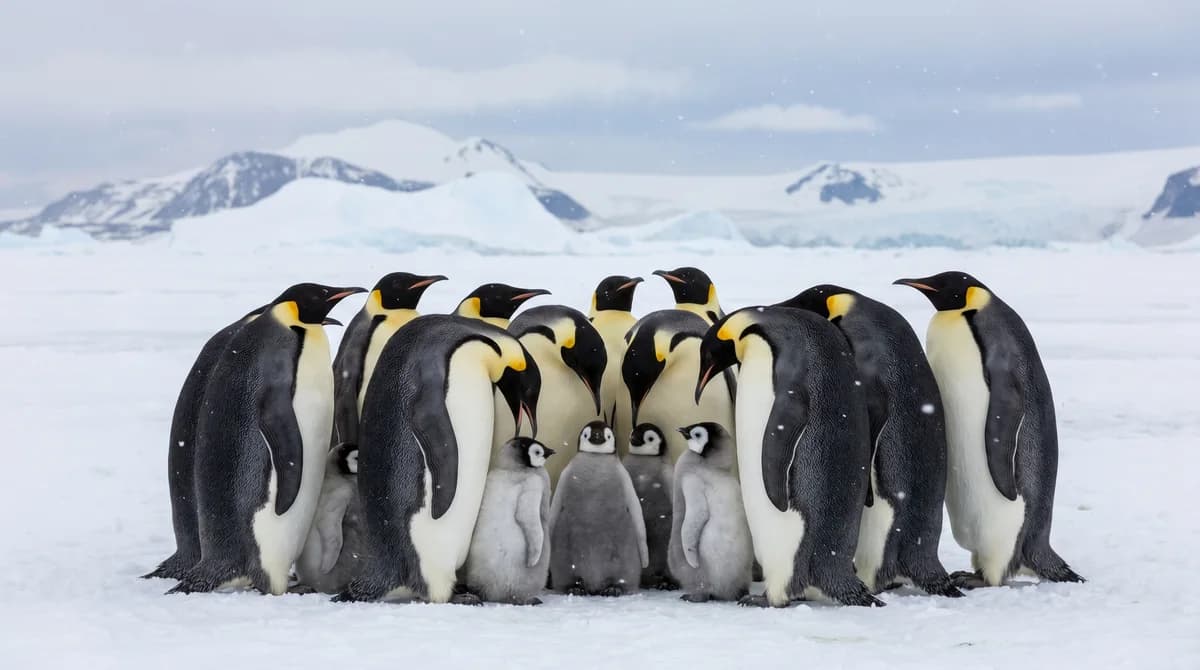
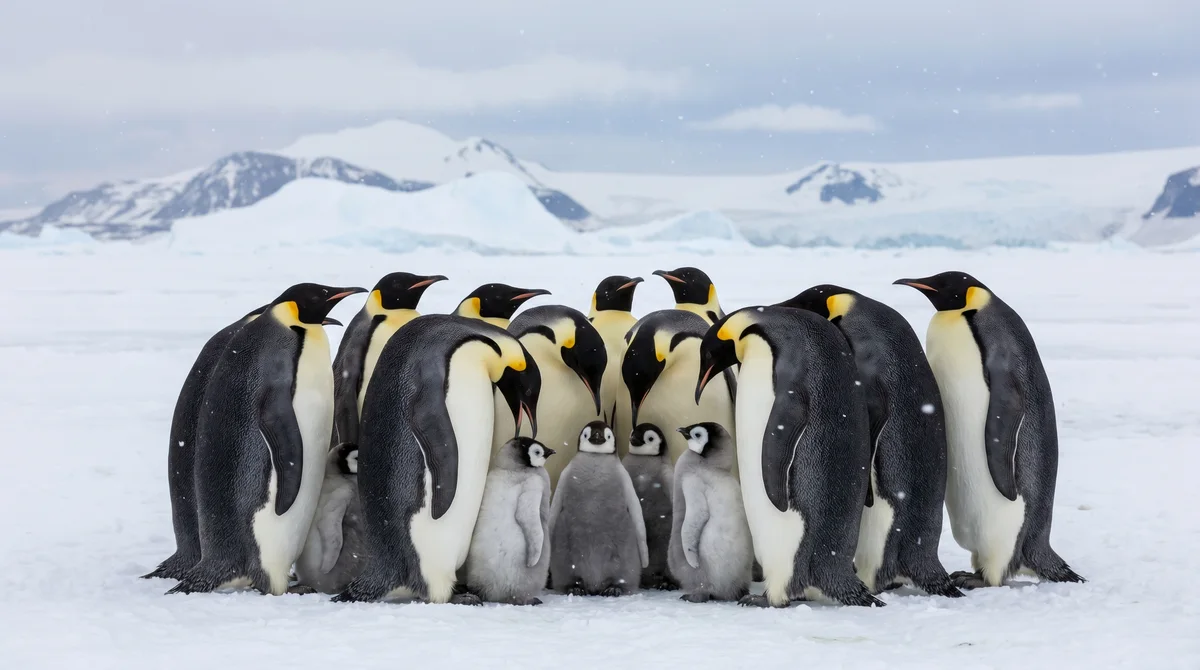
Here is a bonus myth-buster: not all penguins live in snow and ice. While emperor and Adelie penguins do live around icy Antarctica, many penguins live in surprisingly warm places — on the coasts of South America, southern Africa, Australia and New Zealand. The Galapagos penguin even lives right on the Equator, the hottest line on the planet. What all penguins share is the cool southern seas where they find food — not a freezing home (National Geographic Kids — Animals).
Why so many people get this wrong
If the animals never meet, why do we picture them together? Because we see them together all the time — on Christmas cards, in cartoons, on fizzy-drink adverts and birthday decorations. Artists love putting cute polar bears and penguins side by side in the snow. When your brain meets the same picture again and again, it starts to feel like a fact. Spotting that 'I've seen it a lot' is not the same as 'it's true' is a powerful thinking skill.
How to check a 'fact' like this
You can settle this yourself like a real scientist, in three steps. 1. Find a map or globe and look at where each animal lives. 2. Check a trusted source — a wildlife charity or science site, not a cartoon. 3. Ask where their ranges overlap — and here, they simply do not. Replacing 'everyone knows' with 'let's look it up' works far beyond polar animals; it is how you check any surprising claim.
What the two poles share — and don't
The Arctic and Antarctic do have things in common: both are bitterly cold, both have long dark winters, and both have ice. But they are built differently. The Arctic is a frozen ocean surrounded by land, which lets land animals like bears and foxes roam onto the ice. The Antarctic is a frozen continent surrounded by ocean, cut off by stormy seas, so big land predators never reached it. That single difference is why the animals are so different.
Other polar mix-ups, busted
- 'All penguins live in the snow.' No — some live in deserts, on warm beaches, even on the Equator.
- 'The North Pole is solid land.' No — it is floating sea ice over deep ocean.
- 'Polar bears and penguins are enemies.' They cannot be — they have never met.
- 'Penguins can fly.' Not through the air — but they 'fly' expertly underwater.
Think like a scientist
This little question is a perfect critical-thinking workout. When you hear a confident claim, try asking: Where did I learn this — a fact source or a cartoon? Could I check it on a map? Does the evidence actually back it up? The polar-bear-and-penguin mix-up is harmless and fun, but the exact same questions protect you from believing far more serious things that simply are not true.
The one place they could 'meet'
There is a single way a polar bear and a penguin might end up near each other: in a zoo or aquarium, where each is kept in its own carefully cooled enclosure, never together. So if someone insists they have seen the two side by side, they are remembering a picture, a cartoon, or two separate zoo exhibits — not a wild meeting. In nature, the whole width of the planet keeps them apart.
Who the polar bear really shares the north with
If penguins are not in the Arctic, who is? The polar bear shares the frozen north with a whole cast of cold-loving neighbours: tusked walruses hauled out on the ice, narwhals with their spiral 'unicorn' tusks, several kinds of seal, white snowy owls, Arctic foxes and herds of reindeer. These are the real Arctic animals — and not a single penguin among them.
Who the penguins really share the south with
Down south, penguins live alongside a different team entirely: seals (including the fierce leopard seal), great whales, flying seabirds like albatrosses, and vast swarms of tiny krill. Notice what is missing — there are no big land predators in Antarctica at all. That single fact, as we will see, shaped the way penguins behave.
Why are there no polar bears in Antarctica?
Polar bears would probably love Antarctica's seals — so why have they never moved there? Because they simply cannot get there. Polar bears evolved from brown bears in the far north, and Antarctica is cut off from every other continent by thousands of kilometres of stormy, open ocean. No bear could ever cross the warm tropics in between. Animals do not live everywhere that would suit them — only where they can actually reach (WWF — Polar Bear).
Why penguins are so fearless on land
Here is a lovely clue that proves penguins grew up far from polar bears. Because nothing hunts them on land in Antarctica, penguins never learned to fear land animals — which is why they will happily waddle right up to a visiting scientist. An animal that had grown up alongside polar bears would never be so trusting. The penguin's calm, clumsy behaviour on land is living evidence of a world with no big land hunters.
The 'penguin' of the north that vanished
There is a twist to the story. Long ago, the North Atlantic did have a black-and-white, flightless, penguin-like seabird called the great auk — and it was actually the first bird people called a 'penguin.' Sadly, it was hunted to extinction in the 1840s. Today's penguins are a completely separate, southern group that just happens to look similar. So the idea of a 'northern penguin' is not totally crazy — it is just about 180 years out of date.
What this teaches us about where animals live
The big lesson reaches way beyond bears and penguins. Where an animal lives is decided not only by climate but by history and barriers — oceans, mountains and deserts that block the way. Two places can be equally cold and still have totally different animals, simply because of who could get there. Asking 'how did this animal actually arrive here?' is a question that unlocks a huge amount of science.
Bust more polar myths in Wild World: Polar Animals
The issue's Myth-Busters spread sorts fact from fiction at both poles — with polar bears, penguins, puzzles and a quiz, for ages 8-14.
Want the fun facts too? Read 24 polar animal facts for kids.
Sources and further reading
Facts in this article were checked against the public, expert sources above. Spotted something out of date? Tell us and we will fix it.
Frequently Asked Questions
Do polar bears eat penguins?
No. Polar bears live in the Arctic near the North Pole, and penguins live near the South Pole and across the Southern Hemisphere. They live at opposite ends of the Earth and never meet in the wild.
Where do polar bears live?
Polar bears live only in the Arctic — across the icy north of Canada, Greenland, Russia, Alaska and Norway. There are no wild polar bears anywhere in the Southern Hemisphere or in Antarctica.
Where do penguins live?
Almost all penguins live in the Southern Hemisphere. Many live in and around Antarctica, but others live in South America, southern Africa, Australia and New Zealand — and the Galapagos penguin lives right on the Equator.
Are there penguins at the North Pole?
No wild penguins live in the Arctic. There was once an unrelated bird called the great auk that looked a bit like a penguin in the north, but it is extinct. Today, penguins are a Southern Hemisphere group.
Could a polar bear and penguin ever meet?
Only in a zoo or aquarium, where they would be kept in separate, specially cooled habitats. In the wild it is impossible, because thousands of kilometres of ocean separate where each one lives.
Why do people think they live together?
Because cartoons, Christmas cards and adverts often show polar bears and penguins side by side in the snow. Seeing that picture again and again makes it feel true — even though the real animals never share a home.
Try our free critical thinking games!
Fun, colorful brain-building games for kids ages 6-14. No signup required.
Play Now