Do Wolves Really Howl at the Moon? The Surprising Answer
Key Takeaways
- ✓Wolves do not howl at the moon — they howl to communicate with each other.
- ✓Wolves point their muzzles upward to send the sound further, not because they are looking at the moon.
- ✓The myth stuck because wolves are active at night and artists love drawing them against a full moon.
- ✓There is no good evidence that wolves howl more during a full moon.
- ✓The 'alpha wolf' idea is also a myth — wild packs are families led by the parents.
Do wolves howl at the moon? A fact-checked, kid-friendly answer: why wolves really howl, why they point their muzzles up, where the moon myth came from, and the truth about the 'alpha wolf'.
Short answer: no — wolves do not howl at the moon. That dramatic image of a wolf baying at a glowing full moon is everywhere, but it is a myth. Wolves howl to talk to each other, and untangling why we got this so wrong is a brilliant way to practise thinking like a scientist.
Last updated 7 June 2026
So why do wolves really howl?
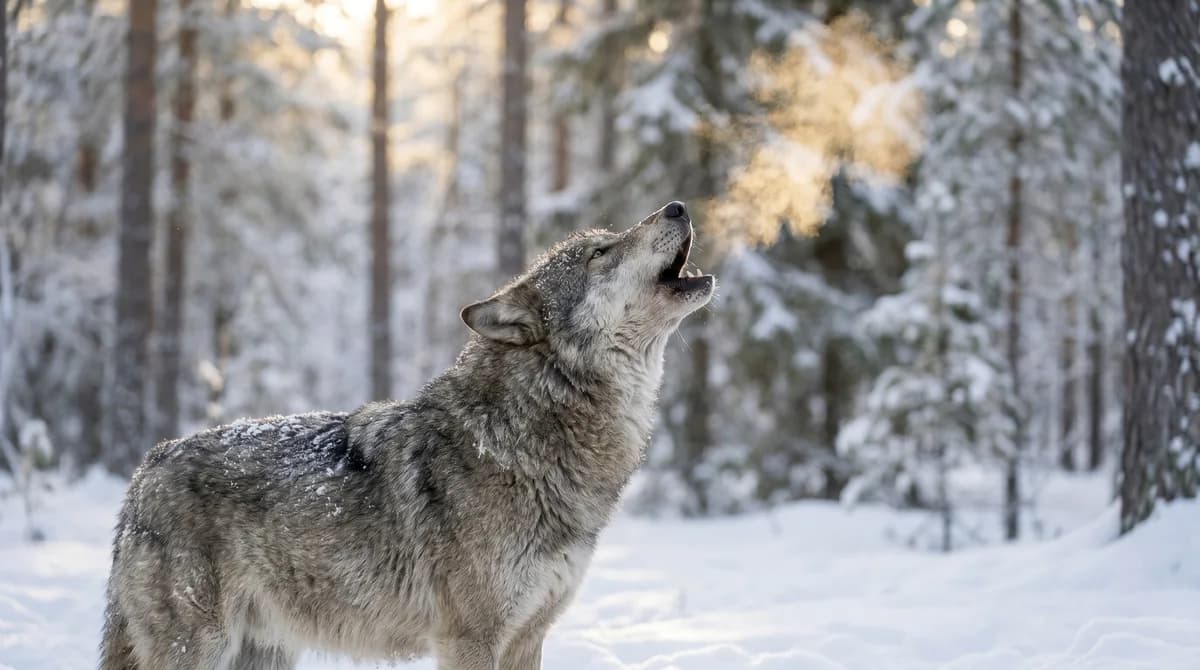
Howling is the wolf's long-distance telephone. Wolves howl to call the pack together after a hunt, to find each other across miles of wild country, to warn rival packs to keep out, and simply to bond as a family. A howl can carry up to around 10 km, and wolves can even tell friend from stranger by voice. It is rich, useful communication — and the moon has nothing to do with it (International Wolf Center).
Why wolves point their muzzles up
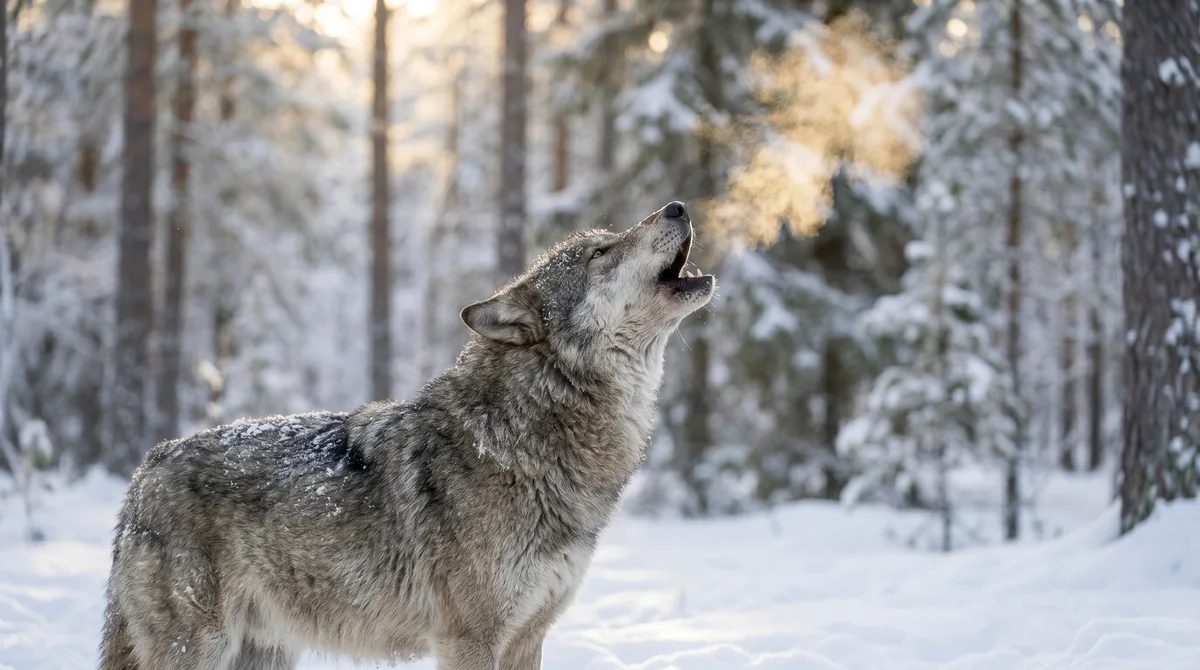
Here is the clue that started the whole myth. When a wolf howls, it tilts its head back and points its muzzle upward — but not to look at the moon. Raising the muzzle helps the sound travel further and more clearly across the land, a bit like cupping your hands around your mouth to call to a friend. People saw that upward pose against the night sky and jumped to the wrong conclusion.
Where the moon myth came from
Two things teamed up to create this myth. First, wolves are often active at dawn, dusk and night, so people heard them howling in the dark — sometimes when the moon happened to be up. Second, artists and storytellers loved the image of a wolf silhouetted against a full moon, and painted it over and over. Seeing the same dramatic picture for hundreds of years made it feel like a fact.
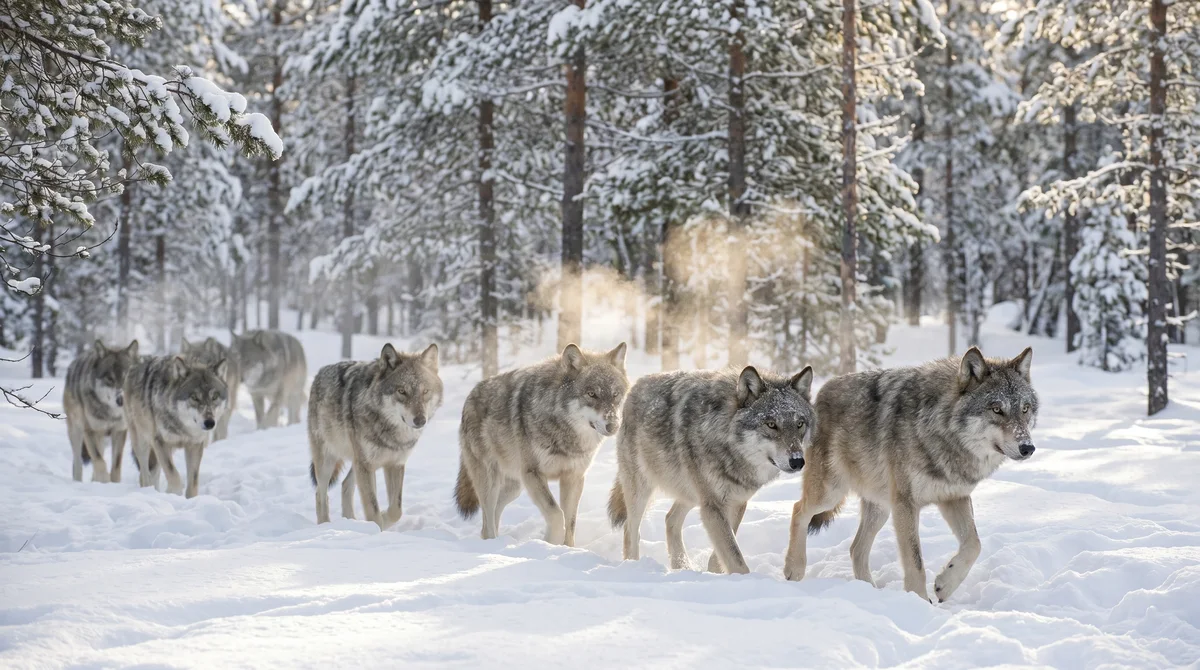
Do wolves howl more at full moon?
If the myth were true, wolves would howl far more on full-moon nights — so let us check. Scientists who study wolves find no good evidence of a full-moon howling spike. Wolves howl right through the month and in daylight too. They might be slightly more active when bright moonlight helps them move around, but that is very different from howling at the moon. The evidence simply does not support the picture.
The other big wolf myth: the 'alpha'
While we are busting myths, here is an even bigger one. You may have heard that wolf packs are ruled by a tough 'alpha' who fought its way to the top. That idea came from watching unrelated wolves crammed together in captivity decades ago — not normal behaviour. In the wild, a pack is a family, and the parents lead simply because they are the mum and dad. Even the scientist who made 'alpha' famous later spent years correcting it (International Wolf Center).
And what about the 'lone wolf'?
The 'lone wolf' has its own myth, too. People use it to mean someone who likes being alone — but real wolves are deeply social and depend on their family. A wolf travelling alone is almost always a young wolf that has left home to find a mate and start a pack of its own. Being solo is a short, in-between stage, not a wolf's idea of a good life.
Why these myths spread so easily
Notice the pattern: each wolf myth is dramatic, simple and repeated everywhere — a howl at the moon, a fierce alpha, a lonely loner. Catchy stories travel faster than careful science, and once a picture is in films, books and cartoons, it feels obviously true. Spotting that 'I've seen this lots of times' is not the same as 'this is proven' is one of the most useful habits a young thinker can build.
How to check an animal 'fact'
You can test a claim like a real scientist. Ask where it came from: a study of wild animals, or an old story? Check the experts: what do the people who actually watch wolves say? Look at the behaviour: does the evidence fit? When you run the moon myth and the alpha myth through these questions, both quietly fall apart — and the true wolf turns out to be even more interesting (U.S. National Park Service — Yellowstone Wolves).
Think like a scientist
Wolves are a perfect thinking workout because so much of what 'everyone knows' about them is wrong. The howl is communication, not moon-worship; the pack is a loving family, not a battle for power; the lone wolf is a hopeful traveller, not a loner. Each correction comes from the same move — checking a dramatic story against real evidence. Do that, and you see animals as they truly are.
The different kinds of howl
A howl is not just one sound — wolves have a whole vocabulary. A lone howl is often a wolf trying to make contact, asking 'where is everyone?' A chorus howl, with the whole pack joining in, strengthens family bonds and announces the group's presence. Wolves can even tell from a howl who is calling and roughly how far away they are. Far from random noise, howling is precise, useful information travelling across the wild.
How a pack 'sings' to sound bigger
Here is a clever trick. When a pack howls together, the wolves deliberately change their pitches so the chorus sounds messy and full — which can fool a rival pack into thinking there are more wolves than there really are. Scientists nicknamed this the 'Beau Geste effect,' after a story where a few soldiers prop up dummies to look like a bigger army. A small family can sound like a mighty pack, all through smart use of sound.
What scientists actually checked
How do we know wolves do not howl at the moon? Because researchers have done the boring, brilliant work of recording when wolves howl and comparing it with the moon's phases. They found howling tied to social activity — reuniting, hunting, dawn and dusk — and no special link to the full moon. That is science at its best: not arguing from a feeling, but gathering data and letting it settle the question (U.S. National Park Service — Yellowstone Wolves).
Howling is only part of the conversation
Wolves 'talk' with their whole bodies, not just their voices. A confident wolf holds its tail and ears high; a nervous one tucks its tail and flattens its ears; playful wolves bow just like pet dogs. Scent and facial expressions add even more. Seeing howling as one channel in a rich communication system — rather than a spooky moon-song — is much closer to how wolves really live.
When the 'alpha' myth did real harm
The 'alpha wolf' myth did not just get wolves wrong — it spread into dog training. People were told to 'be the alpha' and dominate their pet to show who is boss. Because the alpha idea itself was based on stressed captive wolves, many trainers now say this approach is misguided and can even damage trust between a dog and its owner. A wrong fact about wolves ended up affecting millions of family pets — a powerful reason to get the science right.
A scientist who changed his mind
Here is the most inspiring part of the story. The researcher who made the word 'alpha' famous, after studying wolves in the wild for decades, realised it was wrong — and then spent years publicly correcting himself, even asking for his own old book to stop being reprinted. That takes courage. Being willing to say 'I was mistaken, the evidence changed my mind' is not weakness; it is exactly what makes science trustworthy.
Why does your dog howl at sirens?
You may have seen a pet dog throw back its head and howl at a passing siren or a piece of music. It is doing a watered-down version of what wolves do: answering a sound that resembles a howl, as if joining a faraway pack. The dog is responding to the sound, not the siren truck — just as wolves respond to each other, not the moon. Same instinct, same lesson: look for the real reason behind the behaviour.
Bust more wolf myths in Wild World: Wolves
The issue's Myth-Busters spread weighs the wolf legends against the evidence — with packs, howls, the Yellowstone story, puzzles and a quiz, for ages 8-14.
Want the fun facts too? Read 23 wolf facts for kids.
Sources and further reading
- International Wolf Center
- U.S. National Park Service — Yellowstone Wolves
- National Geographic Kids — Animals
Facts in this article were checked against the public, expert sources above. Spotted something out of date? Tell us and we will fix it.
Frequently Asked Questions
Do wolves howl at the moon?
No. Wolves howl to talk to each other — to gather the pack, find each other and warn rivals. They often howl at night and tilt their heads up to carry the sound, which made people think they were howling at the moon.
Why do wolves point their heads up to howl?
Tilting the muzzle upward helps the sound travel further and clearer across the landscape, a bit like cupping your hands around your mouth. It has nothing to do with looking at or aiming at the moon.
Do wolves howl more when there's a full moon?
There is no good scientific evidence that wolves howl more at full moon. They may be a little more active on brighter nights, but they howl all through the month, and during the day too.
Is the 'alpha wolf' real?
Not as people imagine. The idea came from studying unrelated captive wolves. In the wild, a pack is a family, and the parents lead simply because they are the parents, not because they won fights to be 'alpha'.
What is a 'lone wolf'?
A lone wolf is usually a young wolf that has left its family to find a mate and start its own pack. It is a temporary stage, not a wolf that prefers to be alone. Wolves are highly social animals.
How can I check an animal 'fact' like this?
Ask where the idea came from, look for what scientists who study the animals actually say, and check whether the evidence backs it up. Popular images and old stories are not the same as proof.
Try our free critical thinking games!
Fun, colorful brain-building games for kids ages 6-14. No signup required.
Play Now