Are Elephants Really Afraid of Mice? The Surprising Answer
Key Takeaways
- ✓Elephants are not specially afraid of mice — they are just startled by sudden movement near their feet.
- ✓The mouse myth is ancient, going back almost 2,000 years to the Roman writer Pliny the Elder.
- ✓Elephants really are wary of one small creature: bees, whose stings hurt their trunks and eyes.
- ✓Scientists use 'beehive fences' to keep elephants away from farms, a clever real-world use of that fear.
- ✓Testing a fun story with a careful experiment is exactly how scientists separate myth from fact.
Are elephants scared of mice? A fact-checked, kid-friendly answer: where the ancient myth came from, what really startles an elephant, the surprising creature elephants truly avoid, and how scientists test a claim like this.
Short answer: not really. The idea that a giant elephant is terrified of a tiny mouse is one of the most famous animal stories in the world — and it is mostly a myth. Elephants are not afraid of mice in particular, and discovering what is really going on (and what elephants truly do avoid) is a brilliant lesson in testing a claim.
Last updated 7 June 2026
The short answer
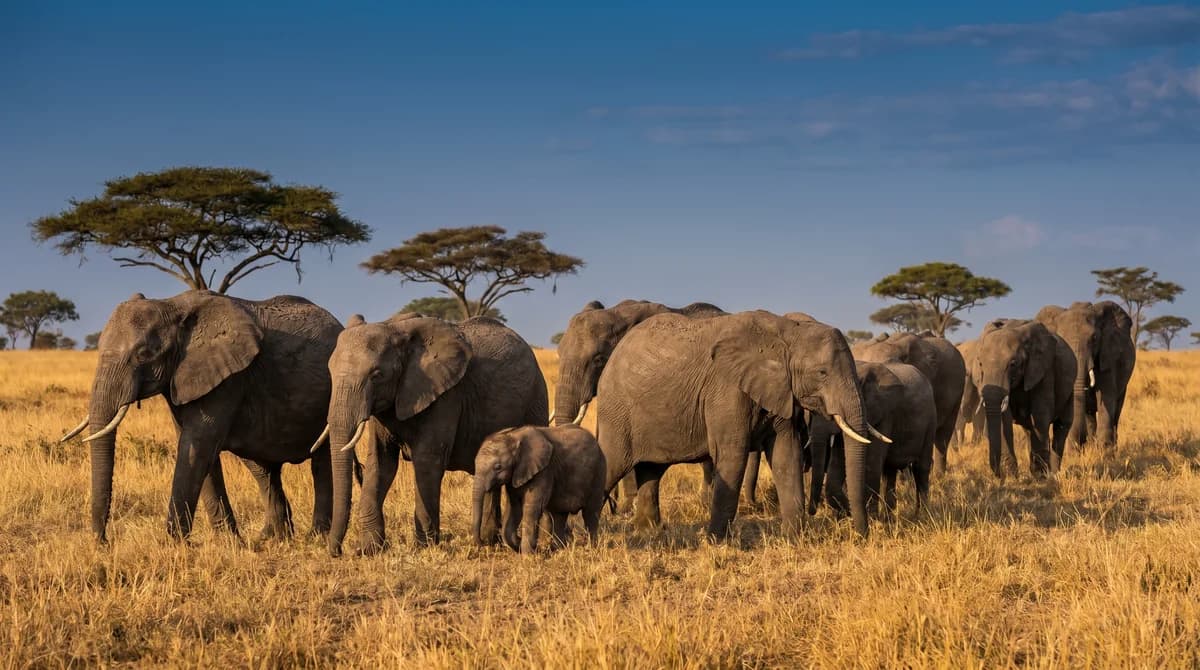
When scientists and observers look closely, there is no good evidence that elephants have a special fear of mice. An elephant might flinch if a mouse suddenly scurries out — but it would react the same way to any small thing darting unexpectedly near its feet. That is plain surprise, not a deep fear of mice. The famous story turns out to be a case of jumping to the wrong conclusion.
Where the myth came from
This myth is seriously old. Almost 2,000 years ago, the Roman writer Pliny the Elder wrote that of all creatures, elephants fear mice the most. People repeated his claim for century after century without checking it, and much later it became a favourite gag in cartoons and films, where huge elephants leap onto stools at the sight of a mouse. Repeated often enough, the story started to feel like an obvious fact.

What actually startles an elephant
To understand the mix-up, think about how an elephant sees the world. Its eyesight is quite poor close-up, so anything that appears suddenly and moves fast right by its feet can make it cautious — a natural, sensible reaction for any animal. A mouse fits that description, but so would a darting lizard, a blowing leaf or a hopping frog. The elephant is reacting to the surprise, not to the mouse being a mouse.
Putting the myth to the test
This is exactly the kind of claim you can test, and people have. When mice were shown to elephants, the elephants sometimes reacted and sometimes did not — and when they did, it looked like surprise at a sudden movement rather than terror. The key scientific point is this: one funny anecdote ('I saw an elephant jump at a mouse!') is not proof. You need to watch carefully, repeat it, and rule out other explanations.
What elephants are really afraid of
Here is the twist that beats the myth: elephants genuinely are wary of one small creature — bees. A swarm of bees can sting the sensitive skin inside an elephant's trunk and around its eyes, which really hurts. African elephants take this so seriously that they will hurry away from the sound of buzzing, and they even make a special low warning rumble to tell the herd that bees are near.
The clever 'beehive fence'
Scientists turned the elephant's real fear into a brilliant invention. Around farms near elephant country, they hang beehives along a wire fence. If an elephant tries to push through to raid the crops, it jostles the hives, the bees buzz out, and the elephant calmly backs away. The crops are saved, the elephants are unharmed, and the farmers even get honey. That is what happens when you replace a myth with real evidence — you can solve real problems (Save the Elephants).
Anecdote versus evidence
The mouse myth is a perfect example of a big idea in clear thinking: an anecdote (a single story) is not the same as evidence (careful, repeated testing). 'My uncle saw an elephant scared of a mouse' is a fun story, but it cannot tell us what elephants in general feel. Only watching many elephants, many times, under fair conditions, can do that. Learning to ask 'is this a story or is this evidence?' is a genuine superpower.
How to test an animal claim yourself
You can investigate like a scientist. Observe carefully and write down exactly what happens. Repeat it more than once, because one result could be luck. Change one thing at a time — would the animal react to a toy that moves the same way? And ask if there is another explanation. Those simple habits turn a guess into something much closer to real science.
Other elephant myths, busted
- 'Elephants go to secret graveyards to die.' No real elephant graveyards exist — it is a legend.
- 'An elephant never forgets.' Their memory is genuinely excellent, but the saying is exaggerated.
- 'Elephants can jump.' They cannot — they always keep at least one foot on the ground.
- 'Elephants drink through their trunks.' They suck water up the trunk, then squirt it into their mouths.
Think like a scientist
The elephant-and-mouse story is a perfect thinking workout. A claim can be ancient, famous and repeated everywhere — and still be wrong. The honest, evidence-based answer (elephants startle at sudden movement, and truly fear bees) is more surprising and more useful than the cartoon version. Asking 'how could we test that?' is exactly how scientists separate a good story from the truth.
How well can an elephant actually see?
A big clue to the mouse mix-up is the elephant's eyesight. Elephants see reasonably well in dim light but quite poorly up close, and their eyes are set on the sides of their head. They lean far more on their incredible smell and hearing. So a small grey shape darting suddenly near their feet is genuinely hard to make out — no wonder a quick movement can make a careful elephant pause. It is a sight problem, not a mouse phobia.
Why a 'fear of mice' makes such a good story
Part of the myth's staying power is simply that it is funny and satisfying. The idea of the biggest animal on land being terrified of one of the smallest is a perfect joke — a delicious mismatch. Stories that make us smile or gasp spread fast and stick hard, whether or not they are true. Noticing that 'this is a great story' can be a warning sign to check it, not a reason to believe it, is a sharp thinking habit.
What elephants are NOT afraid of
For an animal supposedly scared of mice, elephants are remarkably brave. A herd will stand its ground against a pride of lions, form a protective ring around the calves, and chase off predators many times the size of any mouse. Adult elephants have almost no natural enemies. Seeing how fearless they are with genuinely big threats makes the 'terrified of a tiny mouse' story look even more unlikely.
Listening for danger: the elephant rumble
Elephants have an astonishing warning system that has nothing to do with mice. They make deep rumbles, many too low for humans to hear, that travel for kilometres — even through the ground, picked up by sensitive feet. With these calls a herd can warn each other about real dangers, including the buzzing of bees. Understanding how elephants actually sense and signal threats tells us far more than any cartoon ever could.
Other animals we wrongly think fear things
The elephant is not the only animal saddled with a made-up fear. People say ostriches bury their heads in the sand when scared — they do not; they lower their heads to tend eggs or eat. Tales like these survive because they are vivid and often funny. Spotting that a claim is suspiciously cartoon-like is a good prompt to ask, 'has anyone actually checked this?'
Bust more savanna myths in Wild World: Savanna Giants
The issue's Myth-Busters spread weighs the grassland legends against the evidence — with elephants, giraffes, rhinos, puzzles and a quiz, for ages 8-14.
Want the fun facts too? Read 24 savanna giant facts for kids.
Sources and further reading
Facts in this article were checked against the public, expert sources above. Spotted something out of date? Tell us and we will fix it.
Frequently Asked Questions
Are elephants afraid of mice?
Not in the way the story says. Elephants may startle if a mouse darts out suddenly, but that is surprise at a fast movement near their feet, not a special fear of mice. They react the same way to other sudden small things.
Where did the elephant and mouse myth come from?
It is very old. The Roman writer Pliny the Elder claimed almost 2,000 years ago that elephants fear mice most of all. The idea was repeated for centuries and later turned up in cartoons and films.
What are elephants really afraid of?
Bees. African elephants genuinely avoid honeybees, because stings on their trunk and around their eyes are painful. They even make a special warning rumble when they hear bees buzzing.
What are beehive fences?
They are fences made of beehives strung along wires around farms. When elephants try to cross, they disturb the bees and move away, which protects both the crops and the elephants. It is a clever, peaceful solution.
Did anyone test the mouse myth?
Yes. Television experimenters and observers have tried showing mice to elephants. Elephants sometimes reacted, but the best explanation is surprise at sudden movement, not fear of the mouse itself.
How can I test an animal claim myself?
Observe carefully, repeat it more than once, and change one thing at a time. Ask whether there is another explanation. One funny story is not proof, but a careful, repeatable test gives real evidence.
Try our free critical thinking games!
Fun, colorful brain-building games for kids ages 6-14. No signup required.
Play Now