Savanna Giant Facts for Kids: 24 Amazing Things About Elephants, Giraffes and Rhinos
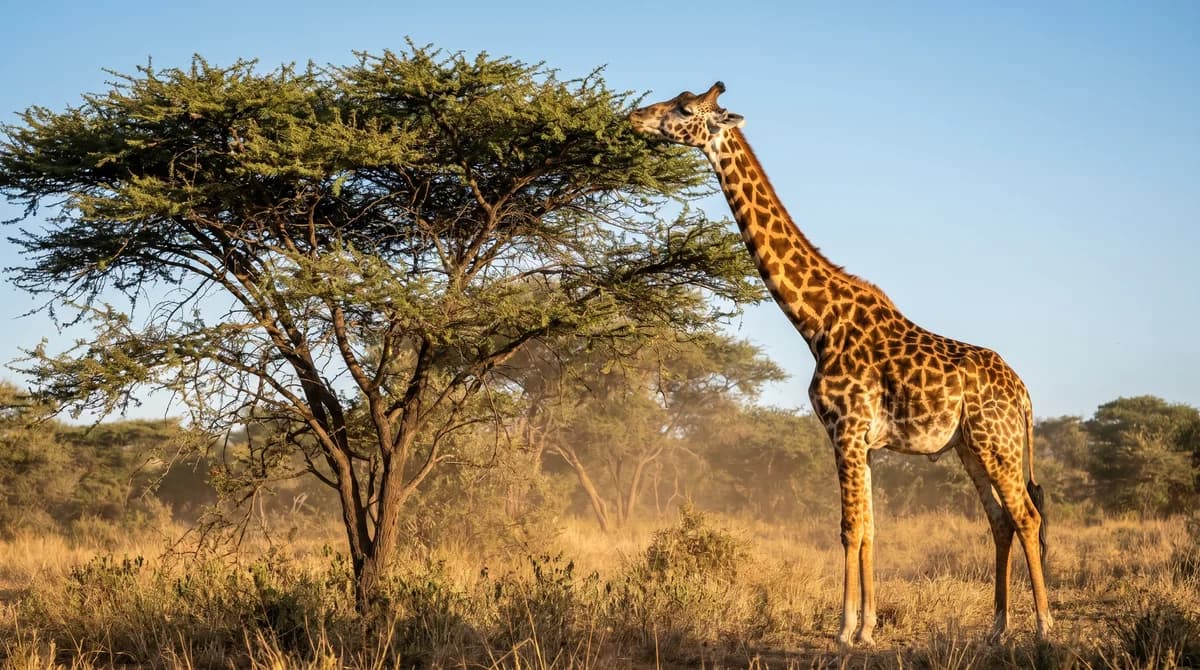
Key Takeaways
- ✓The African elephant is the largest land animal on Earth, and its trunk has around 40,000 muscles.
- ✓The giraffe is the tallest animal, yet its long neck has just seven bones — the same number as yours.
- ✓A rhino's horn is made of keratin, the same material as your hair and fingernails.
- ✓Elephants are 'ecosystem engineers' — they dig water, spread seeds and shape the whole savanna.
- ✓Many savanna giants are endangered, mostly because of poaching and lost habitat.
Fact-checked savanna giant facts for curious kids: how elephants, giraffes, rhinos and hippos live on the African grasslands, why elephants are ecosystem engineers, and how these giants stay cool — grouped so you can find your favourites fast.
The African savanna is home to the biggest animals that walk the Earth — towering giraffes, mighty elephants, armoured rhinos and surprisingly dangerous hippos. These giants shape the grasslands they live on and are some of the most loved and most threatened animals in the world. Here are 24 fact-checked savanna giant facts for curious kids, grouped so you can find your favourites fast.
Last updated 7 June 2026
What is a 'savanna giant'?
A savanna is a vast, warm grassland dotted with scattered trees, found mostly in Africa. The 'giants' are its huge plant-eaters: the elephant, giraffe, rhinoceros and hippopotamus. There is room for so many big animals because the grassland grows a huge amount of food, and being enormous helps these animals reach it, fight off predators, and survive the long dry seasons (African Wildlife Foundation).
The biggest land animal: the African elephant
The African elephant is the largest animal that lives on land. A big male can weigh around 6 tonnes — about the same as four small cars — and stand over 3 metres tall. Everything about it is supersized: it eats up to 150 kg of plants a day and drinks around 150 litres of water. Yet for all their bulk, elephants are gentle, intelligent and famously caring towards their families.
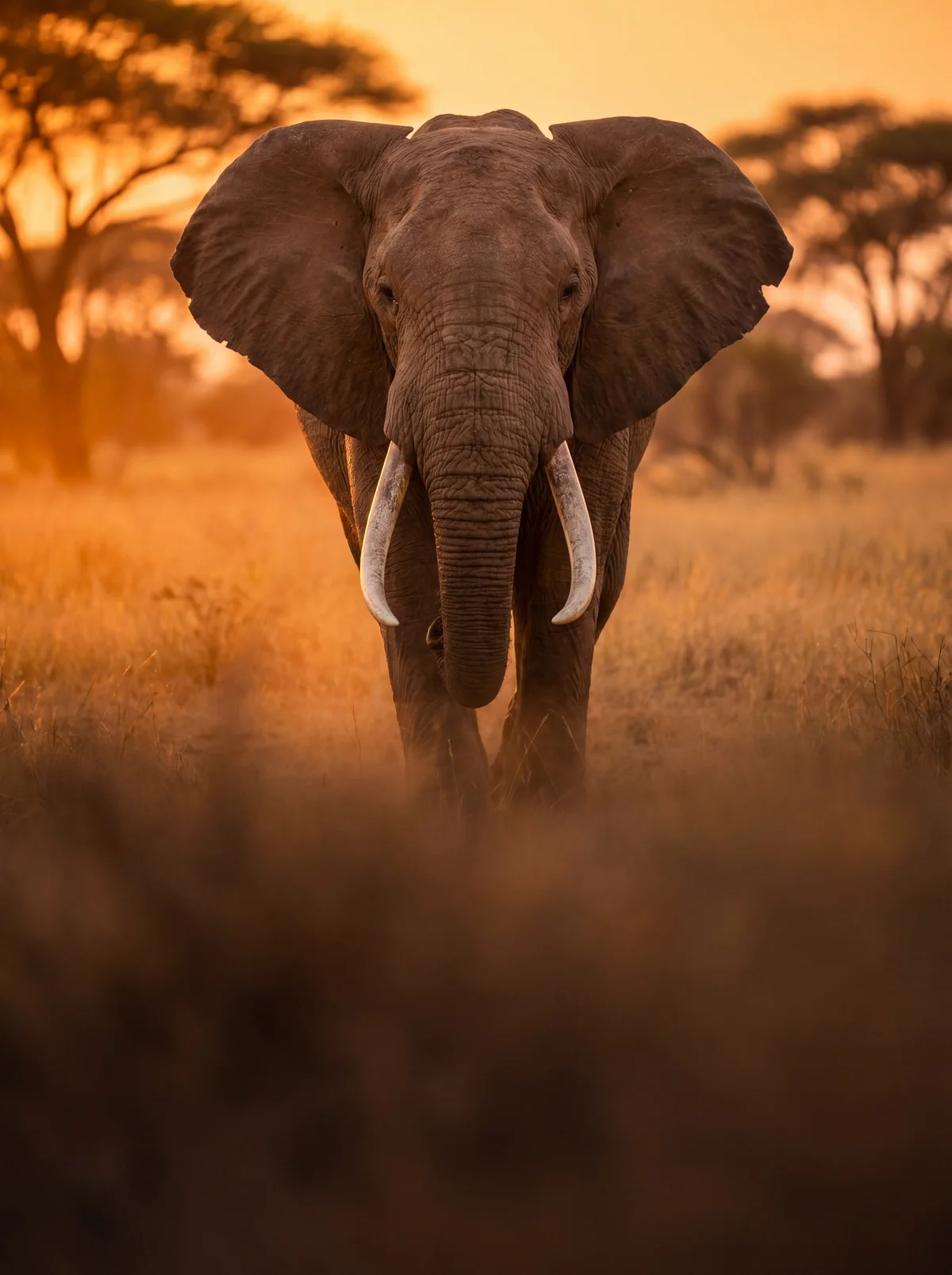
The amazing elephant trunk
An elephant's trunk is one of nature's most incredible tools, containing an estimated 40,000 muscles (your whole body has only around 600). With it, an elephant can breathe, smell, trumpet, drink, rip up trees, and yet still be delicate enough to pick up a single blade of grass. Elephants even greet each other by touching trunks. It is nose, hand, hose and snorkel all in one remarkable package.
Why elephants have such big ears
Those famous flapping ears are really air conditioning. They are full of blood vessels, so when an elephant flaps them, heat escapes from the blood into the air and cools the animal down. That is why African elephants, living in hot open country, have much bigger ears than their Asian cousins in shadier forests. The ears even look a little like the map of Africa — a handy way to remember which is which.
Savanna giants by the numbers
- Biggest land animal: African elephant (~6 tonnes)
- Tallest animal: Giraffe (up to ~5.5 m)
- Neck bones in a giraffe: 7 (same as you)
- Trunk muscles: About 40,000
- Rhino horn: Keratin (like your nails)
- Most dangerous: The hippopotamus
Elephant herds and the wise matriarch
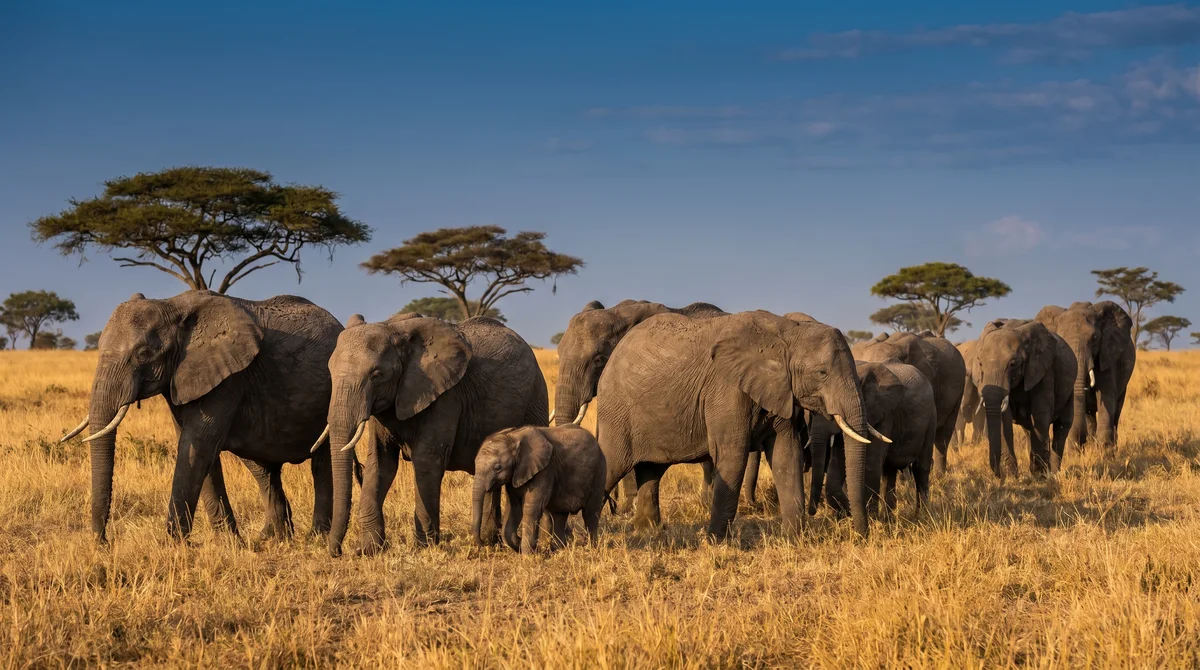
Elephants live in close family herds led by the oldest, most experienced female — the matriarch. She remembers where to find water in a drought and which routes are safe, and the whole herd relies on her knowledge. Elephants are deeply social: they comfort each other, work together to protect calves, and even seem to mourn their dead. Their famous memory is real — and it can mean the difference between life and death for the herd (Save the Elephants).
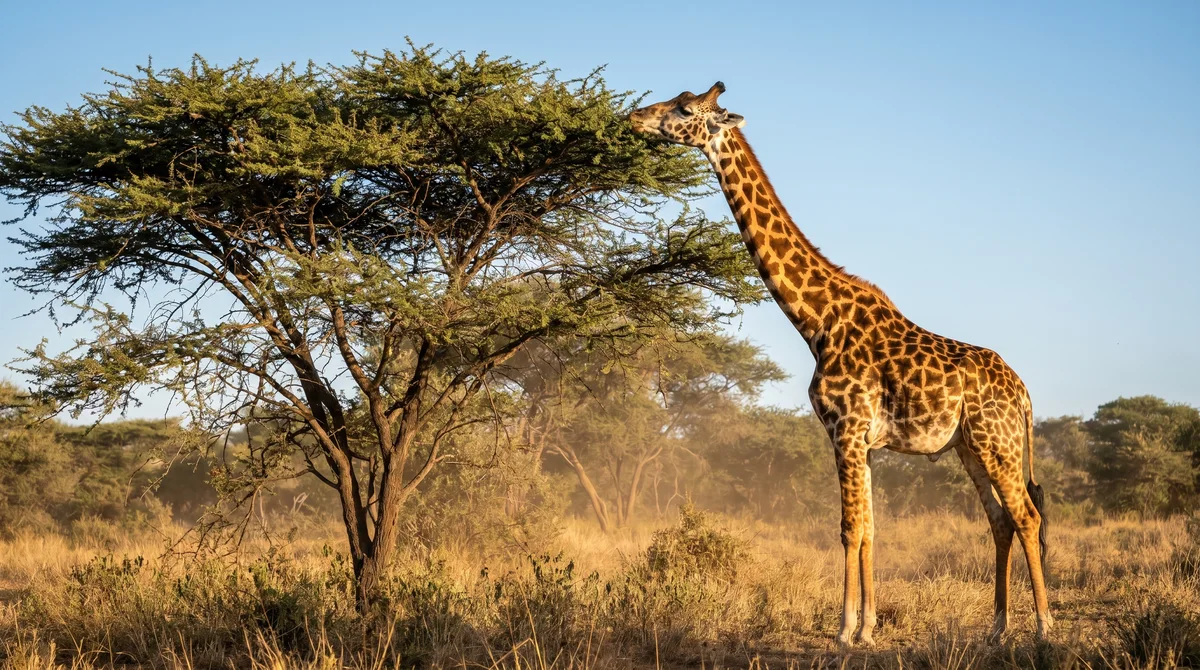
The tallest animal: the giraffe
The giraffe is the tallest animal on Earth, reaching up to about 5.5 metres — tall enough to peer into an upstairs window. Here is the surprise: its towering neck contains just seven bones, exactly the same number as in your neck. Each bone is simply huge. That long neck lets the giraffe feast on leaves high up in acacia trees that no other animal can reach.
Giraffe surprises
Giraffes are full of hidden marvels. Their tongue is around 45 cm long and dark purple-black, which may help protect it from sunburn as they feed all day. The little horns on their heads are called ossicones. Males fight by swinging their necks like clubs, a contest called 'necking.' And to pump blood all the way up to that faraway brain, a giraffe needs a powerful heart that can weigh as much as 11 kg.
Rhinos: the armoured giants
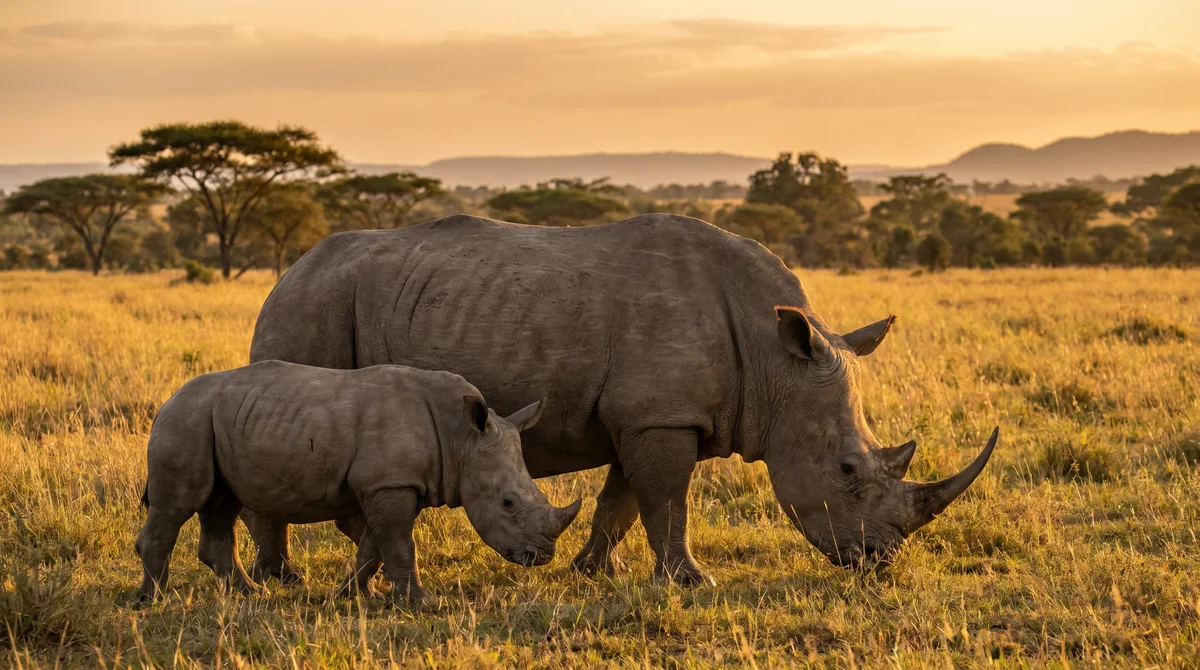
The rhinoceros looks like a creature from the age of dinosaurs, with thick folded skin like armour and one or two mighty horns. There are two African kinds: the white rhino, a grazer with a wide flat lip for cropping grass, and the black rhino, a browser with a hooked lip for grabbing leaves. Surprisingly, a rhino's horn is not bone at all — it is made of keratin, the same stuff as your hair and fingernails.
Hippos: the surprising heavyweight
The hippopotamus spends its days wallowing in rivers to stay cool, then grazes on grass at night. Despite its chubby, gentle looks, the hippo is considered one of the most dangerous animals in Africa — it is huge, fast and fiercely protective of its patch of water. Oddly, hippos cannot really swim; they walk along the riverbed. Their skin even oozes a reddish liquid that works like a natural sunscreen and antiseptic.
How giants keep cool
Staying cool under the savanna sun is a full-time job for a giant. Elephants flap their ears and spray themselves with water and dust; rhinos and hippos wallow in cooling mud that also blocks the sun and bugs; and many giants simply rest in the shade during the hottest hours. Being big actually helps a little, because large bodies heat up and cool down more slowly — a handy trick in a land of scorching days and chilly nights.
What savanna giants eat
The giants share the grassland by eating different things. Grazers like the white rhino and hippo crop grass low to the ground, while browsers like the giraffe and black rhino pick leaves from trees and bushes. Elephants do both, and on a huge scale. By feeding at different heights, the giants avoid competing for the same food — a neat natural way of sharing one habitat between many big mouths.
Elephants: the ecosystem engineers
Elephants do not just live on the savanna — they build it. They dig for water in dry riverbeds, creating waterholes other animals use. They spread the seeds of the fruit they eat across huge distances in their dung. And by pushing over trees and trampling bushes, they keep the grassland open for grazers. Scientists call them ecosystem engineers, because losing elephants would change the whole landscape (African Wildlife Foundation).
Savanna giants in danger
Sadly, many savanna giants are threatened. Elephants are killed for their ivory tusks and rhinos for their horns, even though the horn is just keratin with no magic powers. Growing farms and towns also shrink the wild spaces giants need. The hopeful news is that protected reserves, anti-poaching teams and clever ideas are helping some populations recover — and understanding these animals is the first step to protecting them (IUCN Red List of Threatened Species).
Are elephants really afraid of mice?
You have probably heard that the mighty elephant is terrified of a tiny mouse. It is one of the oldest animal stories around — but is it actually true? The real answer involves a surprising fear you might not expect. Find out in are elephants really afraid of mice?
Roam the grasslands with Wild World: Savanna Giants
Our 15-page science magazine for ages 8-14 covers elephants, giraffes, rhinos and hippos — how they live and shape the land, a Myth-Busters spread, puzzles and a draw-along.
Ready to teach it? See how to teach kids about savanna giants.
Sources and further reading
Facts in this article were checked against the public, expert sources above. Spotted something out of date? Tell us and we will fix it.
Frequently Asked Questions
What is the biggest animal on the savanna?
The African elephant — it is the largest land animal on Earth. Big males can weigh around 6 tonnes, about the same as four small cars, and stand over 3 metres tall at the shoulder.
Why do elephants have such big ears?
Mainly to keep cool. An elephant's huge ears are full of blood vessels, and flapping them releases heat into the air, like a radiator. African elephants have bigger ears than Asian elephants because they live in hotter, more open country.
How many bones are in a giraffe's neck?
Just seven — exactly the same number as in your neck and in almost every mammal. A giraffe's neck bones are simply enormous, which is how it reaches leaves over 5 metres above the ground.
What is a rhino's horn made of?
Keratin — the very same material as your hair and fingernails. It is not bone. Sadly, this horn is why rhinos are poached, even though it has no special medical powers.
Why are savanna giants endangered?
The main threats are poaching (elephants for ivory and rhinos for their horns) and habitat loss as wild land is turned into farms and towns. Conservation work and protected reserves are helping some populations recover.
Can hippos swim?
Not really. Despite living in water, hippos do not float or swim well. Instead they walk or bounce along the riverbed and push off the bottom, holding their breath for up to five minutes at a time.
Try our free critical thinking games!
Fun, colorful brain-building games for kids ages 6-14. No signup required.
Play Now