Can a Whale Swallow a Person? The Surprising Truth
Key Takeaways
- ✓Almost no whale could swallow a person — the giant baleen whales have throats only about the size of a grapefruit.
- ✓The only whale with a throat big enough is the sperm whale, but there is no proven modern case of it swallowing a human.
- ✓In 2021 a diver was briefly scooped into a humpback's mouth by accident and quickly spat out, unharmed.
- ✓Whales are mammals, not fish, and none of them hunt people for food.
- ✓Checking a scary 'fact' against real evidence and animal anatomy is a powerful thinking skill.
Can a whale really swallow a person? A fact-checked, kid-friendly answer: why most whales physically cannot, the one whale that theoretically could, what really happened to a diver scooped up by a humpback, and how to check a scary animal story.
Short answer: almost certainly not. Despite famous stories like Jonah and Pinocchio, nearly every whale in the ocean physically cannot swallow a person — and the reason is a brilliant lesson in checking a scary claim against real evidence. Let us follow the facts, whale by whale.
Last updated 7 June 2026
The short answer, and why it matters
When you actually look at how whales are built, the idea of being swallowed falls apart for almost all of them. This is a perfect example of using evidence and anatomy to test a frightening story, instead of just trusting a feeling or a film. The truth turns out to be far more interesting than the myth — and a lot less scary.
Why people ask this question
The fear has deep roots. The ancient story of Jonah tells of a man swallowed by a 'great fish,' the tale of Pinocchio has a giant whale named Monstro, and every so often a dramatic video or headline brings the idea roaring back. When a story is told for thousands of years, it starts to feel like it must be true — which is exactly why it is worth checking properly.
The throat problem
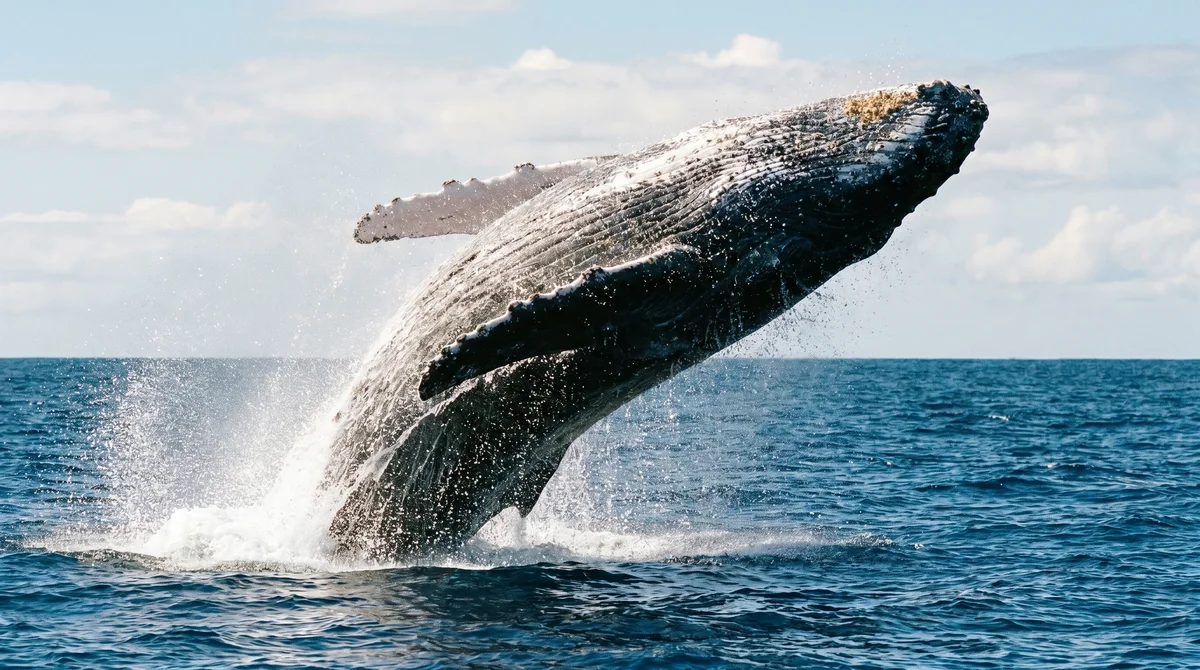
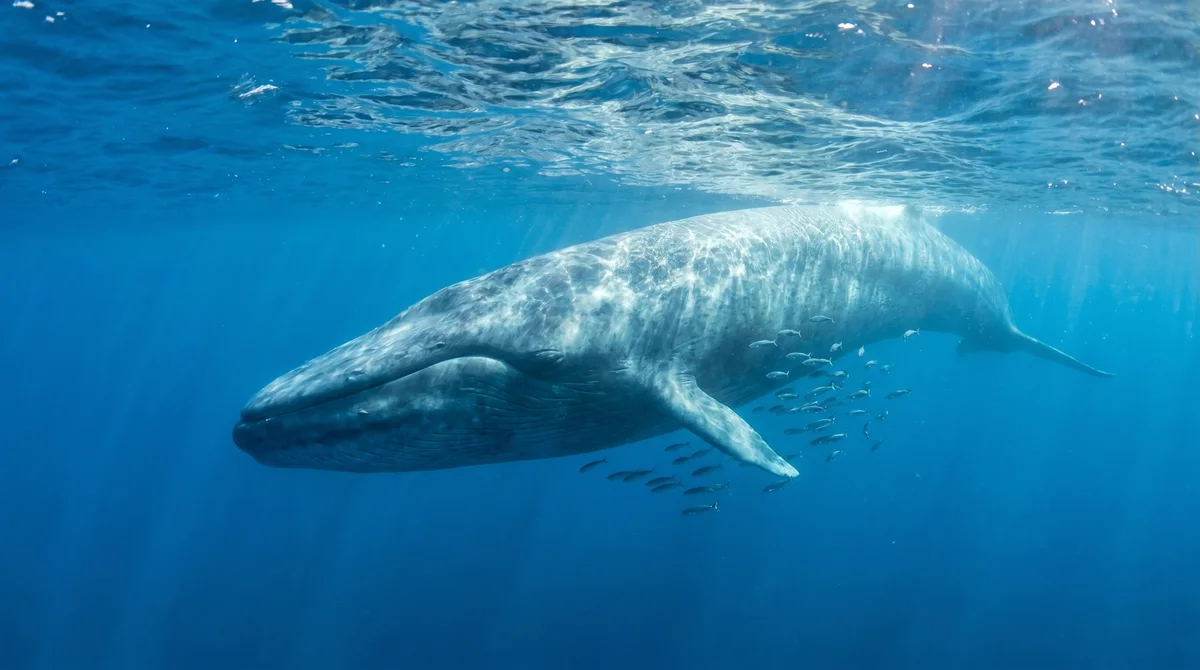
Here is the fact that settles it for most whales: the giant baleen whales — including the blue, humpback and gray — have a throat (oesophagus) only about the size of a grapefruit. Their whole way of eating is built around tiny krill and small fish, not big prey. Even if one accidentally took in something large, it simply could not pass it down to swallow. The biggest animals in the sea have surprisingly small throats.
The one whale that theoretically could
There is a single exception. The sperm whale — a toothed hunter — has a throat wide enough to swallow large prey, because it eats giant squid whole. So in theory, it is the only whale with the plumbing to swallow a person. But here is the key point: there is no proven modern case of a sperm whale ever actually doing so. 'Could in theory' and 'has really happened' are two very different things.
What really happened to the lobster diver
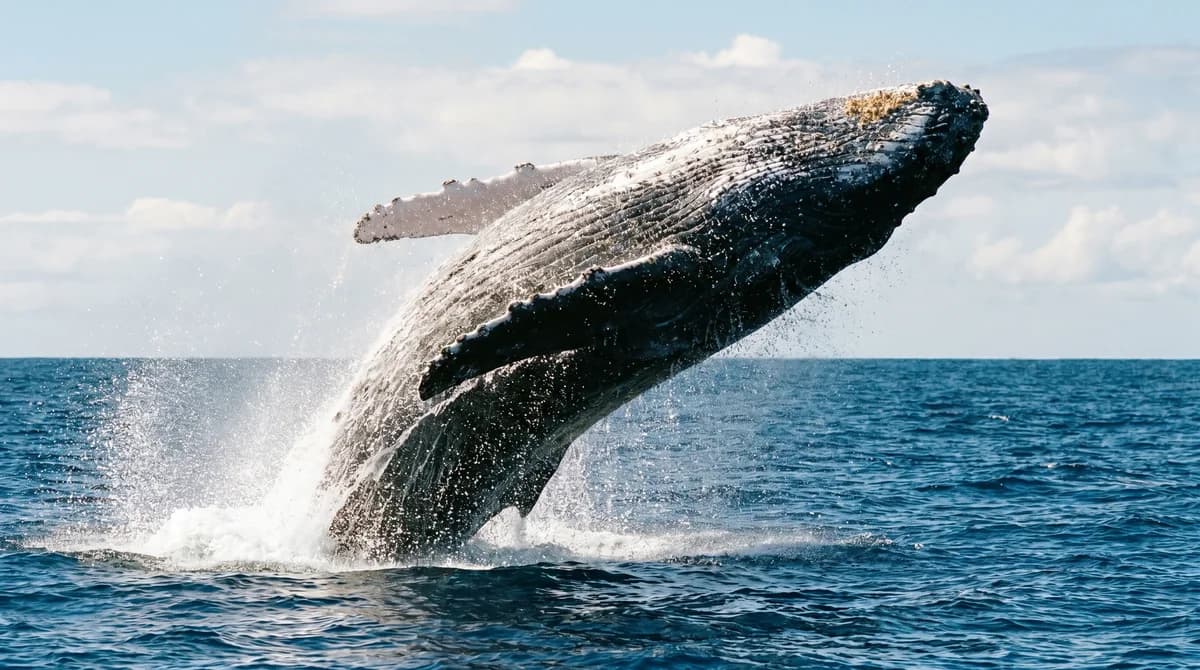
In 2021, a real story made headlines: a lobster diver off Cape Cod felt himself suddenly scooped into the mouth of a humpback whale that was lunge-feeding. It sounds terrifying — but watch what the evidence shows. The whale could not swallow him (remember that grapefruit-sized throat), and after about 30 to 40 seconds it spat him back out. He was bruised but fine. It was a rare accident, not a meal.
Why filter feeders don't even try
The great baleen whales are not hunters chasing big prey — they are gentle filter feeders. They take an enormous gulp of water full of krill, then push all the water (and anything else) back out through their baleen, keeping only the tiny food. A person caught in that gulp would be pushed straight back out with the water, not swallowed. Their whole feeding system is designed to reject anything large.
And remember — a whale is not a fish
The old stories often say a 'fish' swallowed someone, which adds another mistake to bust. A whale is a mammal: it breathes air, is warm-blooded and feeds its babies milk. So 'swallowed by a giant fish' gets the animal wrong twice over — wrong that it could swallow a person, and wrong that it is a fish at all. Two myths in one tidy package.
Why scary stories spread so fast
If it is so unlikely, why does the idea stick around? Because dramatic, frightening stories are exciting and easy to remember — they travel far faster than calm explanations about whale throats. Our brains hold on to the gasp-worthy version. Knowing that 'this is a thrilling story' is not the same as 'this is true' is one of the most useful thinking habits you can build.
How to check a scary animal story
You can investigate a claim like a scientist, in four steps. 1. Check the body: could the animal physically do this? 2. Find the original: where did the story actually come from? 3. Ask the experts: do trusted science sources back it up? 4. Separate 'could' from 'did': is it just possible, or has it really been recorded? Those questions deflate almost every scary animal myth (Whale and Dolphin Conservation).
Other whale myths, busted
- 'Whales spray water out of a hole.' The spout is mostly warm breath and vapour, not seawater.
- 'Whales are giant fish.' They are mammals — air-breathing, warm-blooded and milk-feeding.
- 'Killer whales kill people.' Wild orcas have essentially never killed a human.
- 'A whale could eat you for dinner.' No whale hunts people, and almost none could swallow one.
Think like a scientist
This question is a perfect thinking workout because the honest answer has layers: almost no whale could swallow a person, one rare kind theoretically could, and it has never actually been proven to happen. Holding that careful, accurate picture — instead of a simple scary 'yes' — is exactly what good scientists do. The real story, as usual, is more fascinating than the myth.
How big a mouthful can a whale take?
This is where it gets confusing. A lunge-feeding humpback or blue whale can take in a mouthful of water bigger than its own body — the pleated throat balloons out like a giant pelican's pouch. That huge gulp is exactly how a diver got scooped up by accident. But the mouth is not the same as the swallowing tube behind it: all that water (and anything in it) gets squeezed back out, and only tiny food slips down the narrow throat. Big mouth, tiny gateway.
What whales actually eat
Whales are not built to eat anything person-sized. Baleen whales live on krill and small fish; orcas hunt fish, seals and squid; sperm whales target squid in the deep. Not a single whale specialises in catching large land mammals like us — we are simply not on the menu. When you match each whale's body to its real diet, the idea of one hunting a human falls apart completely.
Could you survive inside a whale anyway?
Stories like Jonah and Pinocchio imagine someone living inside a whale — but even setting aside the tiny throat, that part is pure fantasy. Inside a whale there is no air to breathe and powerful stomach acid for digesting food. So even in the one-in-a-billion case of being swallowed, survival would not be possible. The cosy 'living room inside a whale' is something only cartoons can offer.
Animals that really do swallow big prey
To see why whales are special, compare them with true big-gulp swallowers. Snakes can unhook their jaws to swallow prey wider than their own heads. Some deep-sea fish, like the gulper eel, can take prey nearly their own size. These animals are built to swallow whole — stretchy jaws, expandable throats and bodies to match. Whales, despite their size, are built the opposite way: to filter small food or swallow squid, not to gulp giants.
The sperm whale and the giant squid
There is a real monster story in the deep — just not about people. The sperm whale dives kilometres down to hunt giant and colossal squid, swallowing them whole, and many sperm whales carry round scars from squid suckers fighting back. So the one whale with a throat big enough to swallow large prey uses it on squid in the pitch-black deep. That true battle is far more thrilling than the made-up tale of swallowing a sailor.
Why 'almost never' is the honest answer
You might notice scientists say 'almost certainly not' rather than a flat 'impossible.' That careful wording matters. For nearly every whale it is physically impossible; for the sperm whale it is theoretically possible but has never been proven to happen. Telling apart 'impossible,' 'possible but unproven,' and 'definitely happens' is exactly how good scientists speak — precise, honest, and matched to the evidence.
Bust more sea myths in Wild World: Ocean Giants
The issue's Myth-Busters spread weighs the tall tales of the sea against the evidence — with whales, orcas, puzzles and a quiz, for ages 8-14.
Want the fun facts too? Read 24 ocean giant facts for kids.
Sources and further reading
Facts in this article were checked against the public, expert sources above. Spotted something out of date? Tell us and we will fix it.
Frequently Asked Questions
Can a whale swallow a human?
Almost certainly not. The huge baleen whales, like the blue and humpback, have throats only about the size of a grapefruit, so they cannot swallow anything as big as a person, even by accident.
Could a sperm whale swallow a person?
A sperm whale has a throat big enough to swallow large prey like giant squid, so in theory it is the only whale that could. But there is no proven modern case of a sperm whale actually swallowing a human.
Did a whale really swallow a diver?
In 2021 a lobster diver off Cape Cod was briefly scooped into a humpback whale's mouth as it lunge-fed. The whale could not swallow him because its throat is tiny, and it spat him out after about half a minute.
Was Jonah really swallowed by a whale?
The story of Jonah is an ancient tale, and it actually says a 'great fish,' not a whale. Whether you read it as history or a story, real whale anatomy shows that being swallowed and surviving is not possible.
Are whales dangerous to people?
No. Whales do not hunt humans, and wild orcas have essentially never killed a person. The biggest risk from a whale is an accident, like being near one when it surfaces, not being attacked or eaten.
How can I check a scary animal story?
Look at the animal's body (could it physically do this?), find the original source, check trusted science sites, and ask whether experts agree. Scary stories spread fast, so a little checking goes a long way.
Try our free critical thinking games!
Fun, colorful brain-building games for kids ages 6-14. No signup required.
Play Now