Wolf Facts for Kids: 23 Amazing Things About Wolves and Their Packs
Key Takeaways
- ✓The grey wolf is the largest member of the dog family, and all pet dogs descended from wolves.
- ✓A wolf pack is really a family — usually a parent pair and their pups, not a group of strangers fighting to be 'alpha'.
- ✓Wolves howl to talk to each other — to gather the pack, find each other and warn rivals — not at the moon.
- ✓Wolves hunt as a team and usually target the weakest prey, which keeps prey herds healthy.
- ✓When wolves returned to Yellowstone, the whole landscape began to change — a famous example of how predators matter.
Fact-checked wolf facts for curious kids: how wolf packs are really families, why wolves howl, how they hunt as a team, and how returning wolves changed a whole national park — grouped so you can find your favourites fast.
Wolves are among the most misunderstood animals on Earth — feared in fairy tales, yet in real life they are shy, intelligent and devoted to their families. They hunt as a team, talk in howls, and can change an entire landscape just by being there. Here are 23 fact-checked wolf facts for curious kids, grouped so you can find your favourites fast.
Last updated 7 June 2026
What is a wolf?
The grey wolf (Canis lupus) is the largest wild member of the dog family, with big males weighing up to around 45 kg. Wolves are built for travel and teamwork: long legs for covering huge distances, powerful jaws, and a thick double coat that keeps out the cold. They once roamed across more of the world than almost any other land mammal, from icy tundra to forests and deserts (International Wolf Center).
Wolves and dogs: a family secret
Here is a fact that links wolves straight to your sofa: every pet dog on Earth is descended from wolves. Thousands of years ago, some wolves began living alongside humans, and over many generations they became the dogs we know today. That is why a tiny chihuahua and a giant wolfhound are both, deep down, related to the wolf. Your dog's howl, tail-wag and pack loyalty are all wolf inheritance.
The pack is really a family
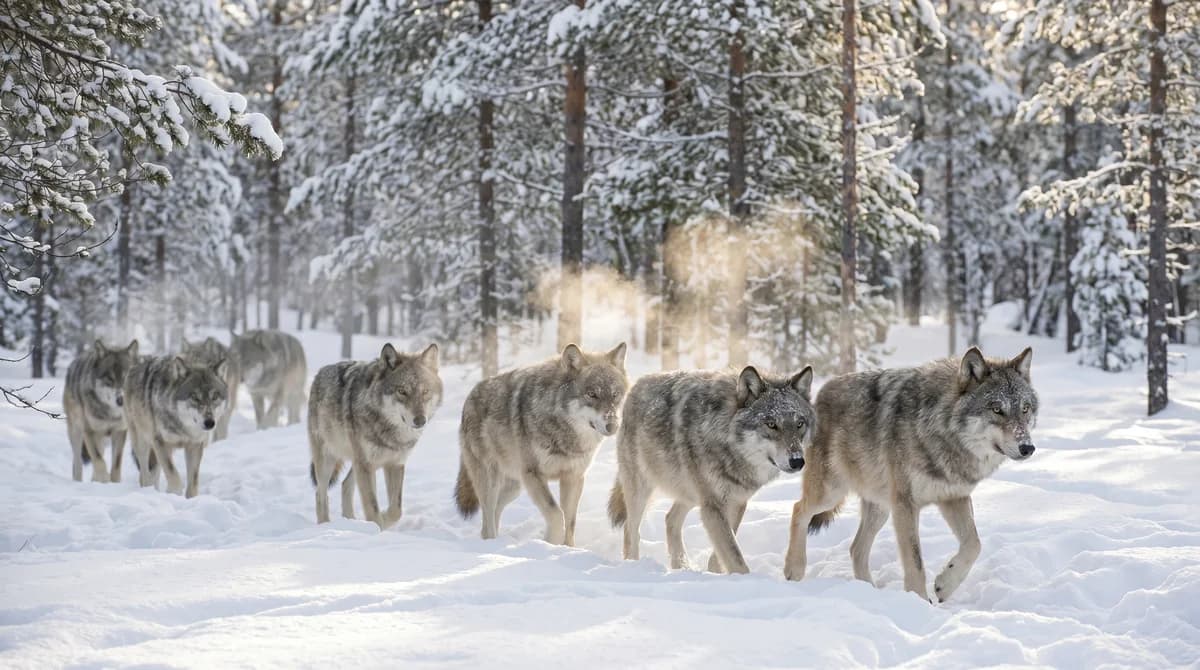
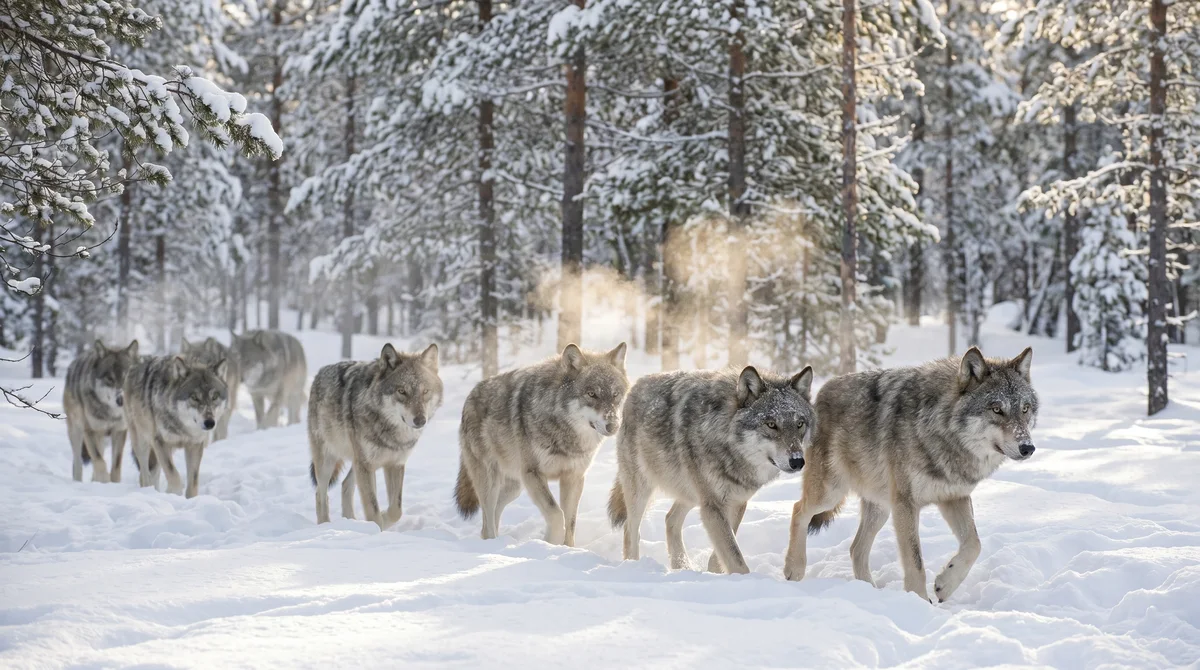
Forget the idea of a gang of strangers battling to be boss. A wild wolf pack is almost always a family: a mother and father and their pups from the last year or two, all living and hunting together. The parents lead simply because they are the parents — just like in a human family. Understanding this changes the whole way we see wolves (International Wolf Center).
How wolves talk: the howl
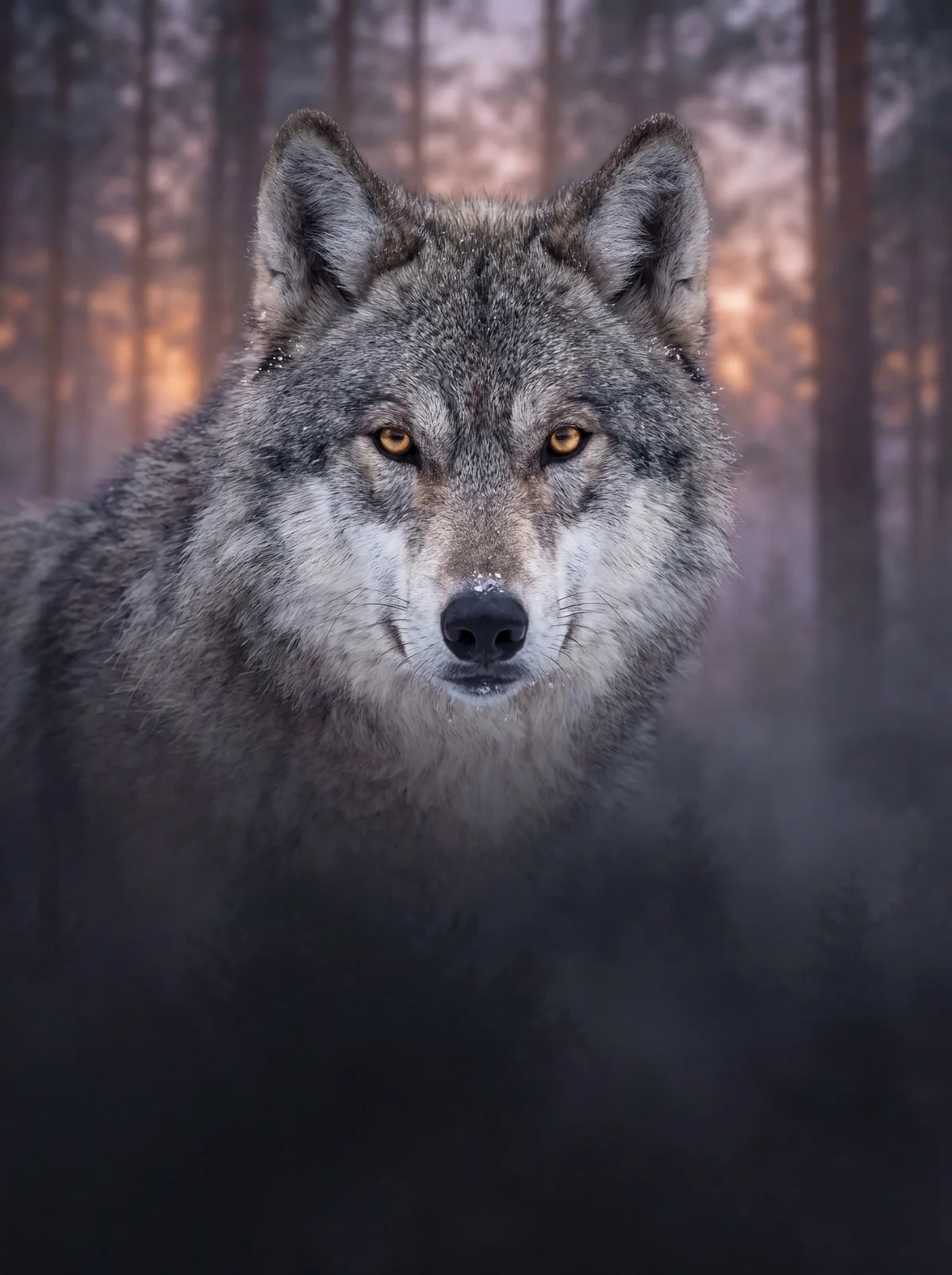
The howl is the wolf's most famous sound, and it is packed with meaning. Wolves howl to call the pack together, to find each other across miles of forest, and to warn rival packs to keep out of their territory. A howl can carry up to about 10 km, and each wolf has its own recognisable voice. Wolves also whine, growl and use body language — but the howl is how a family stays connected across the wild.
Wolves by the numbers
- Family group: The pack (parents + pups)
- Biggest: Grey wolf (males up to ~45 kg)
- Howl heard: Up to ~10 km away
- Sense of smell: Around 100x better than ours
- Travel: Often 30-50 km in a day
- Pet dogs: All descended from wolves
How wolves hunt
Wolves are team hunters, which lets them tackle prey far bigger than themselves, like deer, elk and moose. They work together to test a herd and pick out the animal that is easiest to catch — usually one that is old, young or unwell. Here is the surprising part: most hunts actually fail. Wolves may travel huge distances and try many times before they succeed, so a meal is hard-earned (U.S. National Park Service — Yellowstone Wolves).
Wolf pups and growing up
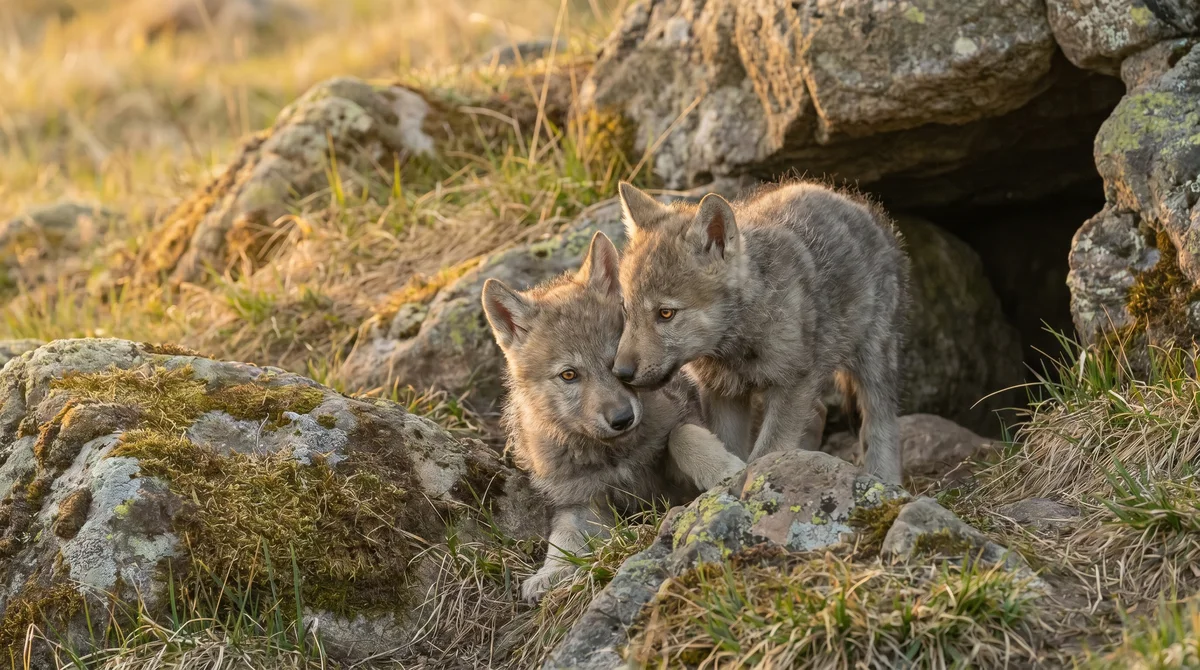
Wolf pups are born in spring in a cosy den, usually in litters of four to six. They are tiny, blind and helpless at first, and the whole pack helps raise them — bringing food and babysitting while the parents hunt. Through endless play-fighting and chasing, pups practise the skills they will need to hunt. By their first winter, they are running with the pack and learning the family trade.
Where wolves live
Wolves are survivors that live in many different homes across the northern half of the world — in North America, Europe and Asia. There are several types, each suited to its surroundings: the snowy-white Arctic wolf of the frozen north, the timber wolves of forests, and others adapted to mountains and plains. Wherever they live, wolves need large, wild spaces to roam and enough prey to feed the family.
Built for the hunt
A wolf's body is a survival toolkit. Its sense of smell is around 100 times sharper than ours, able to detect prey from over a kilometre away. Its hearing is superb, picking up a howl across the valley. Long legs and big paws let it trot for 30 to 50 km in a single day without tiring, and strong jaws help it bring down large prey. Stamina, senses and teamwork are a wolf's real weapons.
The wolves that changed a whole park
One of the most famous stories in science happened in Yellowstone National Park. Wolves had been wiped out there, and without them, elk numbers grew and grew, overgrazing young trees. When wolves were brought back in 1995, the elk moved more and browsed less, so willows and aspens recovered, which helped beavers, birds and other animals return. Scientists call this a trophic cascade — proof that one predator can shape an entire landscape (U.S. National Park Service — Yellowstone Wolves).
Wolves in stories versus real life
Wolves have starred as villains for centuries — the Big Bad Wolf, the wolf at the door, tales of howling beasts. But the real animal is almost the opposite: shy, family-loving and eager to avoid people. Attacks on humans are extremely rare. Much of the wolf's scary reputation comes from old stories and from farmers worried about livestock, not from how wolves actually behave in the wild.
Wolves and people today
Because of that fearsome reputation, wolves were hunted out of much of Europe and North America. Today, attitudes are changing and wolves are slowly returning to some of their old homes, protected by law and helped by careful conservation. They still spark strong feelings, especially among farmers — which makes understanding the real wolf, not the fairy-tale one, more important than ever (IUCN Red List of Threatened Species).
Do wolves really howl at the moon?
Picture a wolf and you probably imagine it howling at a big round moon. But is that what is really going on? The truth is a great piece of myth-busting. Find out in do wolves really howl at the moon?
What wolves eat
Wolves are carnivores built to hunt big plant-eaters — deer, elk, moose, caribou and wild boar. When large prey is scarce, they happily take smaller meals like rabbits, beavers and rodents, and they will scavenge a carcass too. A wolf can gulp down up to 9 kg of meat in one meal after a successful hunt — handy, because the next meal might be days away. Feast-and-famine is the rhythm of a wolf's life.
How wolves mark their territory
A pack defends a large patch of land — sometimes hundreds of square kilometres — and it advertises the borders without fighting whenever possible. Wolves leave scent marks, scratch the ground, and howl to tell neighbouring packs 'this area is taken.' These signposts help packs avoid each other, because a real battle is dangerous for everyone. It is a clever system for sharing a wild landscape with as little conflict as possible.
A wolf's year
Wolves live by the seasons. In spring, the pack settles near a den for the new pups and stays close to home. Through summer, they raise and feed the growing youngsters. By autumn and winter, the pups are big enough to travel, and the whole pack roams far and wide to hunt — winter is actually a good time for wolves, because deep snow makes large prey easier to catch. The pack's whole year revolves around the next generation.
Run with the pack in Wild World: Wolves
Our 15-page science magazine for ages 8-14 covers wolf packs, howling, hunting and the Yellowstone story — plus a Myth-Busters spread, puzzles and a draw-along.
Ready to teach it? See how to teach kids about wolves.
Sources and further reading
- International Wolf Center
- U.S. National Park Service — Yellowstone Wolves
- National Geographic Kids — Animals
Facts in this article were checked against the public, expert sources above. Spotted something out of date? Tell us and we will fix it.
Frequently Asked Questions
Are wolves and dogs related?
Yes — very closely. All pet dogs are descended from wolves, tamed by humans thousands of years ago. A wolf is the largest wild member of the dog family, and dogs and wolves still share most of their DNA.
Is a wolf pack led by an 'alpha'?
Not in the way people think. A wild pack is usually a family — a breeding mother and father and their pups. The 'alpha' idea came from studying unrelated wolves in captivity and does not match how wild packs really work.
Why do wolves howl?
Wolves howl to communicate: to call the pack together, to find each other across long distances, and to warn rival packs to stay away. A howl can carry up to about 10 km. They do not howl at the moon.
How do wolves hunt?
Wolves hunt as a team, often chasing prey much larger than themselves, like deer or elk. They usually catch the weakest animals, and most hunts actually fail, so wolves have to travel far and work hard for food.
Are wolves dangerous to people?
Very rarely. Healthy wild wolves almost always avoid humans, and attacks are extremely uncommon. Wolves have a scary reputation from fairy tales, but in real life they are shy and usually keep their distance.
Why are wolves important?
Wolves are top predators that keep prey herds healthy and in balance. When wolves returned to Yellowstone National Park, plants, beavers and other animals recovered too, showing how one predator can affect a whole ecosystem.
Try our free critical thinking games!
Fun, colorful brain-building games for kids ages 6-14. No signup required.
Play Now