How to Teach Kids About Wolves: Activities and a Free Lesson
Key Takeaways
- ✓Start with wonder — a howl heard 10 km away and a pack that is really a family hook kids fast.
- ✓Wolves are ideal for busting myths: the moon howl, the 'alpha', and the Big Bad Wolf.
- ✓Use the Yellowstone story to show how one predator can change a whole ecosystem.
- ✓Match activities to age: howling and tracking games for young kids; food webs and debates for older ones.
- ✓Hands-on projects — a pack family tree, a Yellowstone before-and-after, fact files — make it stick.
A simple, mostly screen-free way to teach kids about wolves — a 15-minute lesson, hands-on activities by age, a howling-communication game, conversation starters and a magazine that builds real science and myth-busting skills.
Wolves grip children's imaginations like few other animals — and that makes them a perfect teaching tool. Best of all, wolves are ideal for busting myths and showing how science changes its mind: the truth about packs, howls and the famous 'alpha' is far more interesting than the fairy tales. Here is a simple, mostly screen-free way to teach kids about wolves, with a quick lesson and age-by-age activities.
Last updated 7 June 2026
Step 1: Start with wonder
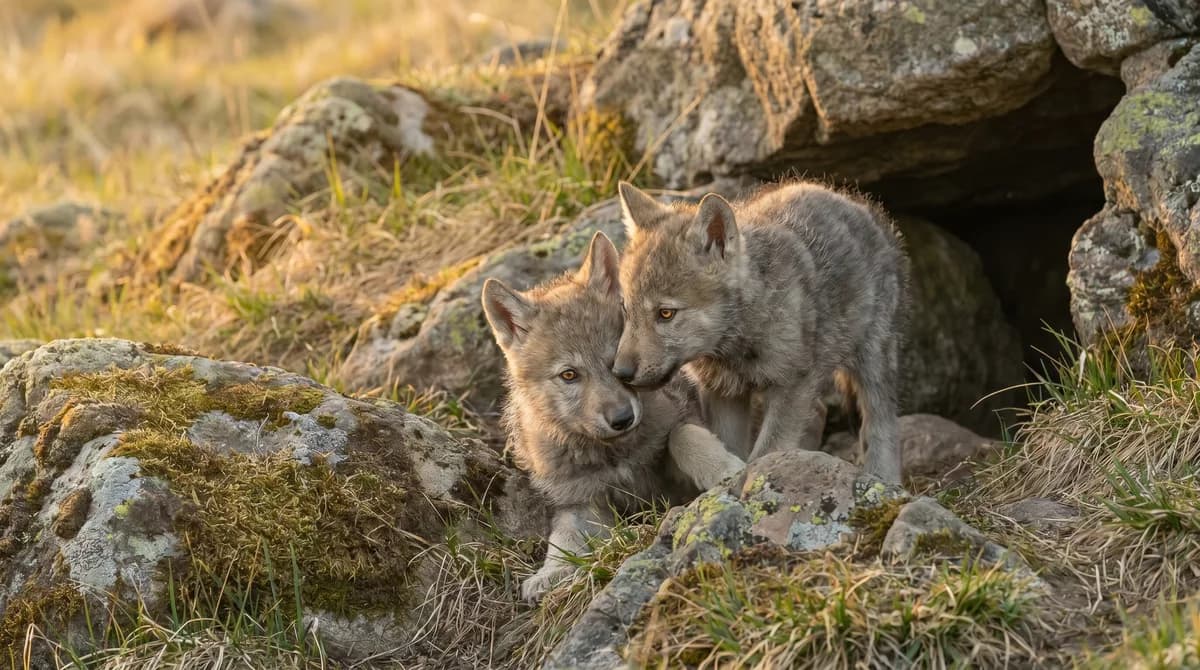
Open with something surprising: a wolf's howl can be heard 10 km away, a pack is really a family, and when wolves returned to Yellowstone the whole park began to change. Wonder grabs attention far better than a list of facts — and the gap between the scary fairy-tale wolf and the real, shy, family animal instantly makes kids curious.
A free 15-minute wolf lesson
Works at the table or in class:
- Wonder (3 min): Share two surprising facts and ask, "Is the wolf from fairy tales the same as the real animal?"
- Facts (5 min): Read about wolves together (try our wolf facts for kids).
- Think (4 min): Ask, "Do wolves really howl at the moon?" and weigh the evidence (see this post).
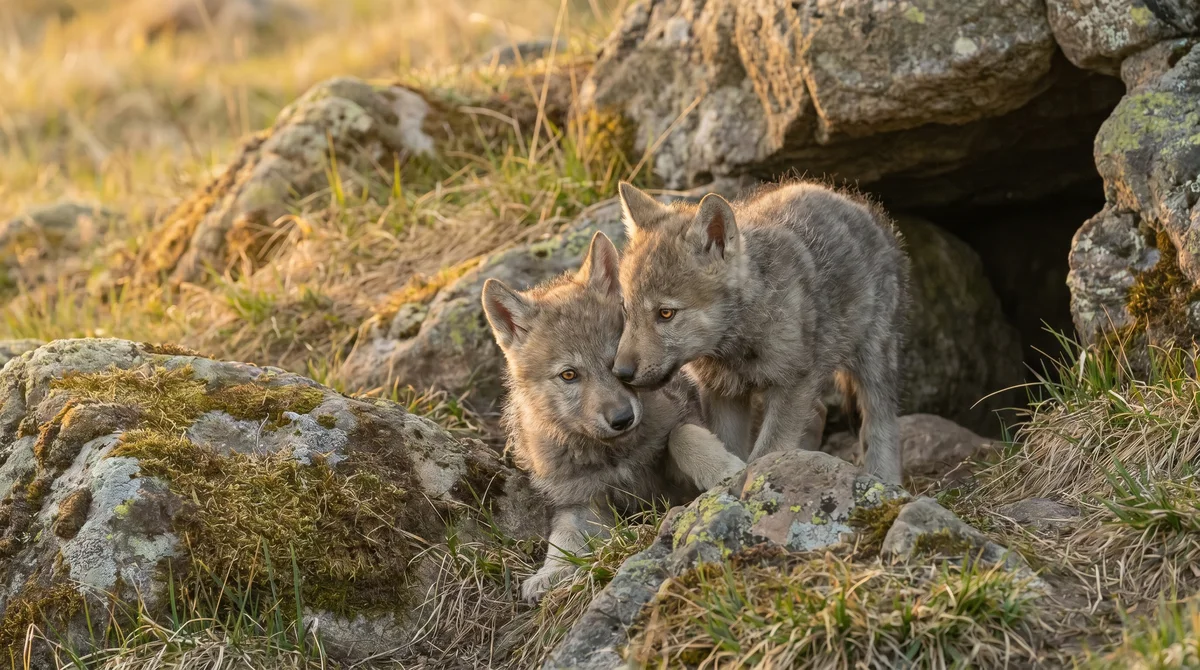
- Create (3 min): Draw a wolf pack and label who is in the family.
Step 2: Play the howling-communication game
This game makes a real science idea click. Have children spread far apart with their eyes closed, then use special 'howls' (agreed calls) to find and regroup with their 'pack' without peeking. Afterwards, ask why a howl is so useful for animals scattered across a huge forest. Kids discover for themselves that howling is communication — a way to stay connected — not moon-howling. It is noisy, active and unforgettable.
Step 3: Activities by age
Ages 4-7: Play the howling game, act out a wolf-pup play-fight, and sort 'fairy-tale wolf' from 'real wolf' pictures.
Ages 8-11: Draw a pack family tree, map how far a wolf travels in a day, and make a simple food web with wolves at the top.
Ages 12-14: Investigate the Yellowstone trophic cascade and present it, or debate how farmers and wolves can share the land.
Step 4: Tell the Yellowstone story
The return of wolves to Yellowstone is one of the best science stories there is — and a brilliant teaching tool. Show a simple before-and-after: no wolves means too many elk, which eat all the young trees; wolves return, the elk move more, the trees recover, and beavers and birds come back. Kids can draw the chain of effects as a flow diagram. It makes the idea of a connected ecosystem real and visible (U.S. National Park Service — Yellowstone Wolves).
Step 5: Update the myths with evidence
Wolves are wrapped in myths, which makes them perfect for fact-checking. Show that wolves do not howl at the moon, that the 'alpha wolf' idea is outdated, and that the Big Bad Wolf is a story, not real behaviour. Each time, ask "how do we know?" and check a trusted source (International Wolf Center). Swapping the fairy tale for the evidence is the heart of the lesson.
Step 6: Make it stick
Finish with a project: a pack family tree, a Yellowstone before-and-after poster, or a fact file the child presents to you. Building and explaining beats memorising every time. Reputable groups like the International Wolf Center have great free pages and real wolf howls to extend the learning.
Ten quick wolf activities
Pick and mix — most take 10-20 minutes:
- Howling game — regroup your 'pack' using calls, eyes closed.
- Family tree — draw a pack as the family it really is.
- Real or fairy tale? — sort wolf pictures and claims into fact and story.
- Yellowstone chain — draw the before-and-after flow diagram.
- Food web — link grass, elk, wolves and scavengers with string.
- Travel map — mark how far a wolf roams in a day.
- Wolf or dog? — compare a wolf with a pet dog and list shared traits.
- Track casts — make and compare wolf and dog paw prints in dough.
- Myth busters — test a grown-up on 'do wolves howl at the moon?'
- Fact file — research a type of wolf and make a poster.
Cross-curricular links
One wolf topic stretches across the timetable. Maths: chart how far wolves travel or how many pups survive. Art: draw a pack or design a 'real wolf vs fairy-tale wolf' poster. Writing: rewrite a fairy tale from the wolf's honest point of view. Geography: map where wolves live and where they have returned. One howl of a theme can carry a whole week of learning.
Misconceptions to clear up
A few gentle corrections go a long way. Wolves do not howl at the moon; packs are not ruled by a fighting 'alpha'; a 'lone wolf' is not a loner by choice; and wolves are not eager to attack people. Each fix models the key move: replace 'everyone says' with 'let's check the evidence.'
Wolf conversation starters
Spark thinking with questions like these:
- Why might it help wolves to hunt as a team instead of alone?
- Wolves are shy in real life — so why are they the villains in so many stories?
- How could bringing back one predator change a whole forest?
- How could we check whether wolves really howl more at a full moon?
Finish with a teach-back
The fastest way to lock in learning is to have the child teach it back to you. Ask them to explain why a wolf pack is a family and to bust one wolf myth, as if you knew nothing about it. Teaching forces them to organise their thoughts, spot any gaps, and put the science into their own words — and it makes a calm, confident finish to the whole topic.
Play a scent-tracking game
Wolves rely on smell far more than we do, and you can show this with a simple game. Hide a strongly scented object (an orange, or a cotton ball with a little vanilla) and have a 'wolf' try to find it using their nose, while another child tries with eyes only. Talk about how a wolf's sense of smell is around 100 times sharper than ours and can detect prey over a kilometre away. Suddenly that fact has a feeling attached to it.
Compare a wolf and a pet dog
If there is a friendly dog around (or just a photo), use it as a living link to wolves. Spot the shared traits: pricked ears, a waggable tail, play-bows, howling or barking, loving a pack/family. Then note the differences shaped by living with humans. Connecting the wild wolf to a cuddly pet makes classifying real and reminds kids that every dog is, deep down, a tamed wolf.
Listen to real wolf howls
Play recordings of a lone howl and a full pack chorus from a trusted source, and ask kids to compare them. What might each one mean? Why would a pack want to sound bigger than it is? Listening closely turns 'wolves howl to communicate' from a sentence into something kids can actually hear and interpret — and it is a brilliant lead-in to busting the moon myth.
Hold a 'wolf court' debate
Older kids love a debate with a twist: put the Big Bad Wolf on trial. One team argues the fairy-tale case ('wolves are dangerous villains'), the other defends the real animal using evidence ('shy, family-loving, rarely harms people, vital to ecosystems'). To take part, each side must find real facts, not just opinions. It is a fun, memorable way to practise building an argument from evidence — and the real wolf usually wins.
Why wolves are a great critical-thinking topic
Few animals are surrounded by as many busted myths as the wolf — the moon howl, the fighting 'alpha', the lonely loner, the Big Bad Wolf. That makes wolves the perfect playground for clear thinking: every myth is a chance to ask 'where did this come from, and what does the evidence say?' Kids who learn to see the real wolf behind the fairy tale have practised a skill that protects them from being fooled for life.
A done-for-you wolf lesson: Wild World: Wolves
15 pages of facts, a Myth-Busters spread, a draw-along and a quiz — built for ages 8-14. Read a free sample before you buy.
Start with the facts: 23 wolf facts for kids.
Sources and further reading
- International Wolf Center
- U.S. National Park Service — Yellowstone Wolves
- National Geographic Kids — Animals
Facts in this article were checked against the public, expert sources above. Spotted something out of date? Tell us and we will fix it.
Frequently Asked Questions
What age can kids learn about wolves?
Any age — match the depth. Young children love howling games and wolf-pup play; kids 8-14 enjoy how packs really work, the Yellowstone story, food webs, and busting the moon and 'alpha' myths.
How do I teach why wolves howl?
Play a howling game: spread out, then use 'howls' (calls) to regroup without looking. Kids feel how howling helps a scattered pack find each other — real communication, not moon-howling.
What are good wolf activities at home?
Draw a pack family tree, map a wolf's huge daily travels, build a Yellowstone before-and-after display, play a howling-communication game, or research a wolf type and make a fact file.
How do wolves teach science skills?
Wolves are perfect for critical thinking (busting the moon and 'alpha' myths), for food webs and ecosystems (the Yellowstone trophic cascade), and for understanding animal communication and family behaviour.
Where can kids learn more about wolves?
Reputable sources like the International Wolf Center, the National Park Service and National Geographic Kids have excellent wolf pages, and you can read a free sample of our Wild World: Wolves magazine online.
Try our free critical thinking games!
Fun, colorful brain-building games for kids ages 6-14. No signup required.
Play Now