How to Teach Kids About Weird and Wonderful Animals: Activities and a Free Lesson
Key Takeaways
- ✓Start with wonder — animals that regrow legs or survive space hook kids instantly.
- ✓The 'design a weird animal' challenge turns adaptation into a creative game.
- ✓Use weird animals to teach that strange features are clever solutions to problems.
- ✓The platypus hoax story is perfect for teaching how to weigh an extraordinary claim.
- ✓Match activities to age: matching games for young kids; adaptation design and debate for older ones.
A simple, mostly screen-free way to teach kids about the world's strangest animals — a 15-minute lesson, hands-on activities by age, a 'design a weird animal' challenge, conversation starters and a magazine that builds real science skills.
Strange animals are pure magic for kids — creatures that regrow legs, lay eggs, or survive outer space sound made-up, yet they are completely real. Best of all, weird animals are the perfect way to teach 'adaptation': the idea that every odd feature is a clever solution to a problem. Here is a simple, mostly screen-free way to teach kids about weird and wonderful animals, with a quick lesson and age-by-age activities.
Last updated 7 June 2026
Step 1: Start with wonder
Open with something unbelievable: an axolotl can regrow its own leg, a platypus lays eggs and senses electricity, and a tardigrade can survive in space. Wonder grabs attention far better than a list of names — and the gap between 'that can't be real' and 'it absolutely is' makes kids hungry to find out how nature pulls off such tricks.
A free 15-minute weird animals lesson
Works at the table or in class:
- Wonder (3 min): Share two unbelievable facts and ask, "Why might an animal need such a strange power?"
- Facts (5 min): Read about one weird animal together (try our weird animal facts for kids).
- Think (4 min): Ask, "Why did scientists think the platypus was fake?" and discuss evidence (see this post).
- Create (3 min): Draw a weird animal and label what each strange feature is for.
Step 2: The 'design a weird animal' challenge
This is the activity kids love most. Give them a tricky habitat — the deep sea, a frozen mountain, a pitch-black cave — and challenge them to invent an animal that could thrive there, drawing and labelling each special feature. Then ask them to explain why each weird part helps it survive. Without realising it, they are doing exactly what evolution does: matching features to challenges. Creativity and real science in one.
Step 3: Match the superpower
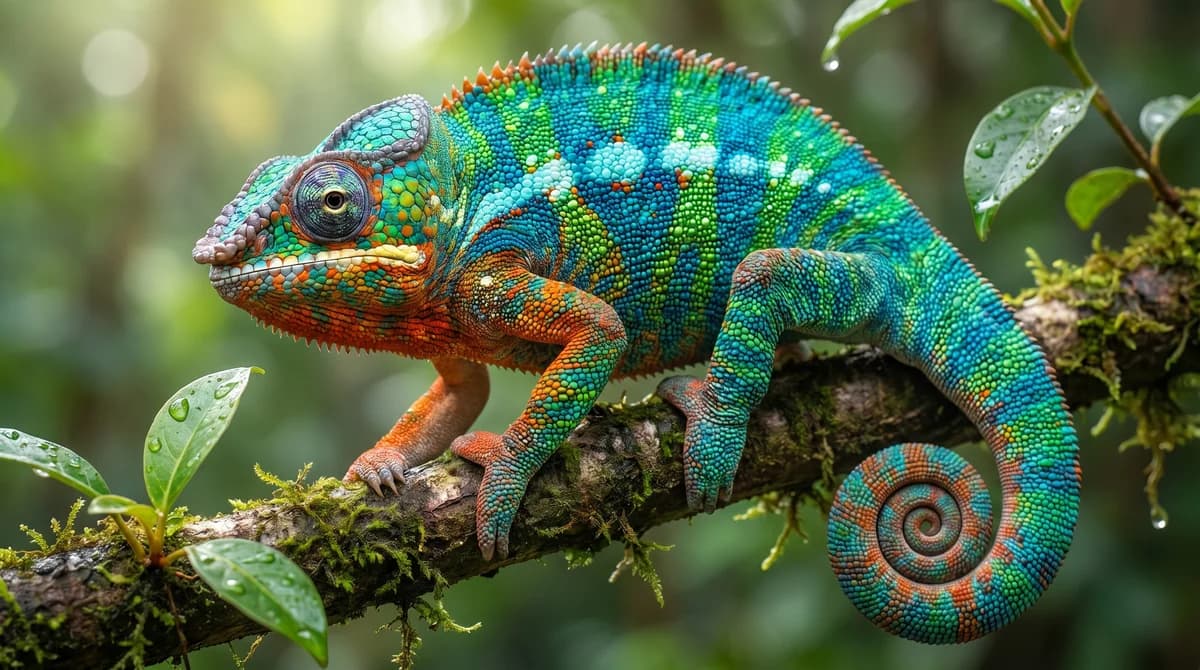
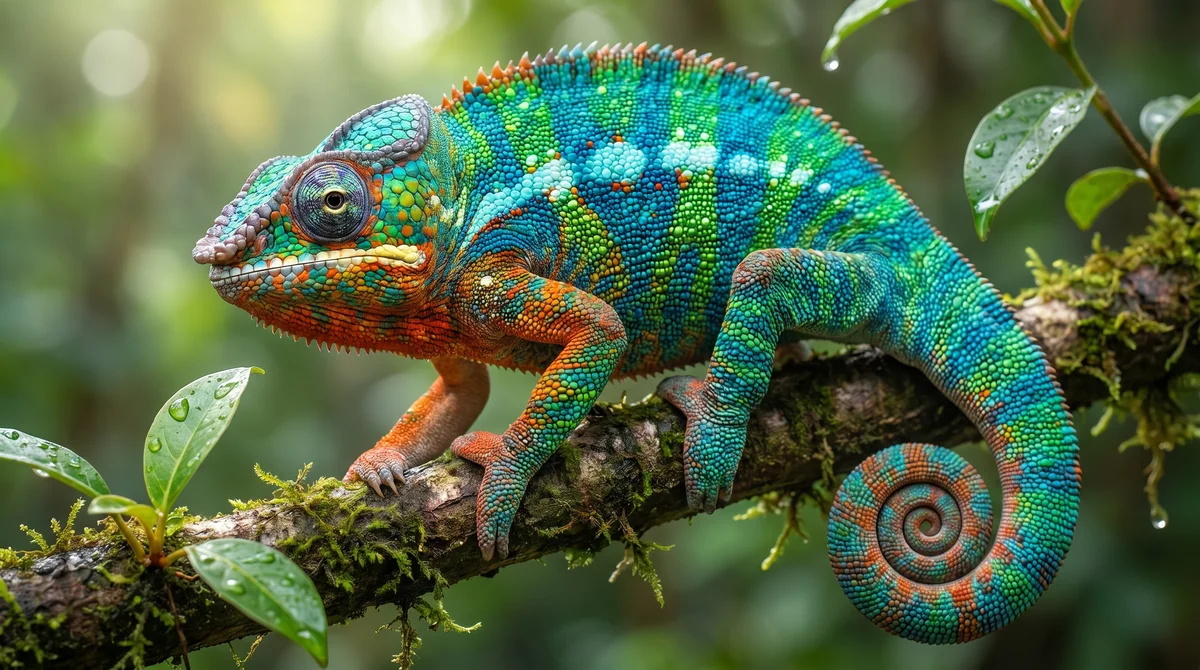
Make a quick card game. On one set of cards write animals (axolotl, tardigrade, platypus, chameleon), and on another their superpowers (regrows limbs, survives space, senses electricity, changes colour). Have kids match each animal to its power, then talk about how that power helps it live. It is fast, fun, and sneaks in a lot of learning about adaptation and how varied life can be.
Step 4: Activities by age
Ages 4-7: Match animals to their superpowers, act out a chameleon's swivelling eyes, and sort animals into 'normal' and 'weird.'
Ages 8-11: Do the 'design a weird animal' challenge, and make a fact file explaining what each odd feature is for.
Ages 12-14: Act out the platypus hoax investigation as a debate, or research how scientists use a weird animal (like the axolotl) to help people.
Step 5: Re-run the platypus investigation
Turn the platypus hoax into a courtroom drama. Present the 'mystery specimen' (a picture) and split kids into believers and doubters. Each side must argue from evidence: Could it be stitched together? How would we check? What would prove it real? Then reveal the true story. It is a thrilling, memorable way to teach that extraordinary claims need strong evidence — and that changing your mind with the facts is a good thing.
Step 6: Make it stick
Finish with a project: a 'weird animal hall of fame' poster, an invented creature with labelled adaptations, or a fact file the child presents to you. Building and explaining beats memorising every time. Reputable sites like the Natural History Museum have great free pages to extend the learning.
Ten quick weird-animal activities
Pick and mix — most take 10-20 minutes:
- Design a creature — invent an animal for a tricky habitat.
- Superpower match — pair animals with their special abilities.
- Hoax court — re-run the platypus investigation as a debate.
- Adaptation hunt — for each weird feature, name the problem it solves.
- Regrow it — model an axolotl growing back a limb with clay.
- Tardigrade tuck — curl up small like a water bear shutting down.
- Where do they fit? — try sorting a platypus into an animal group.
- Camouflage art — design a leafy seadragon that hides perfectly.
- Weird or not? — vote on which animal is strangest and why.
- Fact file — research one weird animal and make a poster.
Cross-curricular links
One weird-animal topic stretches across the timetable. Maths: compare extreme numbers, like how long a tardigrade can survive frozen. Art: design a creature or draw a chameleon mid-colour-change. Writing: write a newspaper report on the platypus 'hoax.' Science: explore adaptation and how scientists test claims. One strange theme can carry a whole week of learning.
Misconceptions to clear up
A few gentle corrections go a long way. 'Weird' does not mean badly made — it usually means brilliantly adapted; the platypus is not a fake or a bird; chameleons change colour mainly for mood and temperature, not just hiding; and a tardigrade is an animal, not a germ. Each fix models the key move: replace 'everyone says' with 'let's check the evidence.'
Weird animal conversation starters
Spark thinking with questions like these:
- If you could have any animal superpower, would you pick healing, surviving space, or changing colour?
- Why do you think scientists doubted the platypus at first?
- What problem might an animal's weirdest feature be solving?
- How can we decide whether a surprising animal claim is true?
Finish with a teach-back
The fastest way to lock in learning is to have the child teach it back to you. Ask them to explain one weird animal's superpower and why scientists doubted the platypus, as if you knew nothing about it. Teaching forces them to organise their thoughts, spot any gaps, and put the science into their own words — and it makes a calm, confident finish to the whole topic.
Play an 'adapt or survive' round game
Turn evolution into a game. Start kids with a plain imaginary animal, then call out a new challenge each round — 'it gets very cold,' 'food is now underground,' 'a new predator hunts by sight.' For every challenge, kids add or change one feature to help their animal cope, redrawing as they go. By the end they have built a gloriously weird creature, and they have felt how strange features pile up as answers to real problems.
Observe everyday weirdness
Bring the lesson home with a real, living oddity. Find a snail, woodlouse or earthworm in the garden and watch it closely for a few minutes (then return it). How does it move? What is strange about its body? Explain a surprising fact — a snail's rasping tongue, a woodlouse being a crab relative — and suddenly a common creature becomes a marvel. Wonder is not only in faraway places; it is under the nearest stone.
Hold a weird-animal showcase
For a bigger project, let each child become the world expert on one strange animal. They research three facts, explain what its weirdest feature is for, and present it to the family or class in a couple of minutes — bonus points for a drawing or model. Researching, explaining and presenting cement the learning far better than a worksheet, and a showcase of everyone's oddballs makes a brilliant, memorable finish.
Why weird animals are a great science topic
Strange animals are the perfect teaching tool because they make the biggest ideas feel exciting. Every odd feature is a lesson in adaptation; sorting an animal like the platypus is a lesson in classifying; and the hoax story is a lesson in critical thinking. Kids who learn to ask 'what is that weird thing for?' and 'how do we know this is real?' have picked up two questions that power a lifetime of science.
A done-for-you weird animals lesson: Wild World: Weird and Wonderful
15 pages of facts, a Myth-Busters spread, a draw-along and a quiz — built for ages 8-14. Read a free sample before you buy.
Start with the facts: 24 weird animal facts for kids.
Sources and further reading
Facts in this article were checked against the public, expert sources above. Spotted something out of date? Tell us and we will fix it.
Frequently Asked Questions
What age can kids learn about weird animals?
Any age — match the depth. Young children love the strange looks and superpowers; kids 8-14 enjoy adaptation, how scientists study odd animals, and critical thinking like the platypus hoax story.
What is the 'design a weird animal' activity?
Give kids a challenge (survive the deep sea, or a frozen world) and have them invent an animal with features to match. It teaches adaptation by making them connect each weird feature to a real problem it solves.
What are good weird-animal activities at home?
Play a 'match the superpower to the animal' game, design a weird animal for a tricky habitat, act out the platypus hoax investigation, or research one strange animal and make a fact file.
How do weird animals teach science skills?
They are perfect for adaptation (every weird feature solves a problem), for classifying (where does a platypus fit?), and for critical thinking, like weighing the extraordinary claim that a mammal could lay eggs.
Where can kids learn more about weird animals?
Reputable sources like the Natural History Museum, the Australian Museum and National Geographic Kids have excellent pages, and you can read a free sample of our Wild World: Weird and Wonderful magazine online.
Try our free critical thinking games!
Fun, colorful brain-building games for kids ages 6-14. No signup required.
Play Now