Rainforest Animal Facts for Kids: 25 Amazing Things About Jungle Wildlife
Key Takeaways
- ✓Rainforests cover only about 6% of Earth's land but are home to more than half of all land animal and plant species.
- ✓A rainforest has four layers — emergent, canopy, understory and forest floor — each with its own animals.
- ✓Bright colours on a rainforest animal often mean 'danger' — a warning that it is poisonous or tastes bad.
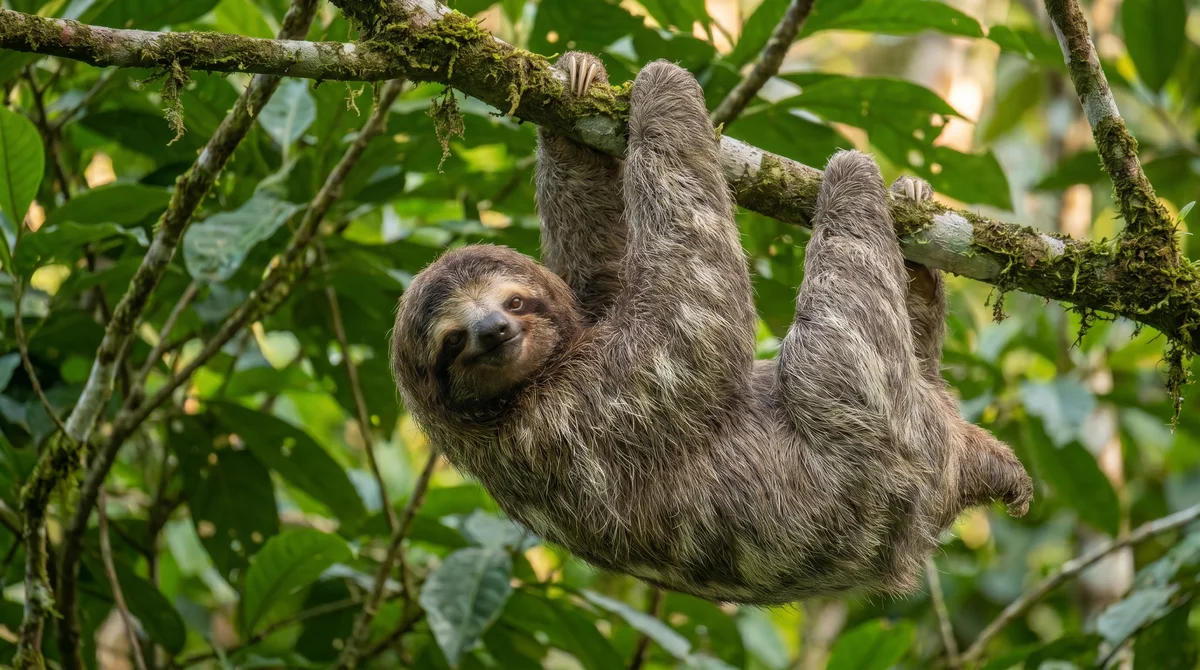
- ✓The sloth is so slow that green algae grows in its fur, which helps it hide.
- ✓Rainforests are disappearing fast, mostly because forests are cleared for farming and timber.
Fact-checked rainforest animal facts for curious kids: the four forest layers, why rainforests hold half the world's species, and amazing animals from jaguars and sloths to poison dart frogs — grouped so you can find your favourites fast.
Rainforests are the most crowded, colourful places on Earth — warm, dripping-wet forests bursting with more kinds of animal than anywhere else on the planet. From prowling jaguars to upside-down sloths and frogs that glow like jewels, they are full of surprises. Here are 25 fact-checked rainforest animal facts for curious kids, grouped so you can find your favourites fast.
Last updated 7 June 2026
What is a rainforest?
A rainforest is exactly what it sounds like: a forest that gets a huge amount of rain — often more than 2 metres a year — and stays warm and humid almost all the time. Tropical rainforests grow near the Equator, where it is hot and wet year-round. All that warmth and water lets plants grow thick and tall, which gives animals endless food and places to live. The result is the richest habitat on Earth (WWF — Forest Habitat).
The four layers of the rainforest
A rainforest is like a busy block of flats with four floors. At the top, a few giant trees poke out into the sunshine — the emergent layer. Below that is the canopy, a thick green roof where most rainforest animals live. Under the canopy is the shady understory of smaller trees, and at the bottom is the dark, damp forest floor, where only about 2% of the sunlight reaches. Each floor has its own residents.
Meet the rainforest animals
- Jaguar — the top hunter of the South American rainforest, and a strong swimmer.
- Sloth — the slowest mammal, hanging quietly in the canopy.
- Toucan — a fruit-eater with a huge, lightweight, colourful beak.
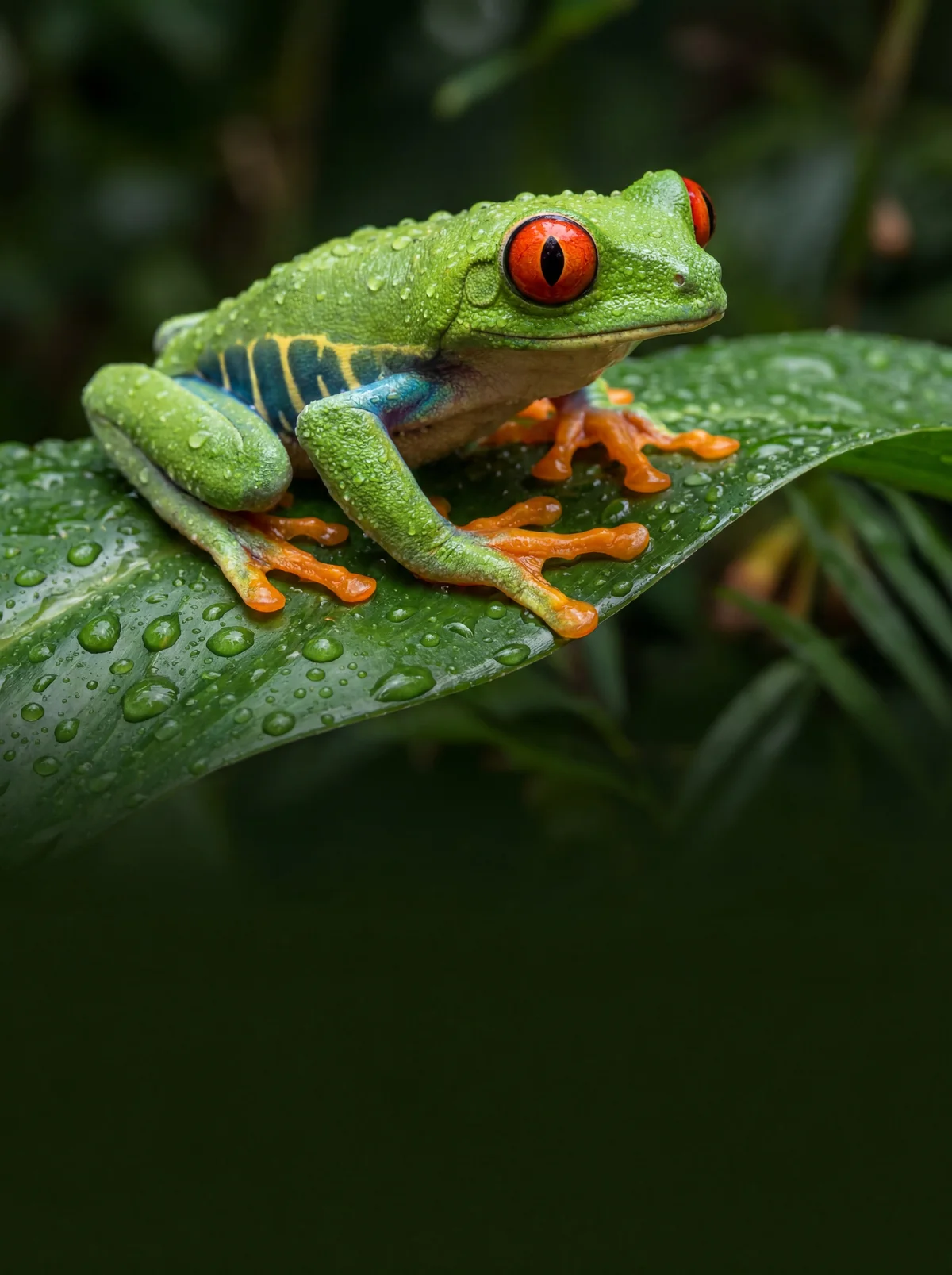
- Poison dart frog — tiny, dazzling and seriously toxic.
- Howler monkey — one of the loudest land animals on Earth.
- Leafcutter ants — farmers that grow their own fungus to eat.
The most life anywhere on Earth
Here is the headline fact: rainforests cover only about 6% of the Earth's land, yet they are home to more than half of all the world's land animals and plants. A single rainforest tree can hold more kinds of ant than the whole of the United Kingdom. Scientists are still finding new rainforest species every year — which means there are creatures out there that no human has ever seen or named (Smithsonian Tropical Research Institute).
Rainforests by the numbers
- Share of land: About 6%
- Share of species: More than 50%
- Rain per year: Often over 2 metres
- Biggest rainforest: The Amazon, South America
- Light on the floor: Only about 2%
- Loudest resident: Howler monkey (heard ~5 km)
Life in the layers
Where an animal lives in the rainforest shapes everything about it. In the sunny canopy, monkeys swing, sloths hang and bright birds feast on fruit. In the shady understory, frogs and insects cling to leaves. On the dark forest floor, big mammals like tapirs roam and armies of ants and beetles break down fallen leaves. The same forest offers dozens of completely different homes, stacked one above another.
The jaguar: king of the rainforest floor
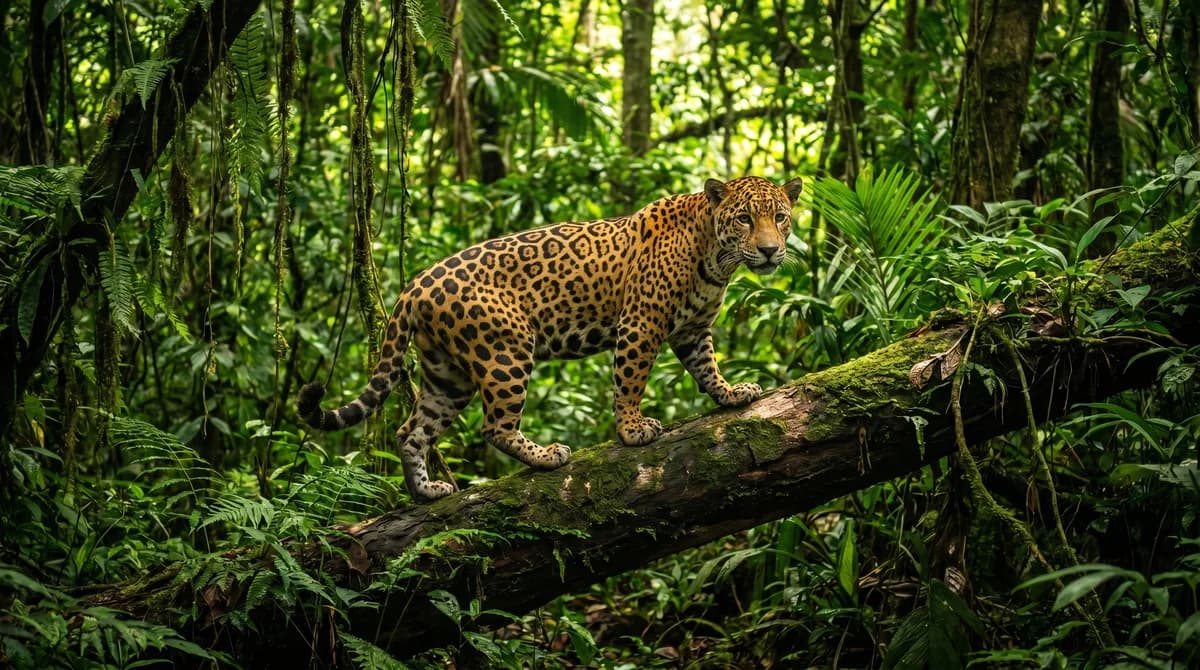
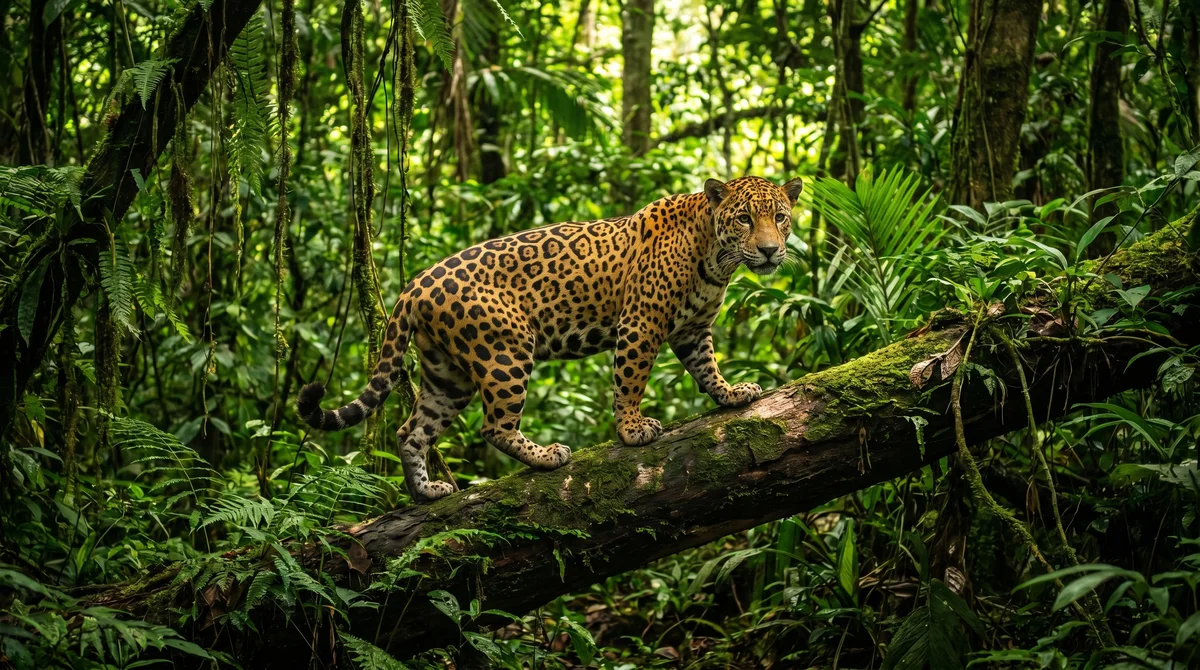
The jaguar is the largest cat in the Americas and the top hunter of the rainforest. It has the strongest bite of any big cat for its size — powerful enough to crack a turtle's shell or pierce tough hide. Unlike most cats, jaguars love water and often swim across rivers or hunt fish and caimans. Their rosette-covered coats melt into the dappled light of the forest, letting them creep close before they pounce.
Masters of disguise and warning colours
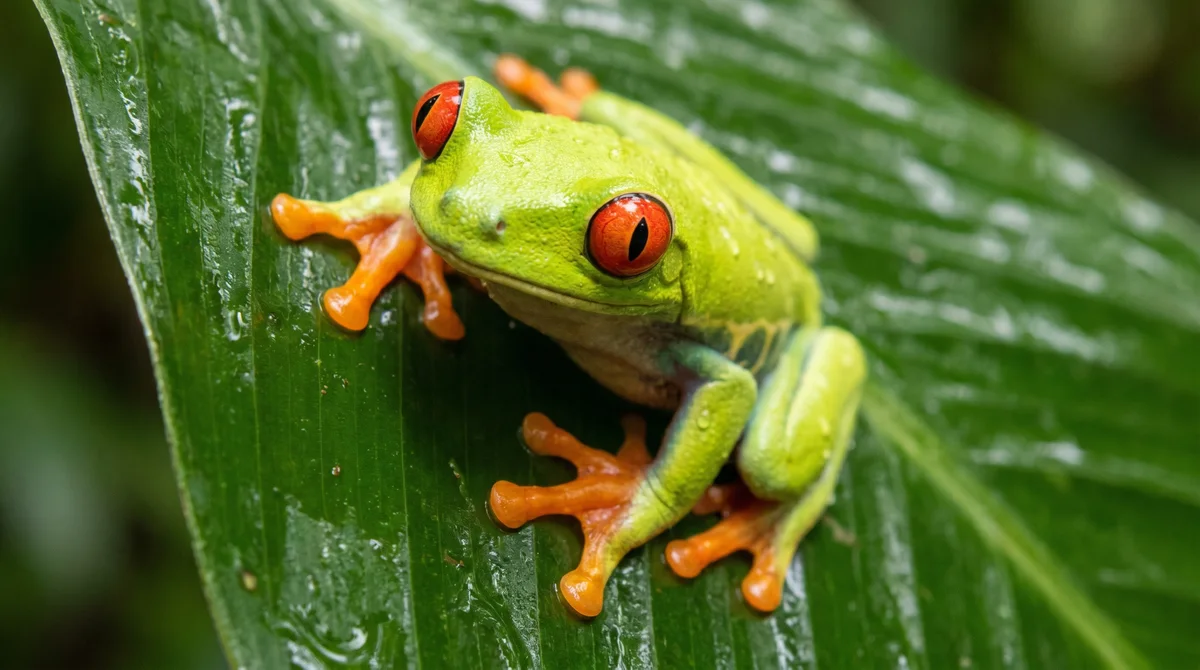
Rainforest animals play two opposite games with colour. Many hide — stick insects look like twigs, and some frogs match the leaves perfectly. Others do the opposite and shout: a poison dart frog's brilliant blue, yellow or red is a warning sign that says 'I am poisonous, leave me alone.' Scientists call this aposematism. Cleverly, a few harmless animals copy the warning colours of toxic ones to scare predators away too.
The slowest mammal: the sloth
The sloth has turned being lazy into a survival superpower. Because it eats nothing but leaves — which give very little energy — it moves in slow motion and can sleep for most of the day. It is so still that green algae grows in its fur, giving it a mossy coat that helps it vanish among the leaves. A sloth only climbs down from its tree about once a week, and it is a surprisingly strong swimmer when it needs to be.
The noisiest neighbours
A rainforest is anything but quiet. Howler monkeys have a special throat bone that lets their calls boom through the trees and be heard up to 5 km away — among the loudest sounds any land animal makes. Add screeching macaws, croaking frogs and the constant buzz of millions of insects, and the rainforest becomes a wall of sound. All that noise is animals talking: warning rivals, attracting mates and keeping family groups together.
Record-breaking rainforest animals
The rainforest is full of champions. The green anaconda is the heaviest snake on Earth. The goliath birdeater, a rainforest tarantula, is the biggest spider, as wide as a dinner plate. The tiny bee hummingbird and jewel-like poison frogs are among the smallest of their kinds. And leafcutter ants can carry many times their own body weight — pound for pound, some of the strongest animals alive (National Geographic Kids — Animals).
Rainforests and us
Rainforests give us far more than we realise. Chocolate, coffee, bananas, vanilla and many spices all came originally from rainforest plants, and around a quarter of modern medicines are based on rainforest species. Rainforests also help make rain and store enormous amounts of carbon, which helps steady the world's climate. In other words, a forest on the other side of the planet quietly affects your everyday life.
Rainforests in trouble
Sadly, rainforests are being cut down fast, mostly to clear land for farming, cattle and timber. When a rainforest is lost, the countless species that live nowhere else can vanish with it, and the stored carbon escapes into the air. The hopeful news is that protected reserves, replanting and careful, sustainable farming are helping — and learning about rainforests is the first step to wanting to protect them (Rainforest Alliance).
Are rainforests really the 'lungs of the Earth'?
You have probably heard rainforests called the 'lungs of the planet' that make the oxygen we breathe. It is a famous claim — and it is more complicated than it sounds. We weigh up the evidence in are rainforests really the lungs of the Earth?
Rainforests around the world
Rainforests are not all in one place. The largest by far is the Amazon in South America, home to the jaguar and the anaconda. Africa has the mighty Congo rainforest, where gorillas and forest elephants live, and Southeast Asia has steamy forests that shelter orangutans and tigers. There are even cool temperate rainforests in places like Canada and New Zealand — proof that 'rainforest' does not always mean 'hot' (WWF — Forest Habitat).
Animals that spend their whole lives in the trees
For many rainforest animals, the ground is a foreign country. Sloths, many monkeys, tree frogs and countless insects are born, feed, sleep and even give birth high in the canopy, rarely or never touching the forest floor. Some tree frogs lay their eggs in little pools of water trapped inside plants, so a tadpole can grow up without ever leaving the treetops. Living a whole life among the branches is one of the rainforest's most remarkable tricks.
Swing into the jungle with Wild World: Rainforest
Our 15-page science magazine for ages 8-14 explores the rainforest layers, jaguars, sloths and poison frogs — plus a Myth-Busters spread, puzzles and a draw-along.
Ready to teach it? See how to teach kids about the rainforest.
Sources and further reading
Facts in this article were checked against the public, expert sources above. Spotted something out of date? Tell us and we will fix it.
Frequently Asked Questions
What animals live in the rainforest?
Rainforests are packed with life: jaguars, sloths, monkeys, toucans, macaws, poison dart frogs, snakes, tree frogs, leafcutter ants and millions of insects. Different animals live at different heights, from the dark floor to the sunny treetops.
What are the four layers of the rainforest?
From top to bottom: the emergent layer (a few giant trees poking out), the canopy (a thick green roof where most animals live), the understory (shady smaller trees), and the forest floor (dark and damp, where decomposers work).
Why are poison dart frogs so brightly coloured?
Their bright colours are a warning. It is called aposematism: the colours tell predators 'I am poisonous, do not eat me.' Many of the most colourful frogs are the most toxic, so the warning is honest.
Why are sloths so slow?
Sloths eat leaves, which give very little energy, so they save energy by moving slowly and sleeping a lot. Being slow also helps them hide — they move so little that green algae grows in their fur as camouflage.
Why are rainforests important?
Rainforests store huge amounts of carbon, help create rain, and shelter more than half of all land species. Many foods and medicines come from rainforest plants too. Protecting them helps wildlife, people and the climate.
Where are the world's rainforests?
The biggest tropical rainforest is the Amazon in South America. There are also great rainforests in the Congo in Africa and across Southeast Asia. Cooler 'temperate' rainforests grow in places like the Pacific Northwest of North America.
Try our free critical thinking games!
Fun, colorful brain-building games for kids ages 6-14. No signup required.
Play Now