How to Teach Kids About the Rainforest: Activities and a Free Lesson
Key Takeaways
- ✓Start with wonder — half of all land species living in one habitat instantly hooks kids.
- ✓Build the four rainforest layers as a craft to make the structure stick.
- ✓A 'rainforest in a bag' shows how forests recycle water, in real time.
- ✓Use the rainforest to teach biodiversity, adaptation and how to check a viral 'fact'.
- ✓Match activities to age: layer crafts for young kids; food webs and conservation for older ones.
A simple, mostly screen-free way to teach kids about the rainforest — a 15-minute lesson, hands-on activities by age, a 'rainforest in a bag' experiment, conversation starters and a magazine that builds real science skills.
Rainforests are pure wonder for kids — steamy, green worlds stacked with more animals than anywhere else on Earth. Best of all, the rainforest is a perfect way to teach 'biodiversity' and 'adaptation': why so many species can share one place, and how each one fits its exact home. Here is a simple, mostly screen-free way to teach kids about the rainforest, with a quick lesson and age-by-age activities.
Last updated 7 June 2026
Step 1: Start with wonder
Open with something astonishing: more than half of all the animals and plants on land live in rainforests, even though rainforests cover only a tiny slice of the planet, and a single tree can hold more kinds of ant than a whole country. Wonder pulls kids in — and it leads straight to the big question: how can so much life fit in one forest?
A free 15-minute rainforest lesson
Works at the table or in class:
- Wonder (3 min): Share two amazing facts and ask, "Why do you think so many animals live in rainforests?"
- Layers (5 min): Learn the four layers and read about one animal (try our rainforest animal facts for kids).
- Think (4 min): Ask, "Are rainforests really the lungs of the Earth?" and weigh the evidence (see this post).
- Create (3 min): Draw the four layers and put one animal on each.
Step 2: Build the four layers
The fastest way to make the rainforest stick is to build it. On a tall sheet of paper or a wall, mark the four layers from top to bottom: emergent, canopy, understory, forest floor. Then have kids draw or stick each animal where it belongs — toucans and monkeys high up, frogs and insects in the middle, tapirs and ants on the floor. Seeing the forest as a stack of homes turns an abstract idea into a picture they will remember.
Step 3: The 'rainforest in a bag' experiment
This little experiment reveals how a rainforest makes its own rain. Pop a damp leafy cutting (or a wet paper towel) into a clear sealable bag, blow it up a little, seal it, and tape it to a sunny window. Within a few hours, droplets of water appear on the inside. Explain that real rainforest trees release water vapour the same way — so much that it forms clouds and falls as rain. The forest, in effect, waters itself.
Step 4: Activities by age
Ages 4-7: Build the layers, make animal noises for each level, and sort rainforest animals from non-rainforest ones.
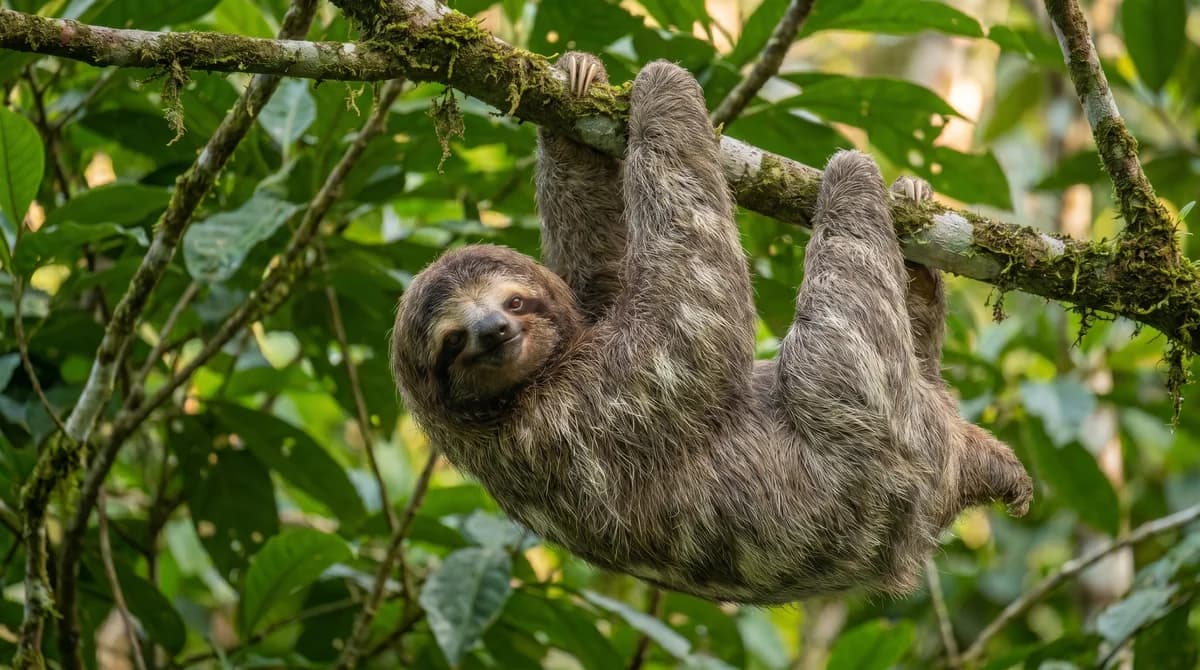
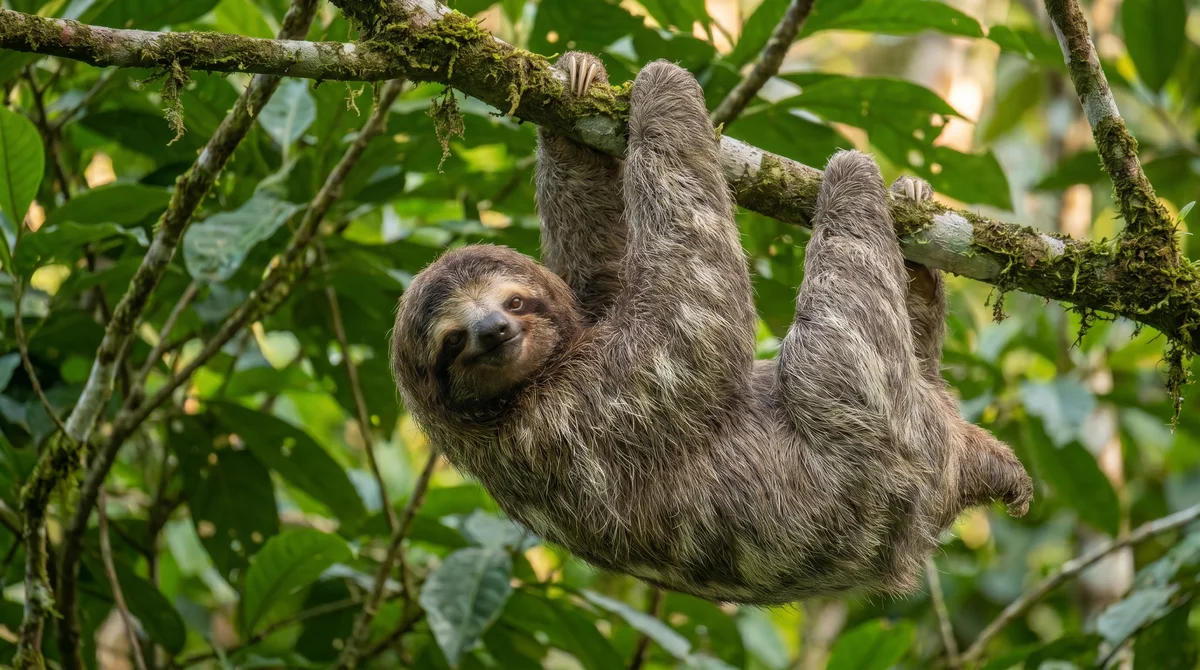
Ages 8-11: Do the rainforest-in-a-bag experiment, draw a rainforest food web, and make a fact file on a favourite animal like the jaguar or sloth.
Ages 12-14: Investigate why rainforests are being cut down and design a way to help, or fact-check the 'lungs of the Earth' claim and present what they find.
Step 5: Update the myths with evidence
Rainforests come wrapped in myths. Show that they are not really our main source of oxygen, that it does not rain non-stop, and that the forest floor is dark, not crowded with plants. Each time, ask "how do we know?" and check a trusted source (WWF — Forest Habitat). Swapping a slogan for the real story is the heart of the lesson.
Step 6: Make it stick
Finish with a project: a layered wall display, a shoebox rainforest, or a fact file the child presents to you. Building and explaining beats memorising every time. Reputable groups like the Rainforest Alliance have great free pages to extend the learning.
Ten quick rainforest activities
Pick and mix — most take 10-20 minutes:
- Layer wall — build the four layers and place animals on each.
- Rainforest in a bag — watch a plant make its own rain.
- Food web — link plants, insects, frogs, monkeys and jaguars with string.
- Camouflage hunt — hide paper animals and see how colour helps them disappear.
- Warning colours — design a bright, 'don't eat me' frog.
- Map it — find the Amazon, Congo and Southeast Asian rainforests on a map.
- Sloth speed — time how slowly you can cross a room like a sloth.
- Sound jungle — make a layered rainforest soundscape together.
- Myth busters — test a grown-up on the 'lungs of the Earth' claim.
- Fact file — research one rainforest animal and make a poster.
Cross-curricular links
One rainforest topic stretches across the timetable. Maths: graph rainfall or count species in a sample square. Art: paint a layered canopy or design a poison frog. Writing: write a rainforest explorer's diary. Geography: locate the world's rainforests and trace where chocolate and bananas come from. One green theme can carry a whole week of learning.
Misconceptions to clear up
A few gentle corrections go a long way. Rainforests are not mainly responsible for our oxygen; 'jungle' and 'rainforest' are not exact synonyms; rainforests are not all hot (temperate ones exist); and the forest floor is not packed with plants. Each fix models the key move: replace 'everyone says' with 'let's check the evidence.'
Rainforest conversation starters
Spark thinking with questions like these:
- Why might so many different animals be able to live in one rainforest?
- Why would a frog want to be brightly coloured instead of camouflaged?
- People call rainforests our 'lungs' — how could we check if that is really true?
- If a rainforest makes its own rain, what might happen if too many trees are cut down?
Finish with a teach-back
The fastest way to lock in learning is to have the child teach it back to you. Ask them to explain the four rainforest layers and to bust one rainforest myth, as if you knew nothing about it. Teaching forces them to organise their thoughts, spot any gaps, and put the science into their own words — and it makes a calm, confident finish to the whole topic.
Play a biodiversity counting game
This game makes 'biodiversity' real in five minutes. Lay a hoop or a square of string on a patch of garden or park and have kids count how many different living things they can find inside it — plants, bugs, birds overhead. Then imagine doing the same in a rainforest, where one small square might hold hundreds of species. Comparing their tally with the rainforest's drives home why scientists call it the most crowded habitat on Earth.
Make a layered rainforest soundscape
A rainforest is a wall of sound, so build one together. Split into groups and assign each a layer: dripping water and insects on the forest floor, croaking frogs in the understory, screeching birds and howler monkeys in the canopy. Bring them in one layer at a time until the whole 'forest' is alive with noise. It is great fun, and it sneakily teaches the four layers and the idea that animals use sound to communicate.
Bring in chocolate (yes, really)
For an unforgettable hook, trace a everyday treat back to the rainforest. Chocolate comes from cacao, a small tree that grows in the shade of tropical rainforests; coffee, vanilla and bananas have rainforest roots too. Let kids taste a piece of chocolate and follow its journey from a rainforest pod to their hand. Connecting a beloved snack to a faraway forest makes conservation feel personal — and delicious.
Why the rainforest is a great critical-thinking topic
The rainforest is perfect for practising clear thinking because it is wrapped in famous half-truths — none better than the 'lungs of the Earth' line. Walking kids through why a catchy claim can be misleading, yet the rainforest still matters enormously, teaches them to hold a careful, evidence-based view instead of a slogan. That habit — loving something and getting the facts right — is the real prize hiding in all that green.
A done-for-you rainforest lesson: Wild World: Rainforest
15 pages of facts, a Myth-Busters spread, a draw-along and a quiz — built for ages 8-14. Read a free sample before you buy.
Start with the facts: 25 rainforest animal facts for kids.
Sources and further reading
Facts in this article were checked against the public, expert sources above. Spotted something out of date? Tell us and we will fix it.
Frequently Asked Questions
What age can kids learn about the rainforest?
Any age — match the depth. Young children love building the layers and naming animals; kids 8-14 enjoy biodiversity, adaptation, food webs, conservation, and checking claims like the 'lungs of the Earth' idea.
What is the 'rainforest in a bag' experiment?
Seal a damp plant cutting or some leaves in a clear bag and tape it to a sunny window. Water droplets soon appear inside as the plant releases moisture — a simple way to show how rainforests recycle water into rain.
What are good rainforest activities at home?
Build the four layers as a wall display, make a shoebox rainforest, sort animals by which layer they live in, do the rainforest-in-a-bag water experiment, or research one animal and make a fact file.
How does the rainforest teach science skills?
It is perfect for biodiversity (so many species in one place), adaptation (how animals suit each layer), and critical thinking (testing famous claims). All build the habit of explaining the world with evidence.
Where can kids learn more about the rainforest?
Reputable sources like WWF, the Rainforest Alliance and National Geographic Kids have excellent rainforest pages, and you can read a free sample of our Wild World: Rainforest magazine online.
Try our free critical thinking games!
Fun, colorful brain-building games for kids ages 6-14. No signup required.
Play Now