Are Rainforests Really the 'Lungs of the Earth'? The Honest Answer
Key Takeaways
- ✓The popular claim that rainforests make '20% of our oxygen' is misleading — the real figure is much smaller.
- ✓Rainforests make a lot of oxygen, but the forest uses up almost as much as it makes, so the net amount added is small.
- ✓About half of the world's oxygen is made by tiny ocean plants called phytoplankton, not by forests.
- ✓Rainforests are still vital — for storing carbon, making rain, and sheltering half of all land species.
- ✓A catchy 'fact' can still be wrong, which is why it pays to check surprising statistics.
Do rainforests make 20% of our oxygen? A fact-checked, kid-friendly look at the famous 'lungs of the Earth' claim: where it comes from, why it is misleading, where our oxygen really comes from, and why rainforests still matter enormously.
Short answer: not really — and the truth is even more interesting. You have probably heard that rainforests are 'the lungs of the Earth' and make around a fifth of our oxygen. Rainforests are genuinely precious, but that particular claim is misleading. Untangling it is a brilliant way to practise checking a 'fact' that almost everyone repeats.
Last updated 7 June 2026
The claim you've heard
The idea goes like this: rainforests, especially the Amazon, are covered in green plants, and green plants make oxygen — so rainforests must produce a huge share of the air we breathe, often said to be '20%.' It sounds completely reasonable, which is exactly why it has been repeated in news stories, posters and school books for years. But a claim being popular and sounding sensible is not the same as it being true.

How plants make oxygen
To check the claim, we need one key idea: photosynthesis. During the day, plants use sunlight to turn water and carbon dioxide into food, and they give off oxygen as a by-product. A rainforest is wall-to-wall plants, so it does this on a massive scale, pumping out enormous amounts of oxygen. So far, the claim looks good — this is the part the slogan gets right.
The part the slogan leaves out
Here is the twist. Plants do not only make oxygen — they also use oxygen to stay alive, day and night, just as we do. On top of that, when leaves and animals die, the tiny creatures and fungi that rot them down use up oxygen too. Add it all up and a mature rainforest uses almost as much oxygen as it makes. The net amount it adds to the air is actually quite small — close to balanced (Smithsonian Tropical Research Institute).
So where does our oxygen really come from?
Two surprising answers. First, about half of all the oxygen made each year comes not from forests but from phytoplankton — microscopic plant-like life drifting in the oceans. Second, and most importantly, Earth already has a gigantic store of oxygen built up in the air over millions of years. We are in no danger of running out, even though that does not make a dramatic headline (NASA Earth Observatory).
Why rainforests matter — the real reasons
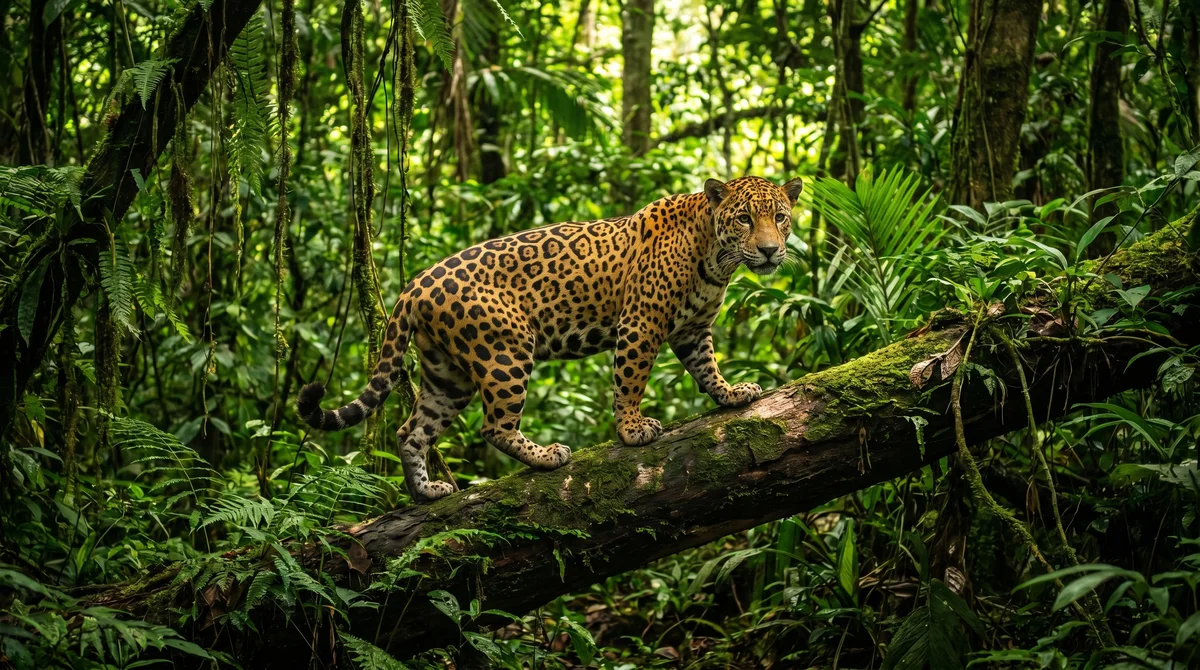
None of this means rainforests are unimportant — quite the opposite. They are vital, just for different reasons than the slogan says. Rainforests store huge amounts of carbon, which helps steady the climate; they create rainfall that waters farms and cities far away; and they shelter more than half of all land species, plus countless medicines. Losing them would be a disaster — so the case for protecting them is rock solid (WWF — Forest Habitat).
Why a catchy 'fact' can still be wrong
So why did the 'lungs of the Earth' idea spread so far? Because it is memorable, emotional and easy to picture. A simple, dramatic line travels much faster than a careful, nuanced explanation. This happens with lots of science claims: the version that is easiest to share wins, even when it is not quite right. Knowing that the catchiest version is not always the truest is a genuine superpower.
How to check a viral statistic
You can test a surprising number like a real scientist. Trace it: where did the figure come from — a study, or just everyone repeating it? Ask 'compared to what?': is anyone counting the oxygen the forest uses up, not just what it makes? Check the experts: do trusted science sources agree? When a claim is everywhere but no one can point to solid evidence, that is your signal to dig deeper.
Other rainforest myths, busted
- 'It rains all day, every day.' It rains a lot, but there are plenty of sunny spells too.
- 'Jungle and rainforest mean the same thing.' A 'jungle' is really the dense, tangled growth where light reaches the ground — most rainforest under the canopy is more open.
- 'All rainforests are hot.' Cool 'temperate' rainforests grow in places like Canada and New Zealand.
- 'The forest floor is bursting with plants.' It is too dark — only about 2% of light gets down there.
Think like a scientist
This question is a perfect thinking workout because the honest answer is not a simple 'yes' or 'no.' Rainforests are not really our 'lungs,' and they are still one of the most important habitats on Earth — both things are true at once. Holding a more accurate, more detailed picture in your head, instead of a snappy slogan, is exactly what good scientists do. The real story is almost always richer than the catchphrase.
What 'net' means — a pocket-money example
The trick to this whole puzzle is one word: net. Imagine you earn £10 of pocket money but spend £9 on sweets — your net saving is just £1, even though £10 came in. A rainforest is the same with oxygen: it 'earns' a huge amount by day, but 'spends' almost as much keeping itself alive and rotting down old leaves. So the oxygen it actually banks for the rest of us is small. Looking at what is left over, not just what is made, is the key to the right answer.
The ocean's invisible forests
If forests are not our main oxygen factory, what is? The answer is hiding in the sea. Drifting in the sunlit surface of the oceans are countless phytoplankton — microscopic, plant-like living things far too small to see. Together they carry out about half of all the photosynthesis on Earth, quietly making roughly half the oxygen in every breath you take. The planet's biggest 'forests' are actually invisible and underwater (NASA Earth Observatory).
Could we ever run out of oxygen?
Here is the reassuring part: no, not any time soon. Earth's air is about 21% oxygen, a gigantic supply that built up over millions and millions of years. Even if oxygen-making slowed down, that huge store would last for an unimaginably long time. So while the 'lungs' headline sounds scary — as if cutting trees might steal our air — the real reason to protect rainforests is different, and actually more important.
The claim that IS true: rainforests are carbon heroes
Swap 'oxygen' for carbon and the picture flips. Rainforest trees lock away vast amounts of carbon dioxide in their wood, leaves and soil — carbon that would otherwise warm the planet. When a rainforest is burned or cut, that carbon escapes back into the air. So the honest, evidence-backed reason to save rainforests is not 'they make our oxygen' but 'they store our carbon, make rain, and shelter half of life on land.' Those reasons are rock solid (Smithsonian Tropical Research Institute).
A better nickname than 'lungs'
Some scientists joke that the rainforest is less like the planet's lungs and more like its air conditioner — it cools the land, recycles water into rain, and keeps the climate comfortable. That picture is far closer to the truth. Noticing that a different metaphor fits the facts better is a neat thinking skill: the words we choose shape what we believe, so it pays to pick ones that match the real evidence.
Being right for the right reasons
Here is the most important takeaway. Defending rainforests with a wrong reason ('they make our oxygen') is risky — because if someone disproves it, people might wrongly decide rainforests do not matter. Defending them with the true reasons — carbon, rainfall, biodiversity, medicine — is far stronger, because the evidence backs it up. Caring about something is even more powerful when your facts are right.
Bust more jungle myths in Wild World: Rainforest
The issue's Myth-Busters spread weighs the famous rainforest claims against the evidence — with jaguars, sloths, frogs, puzzles and a quiz, for ages 8-14.
Want the fun facts too? Read 25 rainforest animal facts for kids.
Sources and further reading
Facts in this article were checked against the public, expert sources above. Spotted something out of date? Tell us and we will fix it.
Frequently Asked Questions
Do rainforests make 20% of the world's oxygen?
Not really. That figure is often repeated but misleading. Rainforests do make a lot of oxygen, but they also use up almost all of it themselves, so the amount they actually add to the air is small.
Where does most of our oxygen come from?
About half of the oxygen we breathe is made by tiny ocean plants called phytoplankton. The rest has built up in the atmosphere over millions of years, so we are not in danger of running out any time soon.
If they don't make our oxygen, why do rainforests matter?
Hugely — just for different reasons. Rainforests store enormous amounts of carbon, help create rainfall, keep the climate steady, and are home to more than half of all land species and many medicines.
Why do people call rainforests the 'lungs of the Earth'?
It is a memorable image, and rainforests are full of green plants that release oxygen. The phrase spread because it is catchy and easy to picture — but being catchy does not make it scientifically accurate.
Does this mean it is okay to cut down rainforests?
No. Even though rainforests are not our main oxygen source, cutting them down releases stored carbon, destroys habitats and wipes out species. Protecting rainforests is still extremely important for the planet.
How can I check a science 'fact' like this?
Ask where the number comes from, look for a trusted science source, and check whether experts agree. If a claim is everywhere but hard to trace to real evidence, that is a clue to dig a little deeper.
Try our free critical thinking games!
Fun, colorful brain-building games for kids ages 6-14. No signup required.
Play Now