Are Dinosaurs Really Extinct? What Birds Reveal
Key Takeaways
- ✓Most dinosaurs went extinct about 66 million years ago after a giant asteroid struck Earth.
- ✓One group survived: the ancestors of modern birds, which are themselves dinosaurs.
- ✓Scientists know birds are dinosaurs from shared features like hollow bones, wishbones and feathers.
- ✓So the honest answer is: most dinosaurs are extinct, but the dinosaur family never fully died out.
- ✓Questioning a simple 'fact' like 'dinosaurs are extinct' is a great critical-thinking workout.
Are dinosaurs really gone? A fact-checked, kid-friendly answer: what killed most dinosaurs 66 million years ago, the one group that survived, and how scientists know that birds are living dinosaurs.
Short answer: mostly — but not entirely. The giant dinosaurs you picture did die out about 66 million years ago. But one group survived and is all around us today. "Are dinosaurs extinct?" turns out to be a brilliant question for practising how scientists think.
Last updated 7 June 2026
The day the world changed
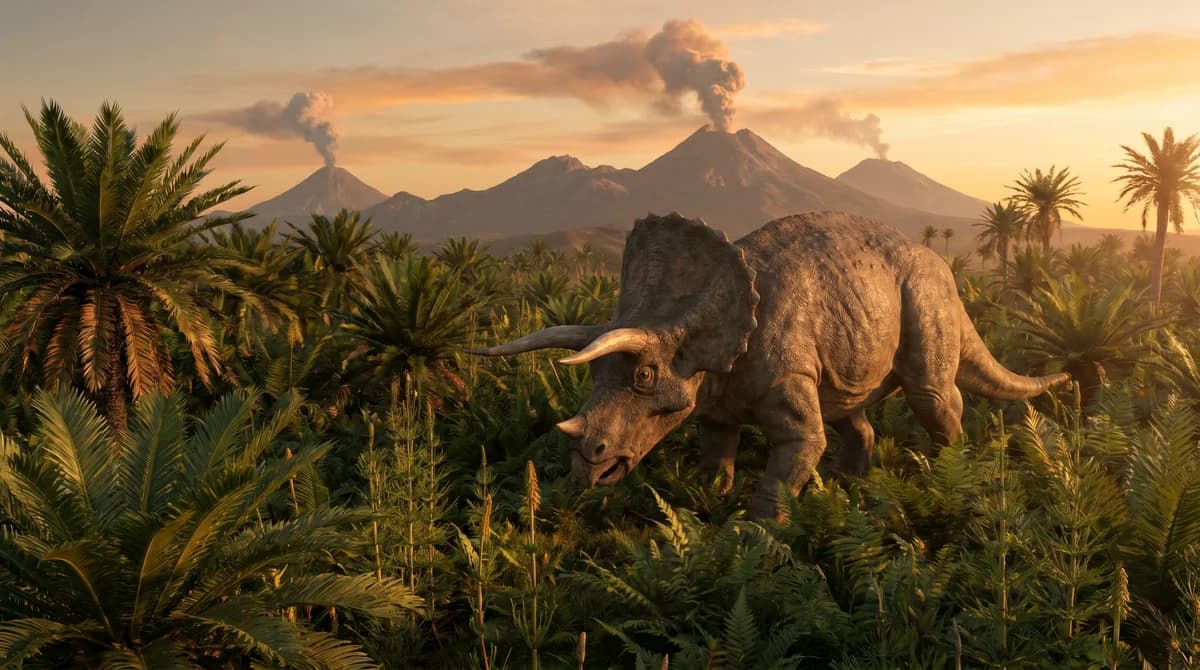
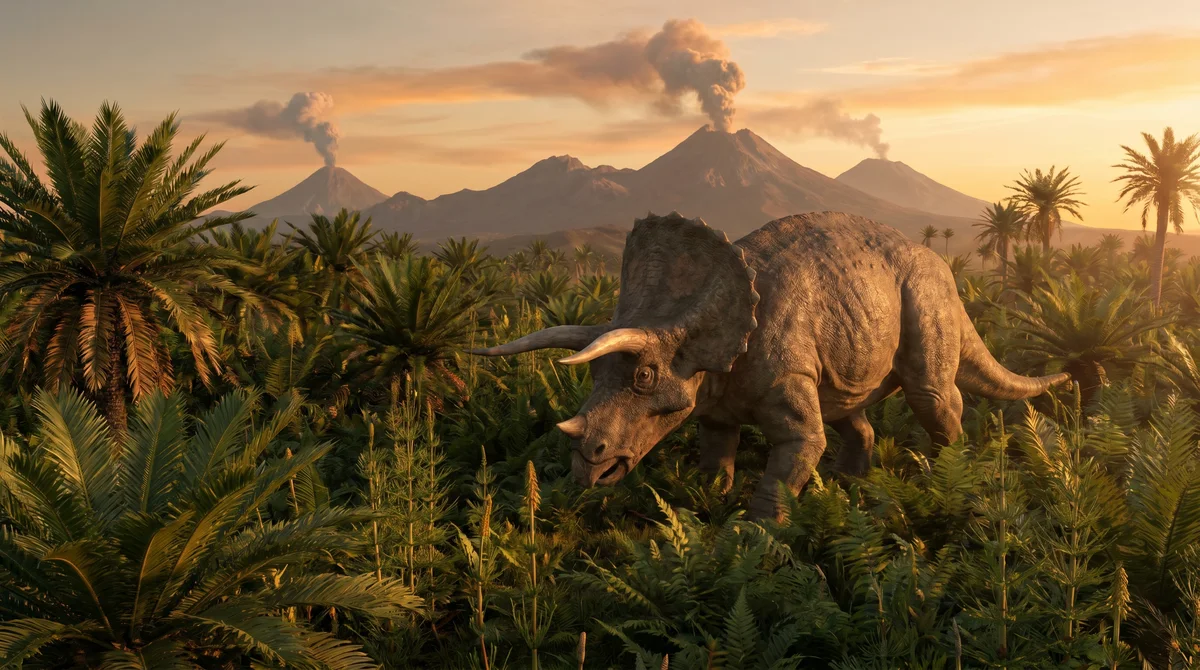
About 66 million years ago, a city-sized asteroid slammed into what is now Mexico. The impact threw enormous amounts of dust and rock into the sky, blocking sunlight and cooling the planet for years. Plants struggled, food chains collapsed, and — together with large volcanic eruptions happening at the same time — most dinosaurs could not survive (Natural History Museum, London).
Who actually survived?
Not everything died. Small animals that could shelter and eat many kinds of food did better — including small mammals, reptiles, and a group of small, feathered, meat-eating dinosaurs. Those feathered survivors are the ancestors of every bird alive today.
How we know birds are dinosaurs
This is not a trick of words — it is what the fossils show. Birds and small meat-eating dinosaurs share a remarkable list of features: feathers, hollow lightweight bones, three main toes, and a wishbone. So many features match that scientists classify birds as dinosaurs (specifically, avian dinosaurs). The next pigeon you see is a tiny, modern dinosaur (American Museum of Natural History).
The feathered-dinosaur clue
For a long time people pictured dinosaurs as scaly. Then palaeontologists found beautifully preserved fossils with clear feather impressions, especially in bird-like dinosaurs. Those feathers connect dinosaurs to birds — and they are a big reason scientists changed their minds. It is a perfect example of how new evidence updates old ideas.
Why we still say "dinosaurs are extinct"
If birds are dinosaurs, why does everyone say dinosaurs are extinct? Because in everyday speech, "dinosaur" usually means the big, ancient, non-bird kind — and those are gone. Scientists just use the word more precisely. Noticing that two people can both be "right" because they mean different things is a powerful thinking skill.
Think like a scientist
This topic is a great workout for young minds. When you hear a flat statement like "dinosaurs are extinct," you can ask: What exactly do we mean? What does the evidence show? Has new evidence changed the answer? That is exactly how science moves forward.
What the asteroid actually did
The asteroid was about 10 km wide and hit with unimaginable force. The real damage came afterwards: dust, soot and tiny droplets were blasted high into the atmosphere, where they spread around the globe and blocked the sun for months or years. Plants could not photosynthesise, so plant-eaters starved, and then the meat-eaters that fed on them starved too. Scientists call this a "global winter." It shows how a single event can topple an entire food web.
How we know it happened
This is not a guess — it is detective work. All around the world, rocks from exactly 66 million years ago contain a thin layer rich in iridium, a metal that is rare on Earth but common in asteroids. Then scientists found the giant Chicxulub crater buried under Mexico, the right age and size. Two separate clues, pointing to the same answer — that is how science builds a strong case (Natural History Museum, London).
Could we ever bring dinosaurs back?
Sorry, fans of a certain movie: not from fossils. DNA breaks down over time, and after 66 million years there is none left to copy. So real "Jurassic Park" cloning is not possible. But here is the comforting twist — we do not need to bring dinosaurs back, because one branch of the family never left. Look out of the window at the next bird, and you are looking at a living dinosaur.
Was it only the asteroid?
Most scientists agree the asteroid was the main killer — but science loves a good debate, and this one is not fully closed. At the same time as the impact, enormous volcanoes in what is now India (the Deccan Traps) were erupting for thousands of years, pumping out gases that also changed the climate. Some researchers think the dinosaurs were already under stress, and the asteroid was the final blow. Holding two possible causes in mind at once is exactly how careful scientists think (Natural History Museum, London).
Why didn't everything die?
If the disaster was so terrible, why did some animals make it through? Survivors tended to be small, able to shelter underground or underwater, and able to eat lots of different foods (including seeds and dead matter when fresh plants vanished). Big animals that needed huge amounts of food fared worst. Those survival rules — be small, be flexible, be adaptable — show up again and again whenever life faces a crisis.
What the great extinction teaches us today
The end of the dinosaurs is not just an exciting story — it is a warning and a lesson. It shows how quickly a healthy world can change when something disrupts the climate and food webs, and how the animals that survive are not always the biggest or strongest. Scientists study this ancient extinction partly to understand the changes happening to wildlife today. The past, it turns out, helps us read the present.
It wasn't the only mass extinction
The asteroid gets all the fame, but it was just one of five great mass extinctions in Earth's history. The biggest of all, about 252 million years ago, is nicknamed the "Great Dying" — it wiped out around nine in ten species and happened before the dinosaurs even rose to power. Knowing the dinosaurs' end was part of a longer pattern helps kids see Earth's history as a vast, dramatic story, not a single event.
How the disaster gave mammals their chance
Every ending is also a beginning. While the giant dinosaurs ruled, mammals stayed small and mostly hid. Once the big dinosaurs were gone, those little survivors suddenly had empty habitats and spare food — and over millions of years they grew, spread and diversified into everything from whales to bats to humans. In a strange way, we owe our existence to that ancient catastrophe. It is a powerful lesson in how life keeps finding a way.
The dinosaurs that are thriving right now
Here is the cheerful side of the story: the surviving branch of dinosaurs did not just scrape by — it flourished. There are around 10,000 species of birds alive today, more than all the mammal species put together, living on every continent from the Antarctic to your back garden. By the only measure that counts in nature — still being here — dinosaurs are one of the most successful groups of animals that has ever lived.
A myth worth retiring: 'dinosaurs were failures'
People sometimes use 'dinosaur' to mean something old-fashioned and doomed. The evidence says the opposite. Dinosaurs ruled the planet for around 165 million years — humans have been around for only a tiny fraction of that. An animal group that dominates Earth for that long, and still has living members today, is the very definition of a success story. Checking a put-down against the facts is one more way this topic builds clear thinking.
Join the great dino debate in Wild World: Dinosaurs
The issue's Myth-Busters and feathered-or-scaly spreads ask kids to weigh real fossil evidence — with giants, puzzles and a quiz, for ages 8-14.
Want the fun facts first? Read 25 dinosaur facts for kids.
Sources and further reading
- Natural History Museum, London
- American Museum of Natural History
- Smithsonian National Museum of Natural History
Facts in this article were checked against the public, expert sources above. Spotted something out of date? Tell us and we will fix it.
Frequently Asked Questions
Are dinosaurs completely extinct?
Not completely. The large, famous dinosaurs died out about 66 million years ago, but birds evolved from small feathered dinosaurs and are still here — so one branch of the dinosaur family survived.
What killed the dinosaurs?
Most scientists agree a city-sized asteroid hit Earth about 66 million years ago, throwing up dust that blocked sunlight and cooled the planet. Huge volcanic eruptions added to the disaster, wiping out most dinosaurs.
How do scientists know birds are dinosaurs?
Fossils show birds share many features with small meat-eating dinosaurs — including feathers, hollow bones, three-toed feet and wishbones. The line between 'bird' and 'dinosaur' is so blurry that scientists class birds as dinosaurs.
Could dinosaurs ever come back?
Not from fossils — DNA breaks down long before millions of years pass, so 'Jurassic Park' is not possible. But in a real sense dinosaurs never left, because birds are their living descendants.
Did any other animals survive the asteroid?
Yes. Besides the ancestors of birds, many small mammals, reptiles, amphibians, insects and fish survived. Being small and able to eat lots of different foods helped a lot.
Were dinosaurs warm-blooded like birds?
Many scientists now think a lot of dinosaurs were warm-blooded, or somewhere in between, especially the bird-like meat-eaters. Their active lifestyles and feathers point that way.
Try our free critical thinking games!
Fun, colorful brain-building games for kids ages 6-14. No signup required.
Play Now