Dinosaur Facts for Kids: 25 Roar-some Things to Know
Key Takeaways
- ✓Dinosaurs ruled the land for about 165 million years, across the Triassic, Jurassic and Cretaceous periods.
- ✓They came in every size — from chicken-sized hunters to plant-eaters longer than three buses.
- ✓We know about dinosaurs from fossils — bones, footprints and even dung — studied by palaeontologists.
- ✓Many dinosaurs, especially the meat-eaters, had feathers, and modern birds are living dinosaurs.
- ✓Most dinosaurs died out about 66 million years ago after a giant asteroid struck Earth.
Fact-checked dinosaur facts for curious kids aged 8-14 — when dinosaurs lived, the biggest and fiercest, how we know about them from fossils, why many had feathers, and the surprising group still alive today.
Dinosaurs ruled the land for about 165 million years — a stretch of time so vast it is hard to imagine. They were not all giant, not all green, and not all fierce, and one group of them is still alive today. Here are 25 fact-checked dinosaur facts for curious kids, grouped so you can jump to your favourites.
Last updated 7 June 2026
What exactly were the dinosaurs?
Dinosaurs were a group of land reptiles that first appeared about 230 million years ago. The word "dinosaur" means "terrible lizard," but that name is a little misleading — dinosaurs were not lizards, and many were more closely related to birds. They stood with their legs directly under their bodies (not sprawled out to the sides like a crocodile), which helped them walk, run and grow to enormous sizes (Natural History Museum, London).
When did dinosaurs live?
Dinosaurs lived during the Mesozoic Era, split into three periods: the Triassic (when dinosaurs first appeared), the Jurassic (the age of giant long-necks), and the Cretaceous (home to Tyrannosaurus rex and Triceratops). Humans did not appear until tens of millions of years after the dinosaurs were gone — so people and (non-bird) dinosaurs never met.
Big, small and everything in between
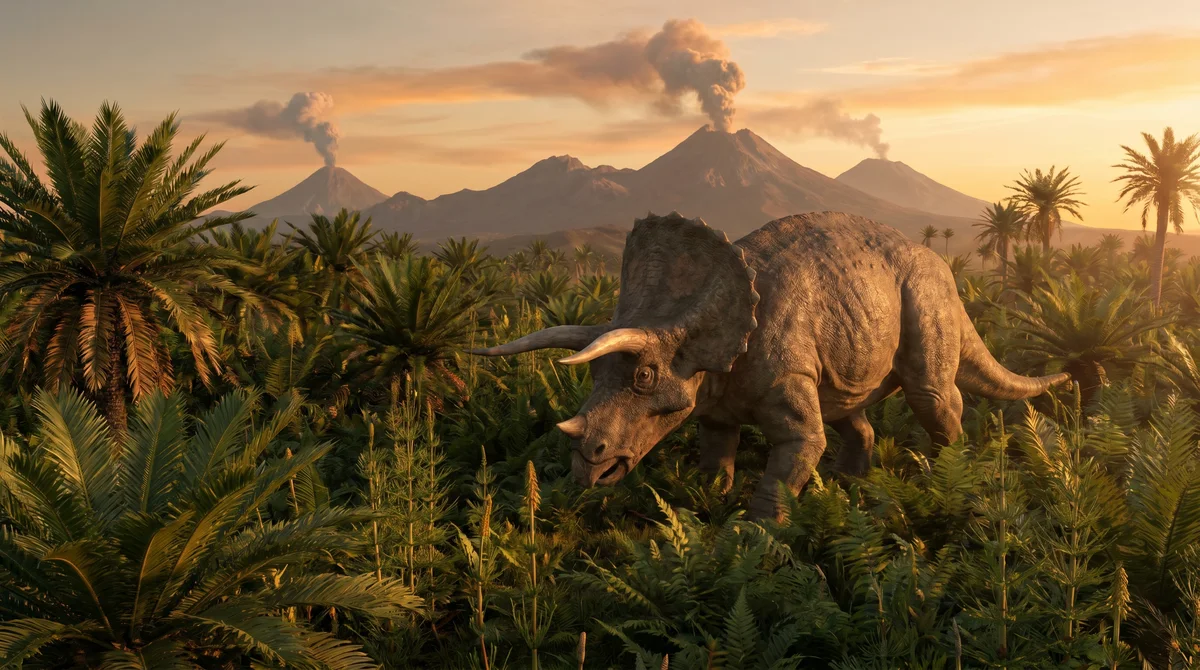
Not every dinosaur was huge. Some, like Compsognathus, were only the size of a chicken. Others were the biggest animals ever to walk the Earth: long-necked sauropods such as Argentinosaurus may have stretched over 30 metres — longer than three buses — and weighed as much as a dozen elephants.
The fiercest hunters
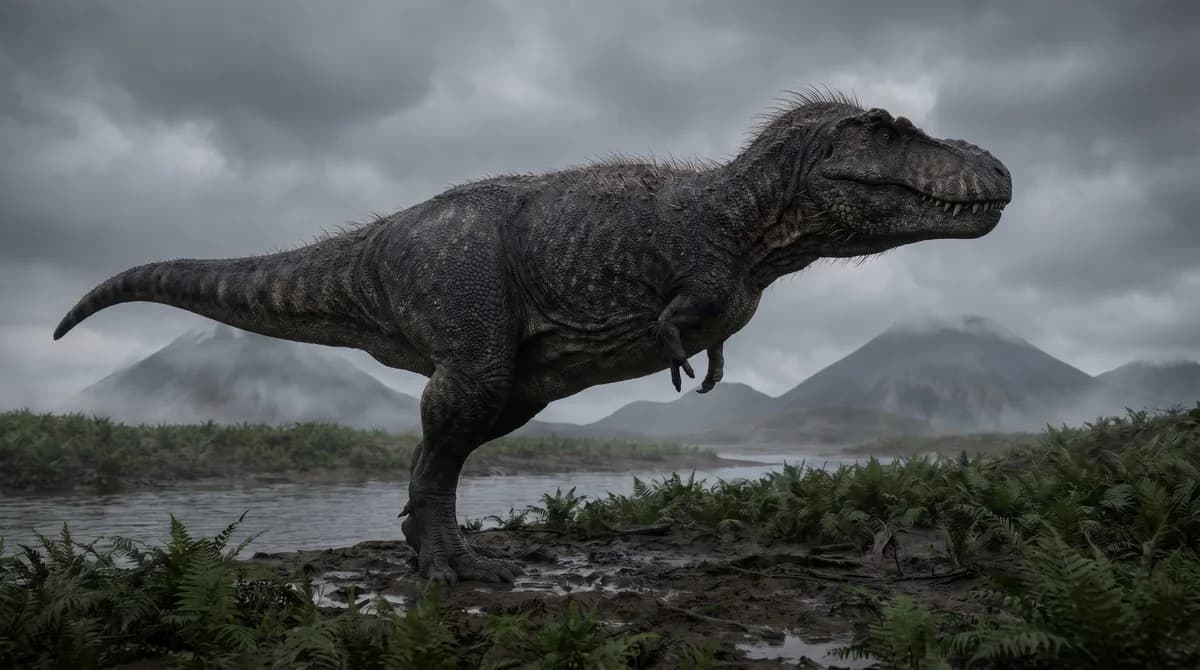
The meat-eaters (theropods) included some of history's most famous predators: Tyrannosaurus rex, with one of the strongest bites of any land animal; the sail-backed Spinosaurus, which hunted in water; and clever, fast pack-hunters like Velociraptor — which, in real life, was about the size of a turkey and covered in feathers, not the giant scaly monster from the movies.
How do we know any of this?
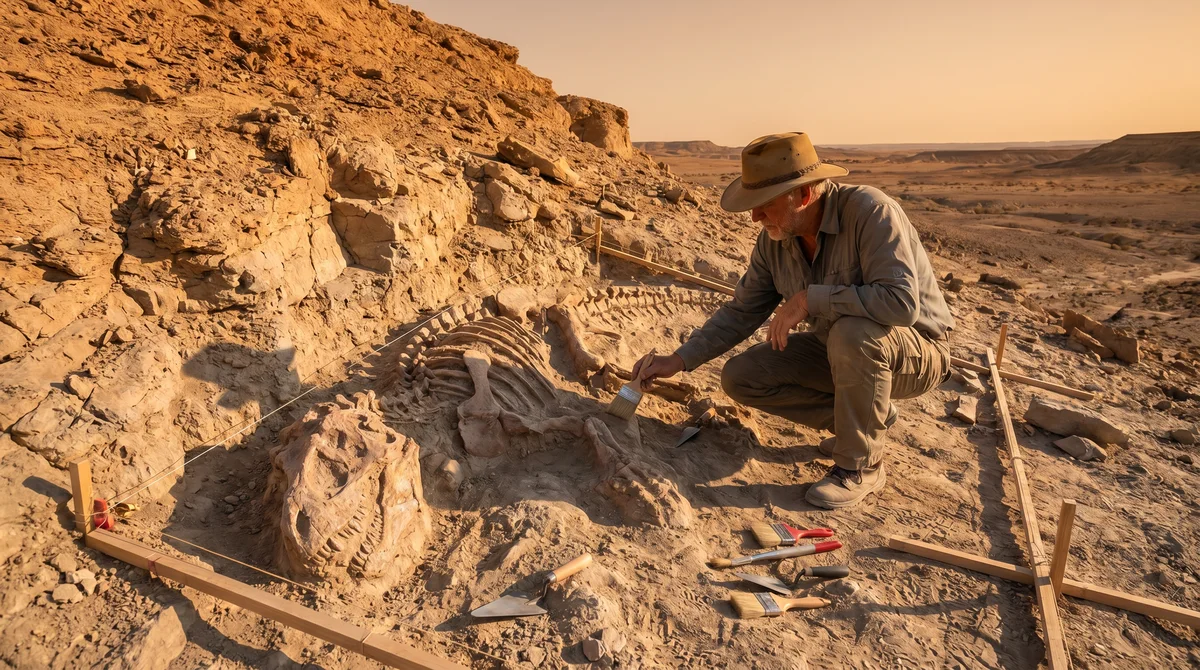
Everything we know comes from fossils — bones, teeth, eggs, footprints and even fossilised dung — preserved in rock for millions of years. Scientists called palaeontologists carefully dig them up and compare them with living animals to work out how dinosaurs moved, what they ate, and how they grew (American Museum of Natural History).
Dinosaurs by the numbers
- Ruled for: ~165 million years
- Periods: Triassic, Jurassic, Cretaceous
- Biggest: Sauropods, 30+ m long
- Smallest: Around the size of a chicken
- Died out: ~66 million years ago
- Still alive: Birds — living dinosaurs!
Were dinosaurs really feathered?
Here is one of the biggest changes in dinosaur science: we now have fossils showing that many dinosaurs had feathers. Most were meat-eaters related to birds, and they used feathers for warmth or to show off — long before any dinosaur could fly. It is why a modern picture of Velociraptor looks more like a scary turkey than a scaly lizard.
A group of dinosaurs is still alive
The most surprising fact of all: dinosaurs never fully died out. Birds evolved from small feathered dinosaurs, which means every robin, chicken and eagle is a living dinosaur. We dig into this in are dinosaurs really extinct?
Plant-eaters and meat-eaters
Scientists can often tell what a dinosaur ate just from its teeth. Plant-eaters (herbivores) like Triceratops and the long-necked sauropods had flat or leaf-shaped teeth for grinding tough vegetation, and many swallowed stones to help mash food in their stomachs. Meat-eaters (carnivores) like T. rex had curved, serrated teeth like steak knives for slicing flesh. Some dinosaurs ate both — they were omnivores. Counting and measuring fossil teeth is one of the main ways palaeontologists reconstruct ancient food chains.
Which famous "dinosaurs" weren't dinosaurs at all
Here is a fact that trips up almost everyone: some of the most famous "dinosaurs" were not dinosaurs. The flying pterosaurs (like Pteranodon) were reptiles that flew, but they were not dinosaurs. The long-necked plesiosaurs and giant mosasaurs that swam the seas were not dinosaurs either. True dinosaurs lived on land and stood with their legs underneath them. Sorting the real dinosaurs from their reptile cousins is exactly the kind of careful classifying that scientists love (Natural History Museum, London).
Where did dinosaurs live?
Everywhere. Dinosaur fossils have been found on every continent on Earth — even Antarctica, which was warmer and greener back then. During much of the age of dinosaurs the continents were joined together, so some of the same kinds of dinosaurs roamed lands that are now separated by whole oceans. Their world looked very different from ours.
Dinosaur eggs and babies
All dinosaurs hatched from eggs, and we have found fossilised nests, eggs and even babies. Some dinosaurs, like the aptly named Maiasaura ("good mother lizard"), seem to have cared for their young in nesting colonies, bringing them food. Fossil nests give scientists rare, precious clues about dinosaur family life.
Record-breaking dinosaurs
Dinosaurs hold some jaw-dropping records. The longest, the sauropod Patagotitan, may have reached 37 metres and weighed as much as ten elephants. The fearsome Spinosaurus was probably the longest meat-eater. Therizinosaurus had claws up to a metre long — the biggest claws of any animal ever. And the speedy little ornithomimids ("bird-mimics") may have run at 50-60 km/h. For every "biggest," there was also a "smallest," right down to crow-sized hunters. Comparing these extremes is a fun way for kids to grasp just how varied the dinosaurs really were.
How do we know how dinosaurs moved?
Bones tell us the shape of a dinosaur, but fossil footprints (called trackways) tell us how it lived. By measuring the spacing between prints, scientists can work out whether a dinosaur walked or ran, how fast it went, and even whether it travelled in a herd. Some trackways show baby dinosaurs walking in the middle of a group, protected by adults — a snapshot of behaviour frozen in stone. It is a brilliant example of reading clues, not just collecting bones (American Museum of Natural History).
How dinosaurs get their names
Dinosaur names look scary but usually describe the animal. They come from ancient Greek and Latin: Triceratops means "three-horned face," Tyrannosaurus rex means "tyrant lizard king," and Velociraptor means "swift thief." Scientists who discover a new dinosaur get to name it, sometimes after where it was found or even the person who found it. Decoding a dinosaur name is a fun puzzle — and a sneaky way to learn some Greek and Latin roots.
The two great branches of the dinosaur family
Scientists sort all dinosaurs into two big groups based on their hip bones. The 'lizard-hipped' dinosaurs include both the giant long-necked plant-eaters and the meat-eaters like T. rex. The 'bird-hipped' dinosaurs were all plant-eaters, like Triceratops and Stegosaurus. Here is the lovely twist: despite the names, birds actually evolved from the lizard-hipped branch — a reminder that nature does not always fit our tidy labels (Natural History Museum, London).
How dinosaur science keeps changing its mind
What we 'know' about dinosaurs is still being rewritten — and that is science working properly. Scientists once drew T. rex standing upright like a kangaroo; new fossils showed it ran with its body level and tail out for balance. We used to think all dinosaurs were dull grey-green; now, fossil clues let us work out that some were reddish or even striped. When better evidence arrives, good scientists change their conclusions — and that willingness to update is exactly what makes the field so exciting.
Travel back in time with Wild World: Dinosaurs
Our 15-page science magazine for ages 8-14 covers the giants, the feathered-or-scaly debate, how fossils work, plus a Myth-Busters spread, puzzles and a draw-along.
Ready to teach it? See how to teach kids about dinosaurs.
Sources and further reading
- Natural History Museum, London
- American Museum of Natural History
- Smithsonian National Museum of Natural History
Facts in this article were checked against the public, expert sources above. Spotted something out of date? Tell us and we will fix it.
Frequently Asked Questions
When did dinosaurs live?
Dinosaurs lived during the Mesozoic Era, roughly 250 to 66 million years ago, split into the Triassic, Jurassic and Cretaceous periods. That is long before any humans existed.
What was the biggest dinosaur?
The largest known dinosaurs were long-necked plant-eaters (sauropods) such as Argentinosaurus, which may have reached over 30 metres long — longer than three school buses.
How do we know about dinosaurs?
Scientists called palaeontologists study fossils — bones, teeth, footprints and even fossilised dung — preserved in rock. By comparing them with living animals, they work out how dinosaurs looked and lived.
Did dinosaurs have feathers?
Many did. Fossils show that lots of dinosaurs, especially meat-eaters related to birds, had feathers for warmth or display. Some, like Velociraptor, were covered in them.
Why did the dinosaurs die out?
Most scientists agree a huge asteroid struck Earth about 66 million years ago, changing the climate dramatically. Combined with big volcanic eruptions, it wiped out most dinosaurs — but not all.
Are any dinosaurs still alive?
Yes — birds are living dinosaurs. They descended from small feathered meat-eating dinosaurs, so every sparrow and eagle is a dinosaur relative.
Try our free critical thinking games!
Fun, colorful brain-building games for kids ages 6-14. No signup required.
Play Now