Minibeast Facts for Kids: 25 Tiny Wonders to Know
Key Takeaways
- ✓A minibeast is a small animal without a backbone — insects, spiders, snails, worms and more.
- ✓Insects are the biggest animal group on Earth, with over a million named species and millions more to find.
- ✓Pound for pound, minibeasts are super-strong: an ant can lift around 50 times its own body weight.
- ✓Minibeasts are master builders, making silk webs, six-sided honeycomb and towering termite mounds.
- ✓They keep the world working by pollinating plants, recycling waste and feeding countless other animals.
Fact-checked minibeast facts for curious kids aged 8-14 — what a minibeast is, how an ant lifts 50 times its weight, nature's tiniest master builders, and why these little creatures keep the world working.
Look closely at any garden, pond or patch of soil and you will find a hidden world buzzing with life. Minibeasts may be tiny, but together they outnumber and out-work almost every other animal on Earth — and they keep our whole planet running. Here are 25 fact-checked minibeast facts for curious kids, grouped so you can find your favourites.
Last updated 7 June 2026
What exactly is a minibeast?
A minibeast is any small animal without a backbone — what scientists call an invertebrate. The word is not a strict scientific group; it is a friendly umbrella term for the little creatures we find around us: insects, spiders, snails, worms and more. What they share is being small, boneless, and astonishingly successful (Natural History Museum, London).
The main minibeast groups
- Insects — six legs and three body parts (beetles, bees, butterflies, ants).
- Arachnids — eight legs and two body parts (spiders, scorpions, mites).
- Myriapods — many legs (centipedes and millipedes).
- Molluscs — soft bodies, often a shell (snails and slugs).
- Worms — long, soft and legless (earthworms).
- Crustaceans — land cousins of crabs (woodlice).
Insects rule the Earth
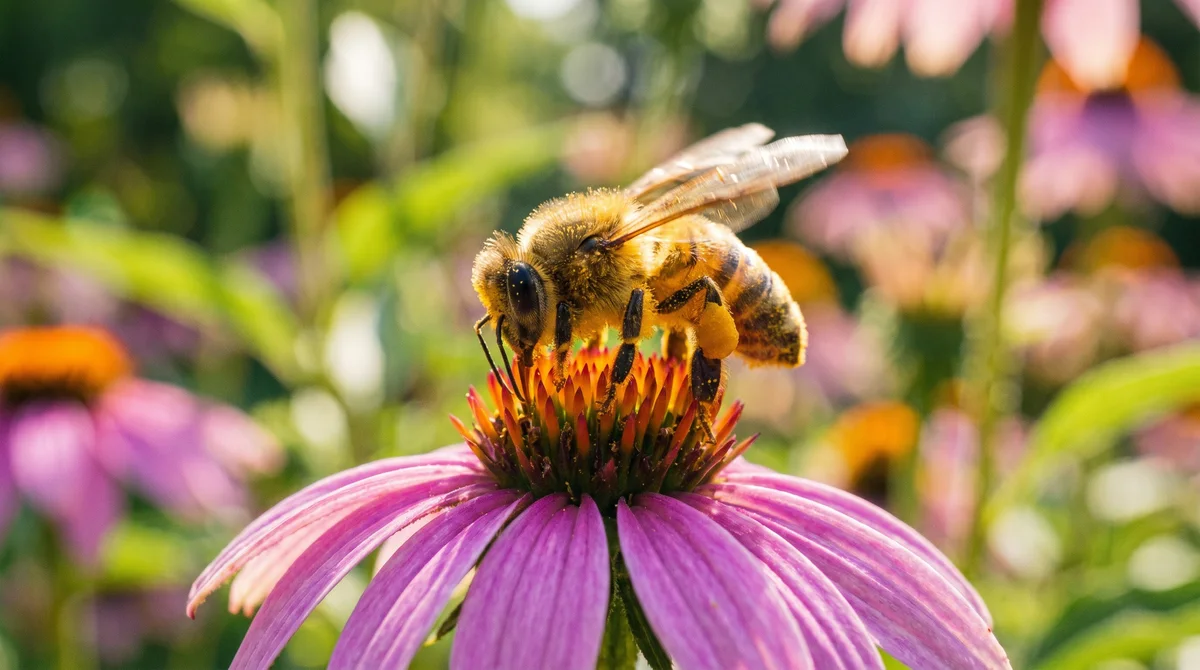
Insects are the most successful animals that have ever lived. Scientists have already named more than a million insect species — more than all other animals put together — and think there are millions more still undiscovered. Every insect has the same basic kit: six legs, three body parts (head, thorax and abdomen), antennae, and often wings (Smithsonian National Museum of Natural History).
Tiny but mighty
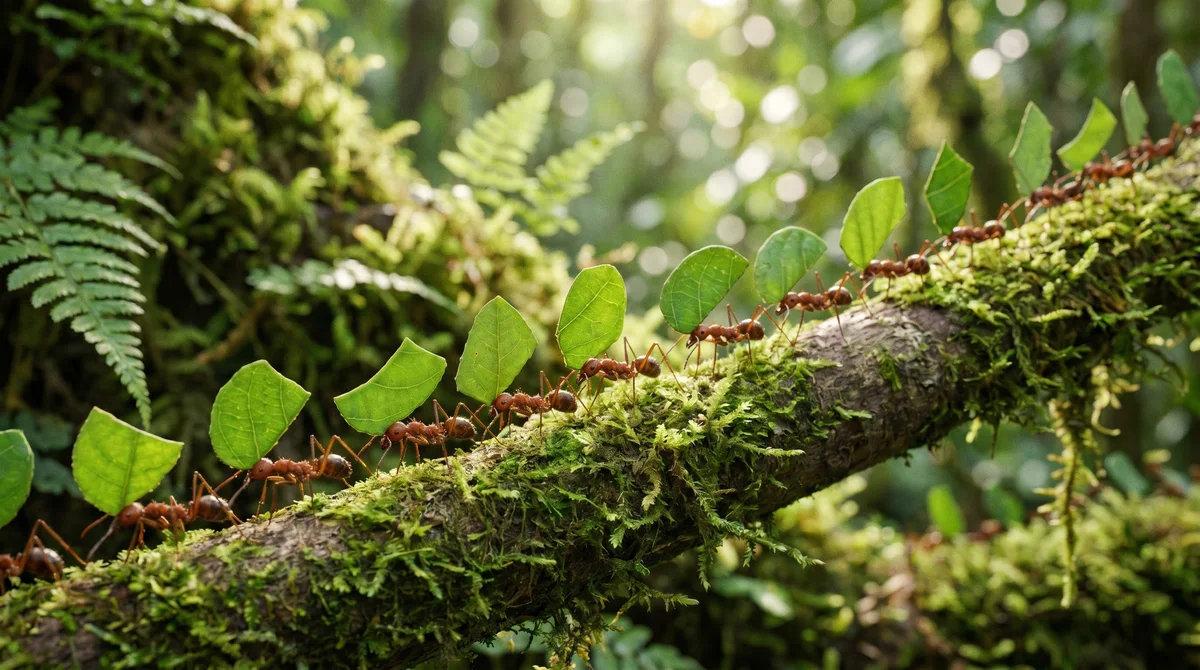
Pound for pound, minibeasts are the strongest athletes alive. An ant can carry around 50 times its body weight — like a child lifting a car. A dung beetle can pull over 1,000 times its weight, making it the strongest insect on Earth. And a flea can jump about 100 times its body length. Being small, it turns out, comes with superpowers.
Nature's tiniest engineers
Minibeasts build astonishing homes with no blueprint at all. Spiders spin silk that is, for its weight, stronger than steel — and rebuild their webs daily. Bees make perfect six-sided honeycomb, the shape that stores the most honey using the least wax. Termites raise mounds taller than a giraffe with built-in air-conditioning tunnels, and ants dig underground cities with nurseries and food stores.
Strange and brilliant senses
Minibeasts experience the world in ways we can barely imagine. Many insects have compound eyes made of hundreds of tiny lenses that spot the fastest movement. Butterflies taste with their feet. Ants leave invisible scent trails to guide the whole colony. And insects breathe not through lungs but through tiny holes along their sides called spiracles.
Minibeasts by the numbers
- Named insect species: 1,000,000+
- Ant strength: ~50x its body weight
- Strongest insect: Dung beetle (~1,000x)
- Flea jump: ~100x its body length
- Honeycomb shape: Six-sided (hexagon)
- Backbone: None — all invertebrates
Why minibeasts matter
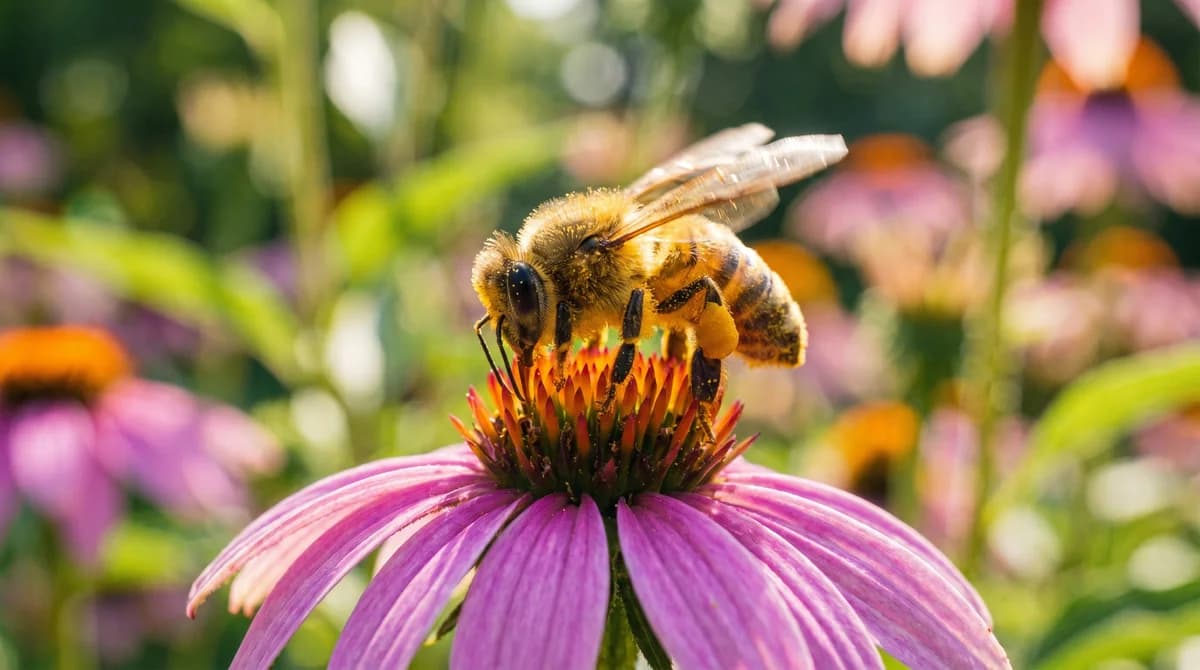
Tiny as they are, minibeasts hold the world together. Pollinators like bees and butterflies help make about three of every four food crops. Decomposers like beetles and worms recycle dead leaves and animals into fresh soil. And minibeasts are food for birds, frogs, fish and mammals. Remove them, and the whole food web would unravel (National Geographic Kids).
Clever minibeast defences
Being small and tasty is dangerous, so minibeasts have brilliant ways to stay alive. Some use camouflage — stick insects look exactly like twigs. Others use warning colours: a ladybird's bright red says 'I taste horrible.' Some harmless flies use mimicry, copying the black-and-yellow stripes of a wasp to look dangerous. A few play dead, squirt smelly chemicals, or flash a sudden 'eye' pattern to startle a predator. Tiny does not mean defenceless.
How minibeasts grow up
Minibeasts grow in a way we never could. Because their skeleton is on the outside (an exoskeleton), they cannot simply get bigger — they must moult, shedding the old shell and swelling into a new, larger one before it hardens. Many also change shape completely through metamorphosis: egg to caterpillar to chrysalis to butterfly. Watching a minibeast grow up is like watching an animal rebuild itself from scratch.
Holding up the food web
Minibeasts are the foundation that bigger animals stand on. Birds feed beakfuls of caterpillars to their chicks; frogs, fish, hedgehogs, bats and lizards all rely on a steady supply of insects; and countless plants depend on minibeasts to pollinate them. Pull minibeasts out of the picture and the whole web above them — right up to the animals we love most — begins to wobble. Small creatures, gigantic importance.
Small in size, staggering in number
It is hard to picture how many minibeasts there are. Scientists estimate there may be billions of insects for every single human on Earth, and the total weight of all the ants alone rivals the weight of all wild mammals. When you walk across a lawn, you are striding over a hidden city of millions. We share the planet with minibeasts far more than most people realise (Smithsonian National Museum of Natural History).
Wait — is a spider an insect?
It is the question every minibeast fan asks, and the answer surprises a lot of people: a spider is not an insect. Find out why in is a spider an insect?
Where do minibeasts live?
Almost everywhere — which is part of what makes them so easy to study. Minibeasts live in gardens, soil, ponds, forests and rivers, and plenty share our homes too. Worms and ants tunnel underground; pond skaters walk on water; beetles hide under logs. There are even minibeasts in Antarctica — a tiny wingless midge is the largest fully land animal on the whole frozen continent. Wherever you are, a minibeast is probably nearby.
Amazing transformations
Many minibeasts completely change shape as they grow, in a process called metamorphosis. A caterpillar dissolves into a kind of soup inside its chrysalis and rebuilds itself as a butterfly; a wriggling maggot becomes a fly; a pond-dwelling nymph climbs out and unfolds into a dragonfly. Few things in nature are stranger or more wonderful than an animal that grows up by becoming something almost unrecognisable (National Geographic Kids).
Record-breaking minibeasts
For their size, minibeasts smash records. The Goliath beetle is among the heaviest insects; the stick insect can be longer than your forearm; and a dragonfly is one of the fastest, most agile fliers alive, catching most of the prey it chases. Tiny does not mean unimpressive — it means efficient.
Minibeasts in trouble
Here is a serious fact: in many places, insect numbers are falling, mainly because of habitat loss and pesticides. That matters to all of us, because minibeasts pollinate our food and feed countless other animals. The good news is that small actions help a lot — planting flowers, leaving wild corners and avoiding sprays all give minibeasts a home (Natural History Museum, London).
Where to find minibeasts near you
You do not need a rainforest — a back garden or local park is bursting with minibeasts if you know where to look. Lift a log or stone and you will likely find woodlice, beetles and worms sheltering underneath. Long grass hides grasshoppers and spiders; flowers draw bees and butterflies; and a damp wall after rain is a highway for snails and slugs. Different mini-habitats suit different creatures, which is a neat lesson in itself.
How to watch them without harm
The golden rule of minibeast hunting is look, don't harm. Use a soft paintbrush to move a tiny creature gently, observe it in a clear pot for a minute, then put it back exactly where you found it. Always replace the log or stone you lifted — it is somebody's home. Treating the smallest animals with care teaches respect for all living things, and it keeps the hunting ground full of life for next time.
Go small with Wild World: Minibeasts
Our 15-page science magazine for ages 8-14 explores bug super-strength, master builders and the spider-versus-insect question — plus a Myth-Busters spread, puzzles and a draw-along.
Ready to teach it? See how to teach kids about minibeasts.
Sources and further reading
- Natural History Museum, London
- Smithsonian National Museum of Natural History
- National Geographic Kids
Facts in this article were checked against the public, expert sources above. Spotted something out of date? Tell us and we will fix it.
Frequently Asked Questions
What is a minibeast?
A minibeast is any small animal without a backbone (an invertebrate). The group includes insects, spiders, centipedes, snails and slugs, worms, and woodlice — basically the little creatures you find in a garden or pond.
What is the difference between an insect and a minibeast?
'Minibeast' is the big umbrella term for all small invertebrates. Insects are one group inside it — those with six legs and three body parts. So all insects are minibeasts, but not all minibeasts are insects.
How strong are minibeasts?
Incredibly strong for their size. An ant can carry around 50 times its body weight, a dung beetle can pull over 1,000 times its weight, and a flea can jump about 100 times its own body length.
Why are minibeasts important?
They pollinate the plants that make our food, recycle dead leaves and animals into healthy soil, and feed birds, frogs, fish and mammals. Without minibeasts, whole ecosystems would collapse.
How many insects are there?
Scientists have named over a million insect species — more than all other animals combined — and believe there are millions more still waiting to be discovered. Insects are the most successful animal group on Earth.
Are minibeasts dangerous?
Almost all are completely harmless to people. A small number can sting or bite if threatened, but the vast majority would rather hide. Most minibeasts are far more helpful than harmful.
Try our free critical thinking games!
Fun, colorful brain-building games for kids ages 6-14. No signup required.
Play Now