How to Teach Kids About Minibeasts: Activities, a Bug Hunt & a Free Lesson
Key Takeaways
- ✓Minibeasts are the easiest wildlife to study — they are right outside the door.
- ✓A simple bug hunt teaches observation, counting and respect for living things.
- ✓Use minibeasts to teach classifying (insect vs spider vs other) — a core science skill.
- ✓Match activities to age: hunting and sorting for young kids; surveys and research for older ones.
- ✓Lead with wonder and gentle handling to turn 'eww' into 'wow'.
A simple, mostly screen-free way to teach kids about minibeasts — a 15-minute lesson, a step-by-step bug hunt, sorting and classifying activities by age, and resources that build real science thinking.
Minibeasts are the best wildlife to teach kids about — because they are right outside the door. A jam jar, a magnifier and a curious child are all you need to do real science. Minibeasts are also perfect for teaching observation and classifying. Here is a simple, mostly screen-free way to teach kids about minibeasts, with a quick lesson, a bug hunt, and age-by-age activities.
Last updated 7 June 2026
Step 1: Start with wonder, not 'eww'
Lead with the amazing stuff: an ant lifts 50 times its weight, a spider's silk is stronger than steel for its weight, and bees grow our food. When a child feels impressed, the squeamishness fades — and they want to look closer rather than back away.
A free 15-minute minibeast lesson
Works at the table or outdoors:
- Wonder (3 min): Share two amazing facts and ask, "What makes something a minibeast?"
- Facts (5 min): Read about one group together (try our minibeast facts for kids).
- Classify (4 min): Ask, "Is a spider an insect?" and count legs to find out (see this post).
- Create (3 min): Draw a minibeast and label its legs and body parts to name its group.
Step 2: Go on a bug hunt
Nothing beats real fieldwork. Grab a magnifier and a small pot, then look in the best minibeast hideouts: under logs and stones, among leaves, and on flowers. The golden rules: observe gently, never hurt anything, and put everything back exactly where you found it. Count how many different kinds you find, and try to sort each into a group. Congratulations — your child just did a real biodiversity survey.
Step 3: Activities by age
Ages 4-7: Hunt and count minibeasts, sort them into 'flies/crawls' or by number of legs, and build a bug hotel from sticks and leaves.
Ages 8-11: Classify finds into the main groups (insect, arachnid, mollusc), make a tally chart of a garden survey, and design a pollinator-friendly flower patch.
Ages 12-14: Run a proper mini-survey comparing two habitats, then research why insect numbers are falling and what could help.
Ten quick minibeast activities
- Bug hunt — magnifier, pot, look under logs (then put back).
- Leg count classify — sort finds into insect / spider / other.
- Bug hotel — build a shelter from sticks and bark.
- Pollinator patch — plant or draw bee-friendly flowers.
- Web watch — find a spider web and sketch its pattern.
- Strength maths — work out what you'd lift at 50x your weight.
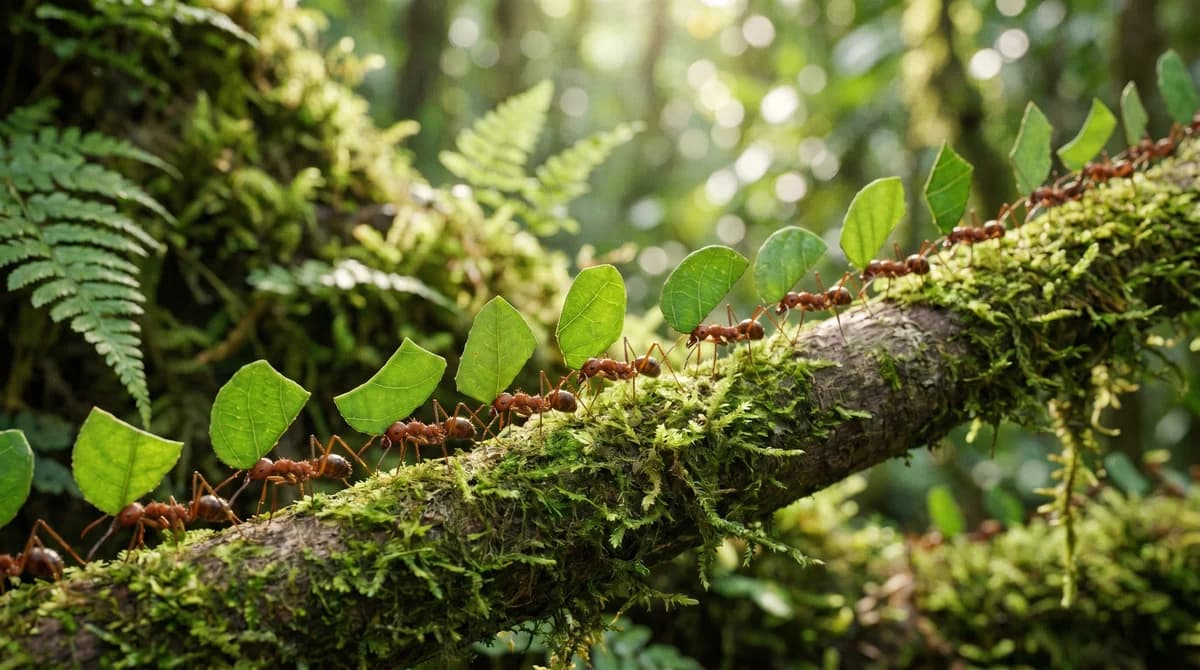
- Ant trail — watch how ants follow each other and why.
- Hexagon hunt — explore why honeycomb is six-sided.
- Fact vs myth — test a grown-up ('spiders are insects?').
- Mini-survey — count minibeasts in two different spots.
Questions kids ask — and simple answers
- "Is a spider an insect?" No — it's an arachnid (8 legs, 2 body parts).
- "Do worms have eyes?" No, but they sense light and touch through their skin.
- "Why are bees important?" They pollinate many of the plants that make our food.
- "Are minibeasts dangerous?" Almost all are harmless and would rather hide.
Turn it into a project
For older kids, build a 'minibeast survey' project: pick a patch of garden, record what you find over a week, classify each animal, and present which group was most common and why. Research, fieldwork and presenting in one. Our Wild World: Minibeasts magazine is a ready-made fact 'starter pack,' and the Natural History Museum, London has great identification guides.
Start a pollinator patch
One of the most rewarding minibeast projects is helping real ones. Plant a small patch (or even a pot) of bee-friendly flowers, add a shallow dish of water with pebbles for safe landing, and leave one corner a little wild. Then keep a tally of the visitors — bees, butterflies, hoverflies — over a few weeks. Kids learn that they can actively help wildlife, and they get a living science experiment right outside the window.
Visit, watch and read
Stretch the topic further: many museums and nature reserves run minibeast or 'bug hunt' days; reputable sites such as the Natural History Museum, London offer free identification guides; and a magnifier plus a library book can keep a curious child busy for hours. Pair any of it with the question 'which group does this belong to?' and you are building real classifying skills.
Minibeast conversation starters
Spark curiosity with questions like these:
- If insects vanished tomorrow, what do you think would happen to our food?
- Why might a spider be a gardener's best friend?
- How can something as small as an ant be so strong?
- Lots of people say minibeasts are 'icky'. Is that a fact or a feeling — and does it change what they DO?
Make a bug-viewer for gentle, safe looking
You do not need fancy kit to study minibeasts up close. A clear plastic pot with a magnifying lid (or just a jam jar and a hand lens) lets children observe a woodlouse or beetle for a minute, then return it exactly where they found it. Set two house rules: look, don't squash, and always put it back. Treating tiny creatures with care is a science lesson and a kindness lesson at the same time.
Cross-curricular links
Minibeasts reach into every subject. Maths: tally how many of each kind you find and draw a bar chart. Art: sketch a beetle's patterns or build a model insect with the correct three body parts. Writing: write a 'day in the life' from a worm's point of view. Geography: map the mini-habitats in a garden (under logs, in long grass, up a wall). One bug hunt can fuel a whole week of learning.
Misconceptions to clear up
A few friendly corrections help enormously. Spiders are not insects; most minibeasts are not dangerous; 'creepy-crawlies' are not dirty — many are vital cleaners and pollinators; and a centipede and a millipede are not the same. Each correction is a chance to ask the magic question: how do we actually know?
A minibeast survey project
For a bigger challenge, run a proper survey. Choose two spots — say a flowerbed and a patch of pavement — and count how many minibeasts you find in each over five minutes. Which habitat had more? Why might that be? Children form a hypothesis, gather evidence and draw a conclusion: the whole scientific method, in the back garden. Our Wild World: Minibeasts issue is the perfect field guide to identify what they catch.
Build a minibeast hotel
A minibeast hotel turns a corner of the garden into a long-running science project. Stack old pallets, bricks with holes, bundles of hollow stems, pine cones, bark and dead leaves to make lots of nooks. Over the weeks, children can check in to see who has 'booked a room' — solitary bees, ladybirds, woodlice, lacewings. It teaches habitats, patience and record-keeping, and it genuinely helps local wildlife.
A bug-hunt scavenger list
Give the hunt a focus with a simple checklist: something with six legs, something with more than eight legs, something with a shell, something that flies, something under a log. Ticking off categories (rather than specific species) makes the activity work anywhere and turns identification into a game of careful looking — the heart of good fieldwork.
Keep a nature journal
Encourage each child to keep a small notebook for their finds: a quick sketch, where and when they saw it, and one question it sparked ('why was it under the stone?'). Returning to the same spots across the seasons reveals real patterns — which minibeasts appear in spring, which vanish in winter. A journal turns scattered bug hunts into a personal, ongoing study.
A done-for-you bug lesson: Wild World: Minibeasts
15 pages of facts, a Myth-Busters spread, a draw-along and a quiz — built for ages 8-14. Read a free sample before you buy.
Start with the facts: 25 minibeast facts for kids.
Sources and further reading
- Natural History Museum, London
- National Geographic Kids
- Smithsonian National Museum of Natural History
Facts in this article were checked against the public, expert sources above. Spotted something out of date? Tell us and we will fix it.
Frequently Asked Questions
What age can kids start learning about minibeasts?
Any age — minibeasts are perfect for the youngest scientists. Toddlers love spotting and counting; kids 8-14 can classify groups, run mini bug surveys, and explore why minibeasts matter to ecosystems.
How do I do a bug hunt with kids?
Take a magnifier and a pot, look under logs, leaves and stones, observe gently without harming anything, then put everything back. Count how many kinds you find and sort them into groups — it is real fieldwork.
How do minibeasts teach science skills?
They are ideal for classifying (insect, spider, mollusc), counting and recording (simple surveys), and understanding food webs. Best of all, kids gather their own evidence outdoors.
How do I help a child who finds minibeasts 'icky'?
Lead with wonder, not fear: show super-strength, silk-spinning and pollination first. Watching a minibeast through a magnifier and learning what it does usually turns 'eww' into fascination.
Where can kids learn more about minibeasts?
The Natural History Museum and National Geographic Kids have excellent minibeast pages, and you can read a free sample of our Wild World: Minibeasts magazine online.
Try our free critical thinking games!
Fun, colorful brain-building games for kids ages 6-14. No signup required.
Play Now