Big Cat Facts for Kids: 22 Wild Things to Know
Key Takeaways
- ✓The 'big cats' include lions, tigers, leopards, jaguars and snow leopards, plus the cheetah and cougar.
- ✓The tiger is the biggest cat; the cheetah is the fastest land animal, reaching about 70 mph in short bursts.
- ✓Lions are the only truly social big cat, living in family groups called prides.
- ✓A jaguar has one of the strongest bites of any cat and can crack a turtle's shell.
- ✓Many big cats are threatened by habitat loss and poaching — tigers especially (IUCN).
Fact-checked big cat facts for curious kids aged 8-14 — how a cheetah hits 70 mph, which cat has the strongest bite, why lions live in prides, and which big cats are in danger.
Big cats are the planet's most powerful and graceful hunters — from the lightning-fast cheetah to the mighty tiger. They are also among the most loved and most threatened animals on Earth. Here are 22 fact-checked big cat facts for curious kids, grouped so you can find your favourites fast.
Last updated 7 June 2026
What counts as a "big cat"?
Scientists usually mean the members of the cat family that are large and wild. The five classic big cats are the lion, tiger, leopard, jaguar and snow leopard (the group called Panthera), and people often include the cheetah and cougar too. They all share sharp senses, retractable claws and a hunter's body (San Diego Zoo Wildlife Alliance).
Meet the big cats
- Lion — the only social big cat, living in prides on the African savanna.
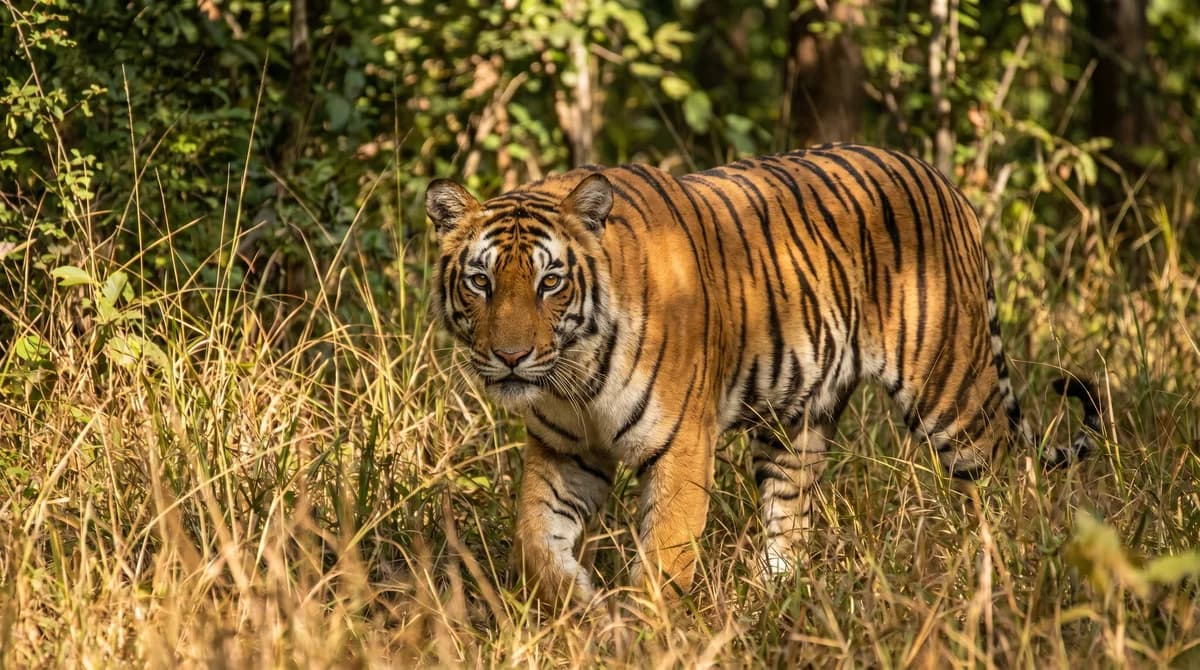
- Tiger — the largest cat of all, a striped ambush hunter of Asian forests.
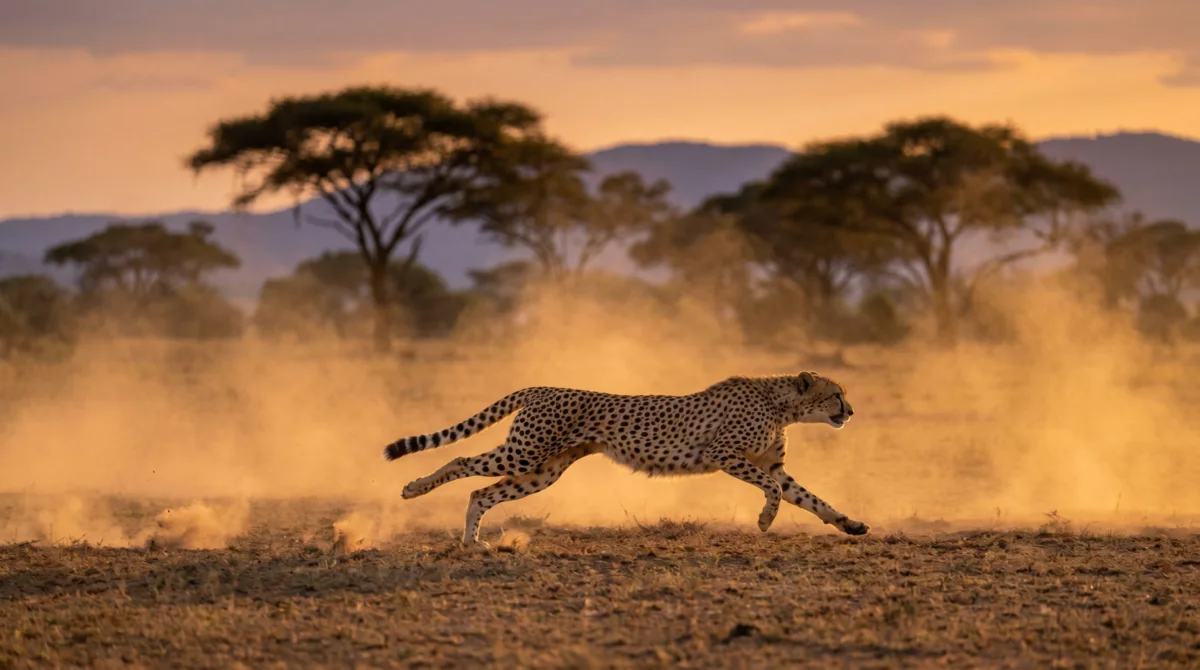
- Cheetah — the fastest land animal, built for the sprint.
- Leopard — a stealthy climber that hauls its meals up into trees.
- Jaguar — the strongest biter, at home in rainforests and rivers.
- Snow leopard — a shy mountain cat with a thick coat and huge tail.
Built to hunt
Every part of a big cat is hunting gear: forward-facing eyes that judge distance, whiskers that feel their way in the dark, retractable claws that stay sharp, and powerful jaws with dagger-like teeth. Many also have camouflage — a tiger's stripes and a leopard's rosettes break up their outline so they can creep close before they pounce.
Speed, strength and other records
Big cats are record-breakers. The cheetah accelerates faster than most sports cars. The jaguar bites with enough force to crack a turtle shell. A tiger can leap several metres in a single bound, and a leopard can haul prey heavier than itself straight up a tree.
Why lions are different
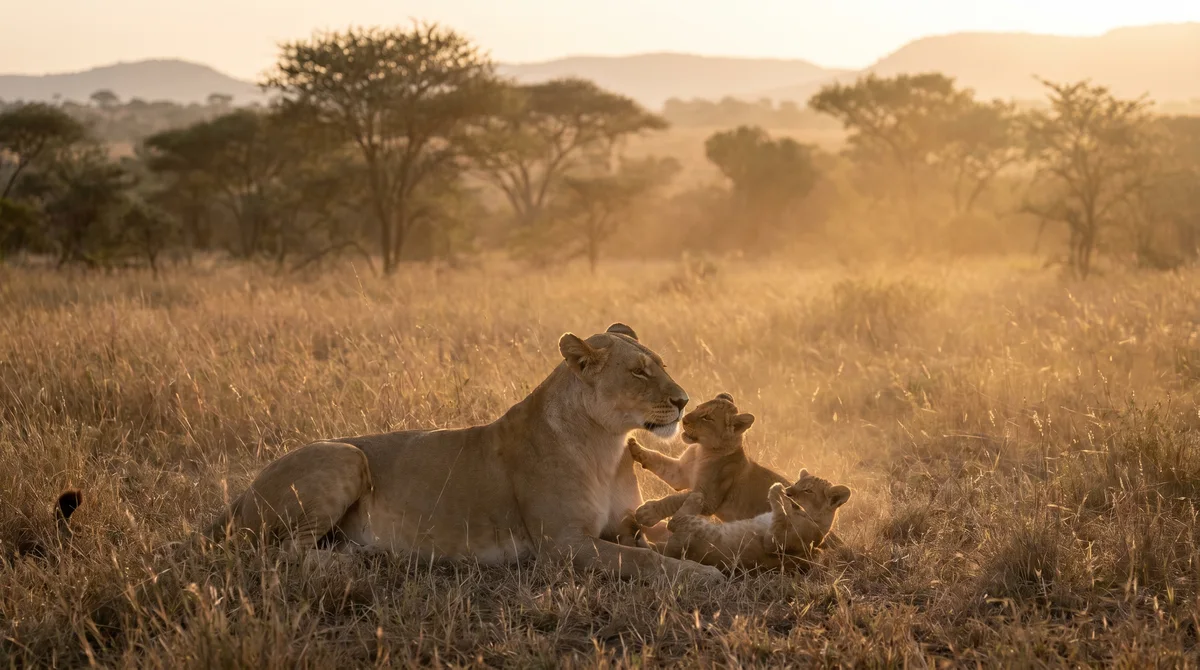
Almost all cats are loners — but lions live in prides. Related lionesses hunt as a team, share the work of raising cubs, and defend their territory together. Working together lets them take down prey far bigger than a single cat could manage.
Big cats by the numbers
- Biggest: Tiger (males 300+ kg)
- Fastest: Cheetah, ~70 mph in bursts
- Strongest bite: Jaguar
- Most social: Lion (prides)
- Best climber: Leopard
- Highest-living: Snow leopard (mountains)
Are big cats in danger?
Sadly, many are. Tigers, snow leopards and several lion and leopard populations are threatened, mostly because of habitat loss and poaching. The good news is that protected reserves and conservation projects are helping some populations recover (IUCN Red List of Threatened Species).
Can every big cat roar?
Here is a surprise: not all big cats can roar, and the ones that roar cannot purr like your pet cat. We explain exactly which cats can do what in can all big cats roar?
Where in the world do big cats live?
Big cats are spread across the globe. Lions roam the African savanna (with a tiny population in India); tigers prowl Asian forests and grasslands; jaguars rule Central and South American rainforests; leopards are the most widespread, living across Africa and Asia; and snow leopards haunt the high mountains of Central Asia. Each cat's body suits its home — the snow leopard's thick coat and huge tail, the lion's sandy camouflage (San Diego Zoo Wildlife Alliance).
How big cats raise their cubs
Big cat cubs are born tiny, blind and helpless, and they depend completely on their mother. She hides them, feeds them, and teaches them to hunt through play — all that pouncing on tails and siblings is hunting practice. In a lion pride, several mothers may even raise cubs together. Cubs stay with their mother for one to two years before heading off on their own.
Coats and camouflage
A big cat's coat is both a disguise and an ID card. A tiger's stripes break up its shape in tall grass; a leopard's and jaguar's rosettes mimic dappled forest light; a lion's plain coat blends with dry savanna. Every tiger's stripe pattern is unique, like a fingerprint — scientists use it to tell individuals apart from camera-trap photos.
The cats that aren't quite "big cats"
Here is a fun technicality: the cheetah and the cougar are huge, but scientists don't put them in the same group (Panthera) as lions and tigers — partly because they can't roar. So depending on how strict you are, "big cat" can mean just the five Panthera, or it can include these speedy, purring cousins. Either way, they are spectacular.
How big cats actually hunt
Most big cats are ambush hunters: they creep close using cover, freeze, then explode forward in a short, powerful rush. Speed alone rarely wins — even a cheetah succeeds only about half the time, and most big cats miss more hunts than they win. That is why patience and stealth matter as much as muscle. Tigers often hunt at night, using superb low-light vision; lions team up to surround prey; leopards drag their catch up a tree to keep it from scavengers. Different cats, different clever tactics.
Senses built for the hunt
A big cat's senses are finely tuned. Their eyes gather several times more light than ours, so they see well in near-darkness. Their whiskers sense the faintest touch and air movement, helping them feel their way and judge gaps in the dark. Large, swivelling ears pick up the tiniest rustle of prey. Put together, these senses make a big cat an astonishing night-time hunter — and explain why so many rest in the heat of the day and come alive at dusk.
Big cats and people
Sharing a planet with big cats is not always easy. As wild spaces shrink, cats sometimes come into conflict with farmers, and poaching remains a serious threat. But there is real hope: protected reserves, wildlife corridors and community projects have helped some tiger and lion populations begin to recover. Many scientists argue that protecting big cats also protects whole landscapes, because a healthy top predator usually means a healthy habitat (IUCN Red List of Threatened Species).
How big cats actually hunt
Most big cats are ambush hunters, not chasers. They creep close using cover, freeze, then explode forward in a short, powerful rush — which is why a missed pounce often means the meal escapes. The cheetah is the exception, relying on a flat-out sprint. Surprisingly, hunting is hard work: even skilled big cats fail more often than they succeed, which is why they rest for many hours a day to save energy between attempts (National Geographic Kids).
Why big cats matter to the whole habitat
Big cats are apex predators, sitting at the top of their food chains. By keeping the numbers of grazing animals in balance, they actually protect the grasslands and forests those grazers feed on — which helps countless other species too. When a top cat disappears, the whole web below it can fall out of balance. Protecting a tiger or a lion, it turns out, helps protect an entire living landscape.
Meet the whole family in Wild World: Big Cats
Our 15-page science magazine for ages 8-14 covers lions, tigers, cheetahs and more — how they hunt, a Myth-Busters spread, puzzles and a draw-along.
Ready to teach it? See how to teach kids about big cats.
Sources and further reading
Facts in this article were checked against the public, expert sources above. Spotted something out of date? Tell us and we will fix it.
Frequently Asked Questions
How fast can a cheetah run?
A cheetah can reach about 70 mph (over 110 km/h) in short bursts of a few seconds, making it the fastest land animal on Earth. It is built for acceleration, not distance.
What is the biggest big cat?
The tiger is the largest cat in the world. A big male Siberian (Amur) tiger can weigh over 300 kg — far heavier than a lion.
Which big cat has the strongest bite?
For its size, the jaguar has one of the most powerful bites of any cat. It can bite straight through tough hide, skulls and even turtle shells.
Do all big cats live alone?
Most do, but lions are the exception. They live in family groups called prides, where related females hunt together and raise cubs as a team.
Are big cats endangered?
Many are. Tigers, snow leopards and some lion and leopard populations are threatened, mainly by habitat loss and poaching. Conservation groups and protected reserves are working to help them recover (IUCN).
What is a black panther?
A 'black panther' is not a separate species — it is a leopard or jaguar with extra dark pigment (melanism). In bright light you can often still see the faint spots underneath.
Try our free critical thinking games!
Fun, colorful brain-building games for kids ages 6-14. No signup required.
Play Now