How to Teach Kids About Big Cats: Activities, Facts & a Free Lesson
Key Takeaways
- ✓Start with wonder — speed, strength and stealth hook kids instantly.
- ✓Big cats are perfect for teaching comparing and classifying (a core science skill).
- ✓Match activities to age: sorting and movement games for young kids; research and debate for older ones.
- ✓Use evidence to replace myths (cheetahs aren't 'baby lions'; black panthers aren't a species).
- ✓Hands-on projects — fact cards, a 'who's who' chart, conservation posters — make it stick.
A simple, mostly screen-free way to teach kids about big cats — a 15-minute lesson plan, compare-and-classify activities by age, conversation starters, and resources that build real science thinking.
Big cats are pure excitement for kids — and that excitement is a perfect doorway into real science. Best of all, big cats are ideal for teaching comparing and classifying: who roars, who climbs, who hunts alone, who is fastest. Here is a simple, mostly screen-free way to teach kids about big cats, with a quick lesson and age-by-age activities.
Last updated 7 June 2026
Step 1: Start with wonder
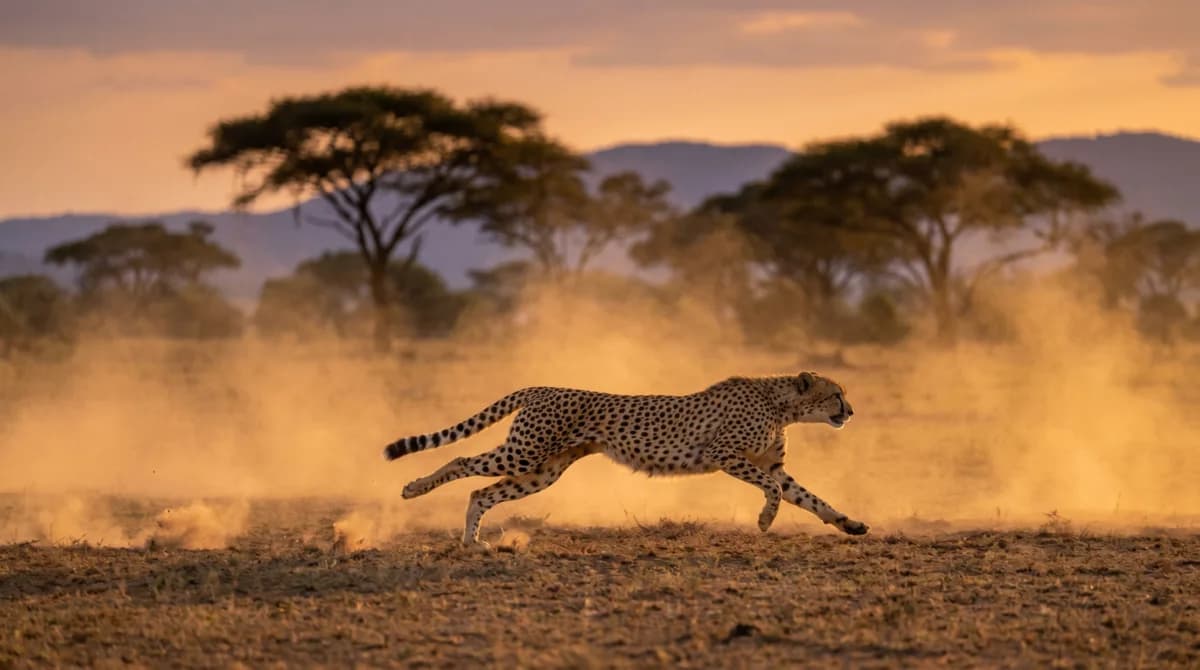
Open with a record-breaker: a cheetah out-accelerates a sports car, a jaguar can crack a turtle shell, and a lion's roar carries for kilometres. Wonder grabs attention — and it makes kids ask the questions that lead to real learning.
A free 15-minute big cat lesson
Works at the table or in class:
- Wonder (3 min): Share two amazing facts and ask, "What makes a cat a big cat?"
- Facts (5 min): Read about two cats together (try our big cat facts for kids).
- Classify (4 min): Sort them — who roars, who purrs, who lives in groups? (See can all big cats roar?)
- Create (3 min): Draw a favourite cat and label two features that help it hunt.
Step 2: Activities by age
Ages 4-7: Sort cat pictures into big and small, practise a slow 'stalk and pounce,' and match each cat to its coat pattern (stripes, spots, plain).
Ages 8-11: Make fact cards and sort them by features (roars vs purrs, social vs solitary, forest vs grassland). Build a size line from cheetah to tiger using string.
Ages 12-14: Research why a big cat is endangered, then design a conservation plan or debate whether zoos help or harm big cats.
Step 3: Replace myths with evidence
Big cats come with myths worth busting. A cheetah is not a baby lion — it is its own species. A 'black panther' is not a separate animal — it is a leopard or jaguar with dark fur. Each time, ask "how do we know?" and check a trusted source (National Geographic Kids).
Step 4: Make it stick
Finish with a project: a 'who's who of big cats' chart, a set of trading cards, or a conservation poster the child presents. Creating and explaining locks in the learning. The San Diego Zoo Wildlife Alliance has great free pages to extend it.
Ten quick big cat activities
Pick and mix — most take 10-20 minutes:
- Who's who chart — make a grid of the big cats and their key features.
- Roar or purr sort — sort cats into roarers and purrers.
- Size line — use string to compare a cheetah, lion and tiger.
- Coat match — match stripes, rosettes and plain coats to the right cat.
- Stalk and pounce — practise moving silently like a hunting cat.
- Map it — mark where each big cat lives on a world map.
- Speed maths — work out how far a 70 mph cheetah goes in 3 seconds.
- Camera-trap art — design a tiger's unique stripe "fingerprint."
- Conservation poster — make a "save the tiger" poster.
- Myth busters — test a grown-up on big cat myths.
Questions kids ask — and simple answers
- "Is a cheetah a baby lion?" No — it's a completely separate species, built for speed, not strength.
- "What's a black panther?" A leopard or jaguar with dark fur — not its own species.
- "Why don't tigers live with lions?" They live on different continents (tigers in Asia, lions mostly in Africa).
- "Which big cat is strongest?" For its size, the jaguar has the most powerful bite.
Turn it into a project
For older kids, roll it into one mini-project: choose a big cat, research five facts and one myth to bust, draw or model it, and present in three minutes. It builds research, writing and confidence in one go. Our Wild World: Big Cats magazine is a ready-made fact "starter pack."
Make a big cat fact wall
Turn a wall or a big sheet of paper into a growing "big cat HQ." Add a world map and pin each cat where it lives; start a column for records (fastest, strongest, biggest); and add a "myth-busted" corner where kids move a claim from "myth" to "fact" once they have checked it. Because the wall grows over days, it keeps the topic alive and lets children see their knowledge building up. It also doubles as a brilliant recap before a quiz.
Watch like a scientist
Wildlife documentaries are perfect fuel for a big cat unit — if you watch actively. Before pressing play, give each child one job: count successful vs failed hunts, or note one new fact. Afterwards, ask, "What did we actually see, and what did the narrator just tell us?" Reputable sources like National Geographic Kids and the San Diego Zoo Wildlife Alliance also have short, accurate clips. Turning passive watching into questions is the whole game.
Cross-curricular links
One big cat topic stretches across the whole timetable. Maths: graph top speeds or compare body weights. Art: draw a tiger's unique stripe 'fingerprint' or design a habitat. Writing: write a diary entry as a snow leopard, or a persuasive 'save the lion' letter. Geography: map each species' range and the habitats it needs. Big cats are a brilliant hook precisely because they connect to so many subjects at once.
Build a big-cat classification key
For a deeper classifying challenge, help kids build a simple 'yes/no' key — the same tool real scientists use to identify species. Start with a question that splits the group: Can it roar? 'Yes' leads to lion, tiger, leopard, jaguar; 'no' leads to cheetah, cougar, snow leopard. Keep adding questions (Does it live in groups? Does it live in mountains?) until each cat is pinned down. It turns sorting into proper, logical detective work.
Connect it to your pet cat
The fastest way to make big cats feel real is to compare them with a house cat. Watch your pet stalk a toy, knead a blanket, groom with a rough tongue or pounce on a string — every one of those behaviours is a scaled-down version of what a lion or tiger does to survive. Spotting 'same family, different size' helps children see that classifying animals is about shared features, not just appearances.
Run a conservation mini-campaign
Channel kids' love of big cats into something purposeful. Have them pick a threatened cat, research why it is in trouble (habitat loss, poaching), and then create a real 'campaign' — a poster, a short talk, or a letter. Connecting facts to action teaches that science is not just for memorising; it can help solve real problems. Reputable conservation pages give trustworthy, up-to-date information to build on (IUCN Red List of Threatened Species).
Thinking traps to flag along the way
Big cats are a gentle place to name a few thinking traps. Watch for sweeping claims ('all big cats roar'), judging by looks (a 'black panther' looks unique but is a spotted leopard underneath), and assuming similar means same (a cheetah resembles a small lion but is a different species). Each time, model the fix out loud: 'Let's check what the evidence actually shows.' That habit is the real prize of the whole unit.
A done-for-you cat lesson: Wild World: Big Cats
15 pages of facts, a Myth-Busters spread, a draw-along and a quiz — built for ages 8-14. Read a free sample before you buy.
Start with the facts: 22 big cat facts for kids.
Sources and further reading
Facts in this article were checked against the public, expert sources above. Spotted something out of date? Tell us and we will fix it.
Frequently Asked Questions
What age can kids learn about big cats?
Any age — match the depth. Young children love sorting cats by size and pretending to stalk and pounce; kids 8-14 enjoy comparing species, classifying by features, and exploring conservation.
How do big cats teach classifying?
Big cats differ in clear, checkable ways — who roars, who lives in groups, who climbs, who is fastest. Sorting them by these features teaches kids to group things by evidence, a key science skill.
What are good big cat activities at home?
Make fact cards and sort them (roars vs purrs, social vs solitary), build a size line from cheetah to tiger, map where each cat lives, or design a conservation poster for an endangered cat.
How do I correct big cat myths?
Lead with evidence. Explain that a cheetah is its own species (not a young lion), and that a 'black panther' is a dark leopard or jaguar. Ask 'how do we know?' and look it up together.
Where can kids learn more about big cats?
Reputable sites like National Geographic Kids and the San Diego Zoo have kid-friendly big cat pages, and you can read a free sample of our Wild World: Big Cats magazine online.
Try our free critical thinking games!
Fun, colorful brain-building games for kids ages 6-14. No signup required.
Play Now