Birds of Prey Facts for Kids: 24 Sky-Hunter Facts
Key Takeaways
- ✓Birds of prey (raptors) hunt with hooked beaks and gripping talons; the group includes eagles, hawks, falcons, owls and vultures.
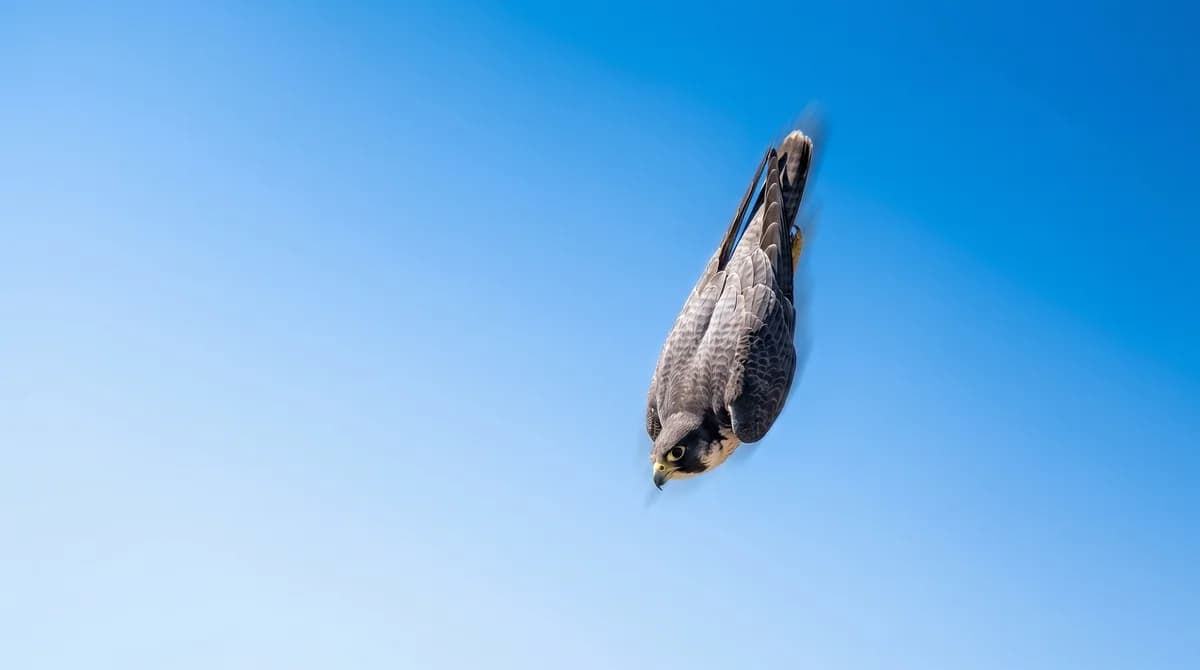
- ✓The peregrine falcon is the fastest animal on Earth, diving at over 240 mph (about 390 km/h).
- ✓Many raptors see several times more sharply than humans, spotting prey from far away.
- ✓Owls fly almost silently and can turn their heads about 270 degrees to hunt by sound.
- ✓Raptors keep nature healthy by controlling rodents and, in the case of vultures, cleaning up dead animals.
Fact-checked birds of prey facts for curious kids aged 8-14 — the falcon that dives at 240 mph, eyesight far sharper than ours, silent owls, and why these sky hunters matter.
High above the world, the hunters are watching. Birds of prey — also called raptors — are the masters of the air, with hooked beaks, gripping talons and eyes so sharp they can spot a mouse from far across a field. Here are 24 fact-checked birds of prey facts for curious kids, grouped so you can find your favourites.
Last updated 7 June 2026
What is a bird of prey?
A bird of prey, or raptor, is a bird that hunts other animals for food using two key tools: a sharp hooked beak for tearing meat, and strong feet with curved claws called talons for catching and gripping prey. The word 'raptor' comes from a Latin word meaning 'to seize' — because they grab their food with their feet (Cornell Lab — All About Birds).
The main groups of raptors
- Eagles — large and powerful, the heavyweight hunters.
- Hawks — fast, agile hunters of woods and open country.
- Falcons — pointed wings built for record-breaking speed.
- Owls — silent hunters, mostly active at night.
- Vultures — soaring scavengers that clean up the dead.
Built to hunt
Every part of a raptor is hunting gear. The hooked beak tears meat into bite-sized pieces. Talons grip with crushing force — an eagle's grip is many times stronger than a human hand. Telescopic eyes spot prey from far away. Broad wings let eagles and vultures soar for hours without flapping, and owls have soft-edged feathers that let them fly in near silence.
Record-breaking raptors
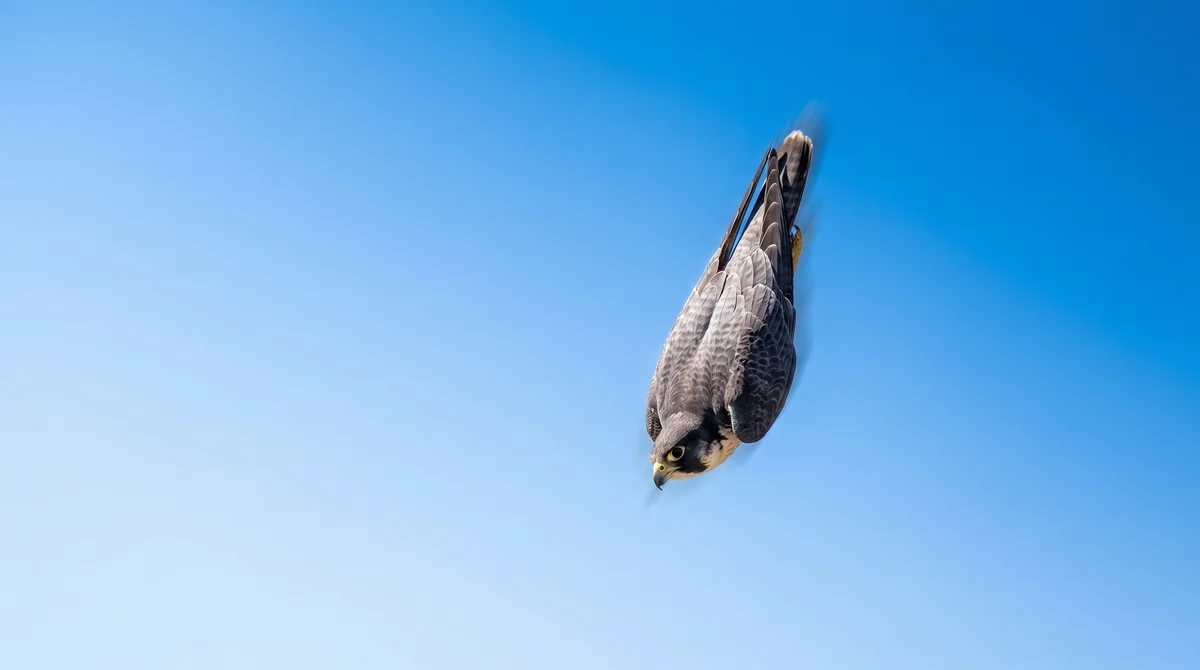
Birds of prey hold some incredible records. The peregrine falcon dives at over 240 mph — the fastest any animal moves. An eagle's eyesight is several times sharper than ours. An owl can rotate its head about 270 degrees and hunt in near-total darkness by sound alone. And the giant Andean condor has one of the largest wingspans of any land bird, riding mountain air for hours.

Super-senses
A raptor's senses are extraordinary. Their eyes are so large they nearly fill the skull, which is why an owl turns its whole head instead of moving its eyes. Many raptors also see in fine detail at long range, and some can even detect ultraviolet light. Owls add astonishing hearing, with ears set at slightly different heights to pinpoint exactly where a sound is coming from.
Birds of prey by the numbers
- Fastest: Peregrine falcon, 240+ mph dive
- Eyesight: Several times sharper than ours
- Owl head turn: ~270 degrees
- Grip: Eagle talons: many times a human's
- Biggest wingspan: Andean condor (~3 m)
- Found on: Every continent except Antarctica
Where do birds of prey live?
Raptors live almost everywhere — on every continent except Antarctica. They hunt over mountains, forests, deserts and grasslands, and some have even moved into our cities: peregrine falcons now nest on tall buildings and hunt pigeons among the skyscrapers. Wherever there is prey, a bird of prey is usually watching from above (Audubon).
Why birds of prey matter
Raptors are guardians of the balance of nature. A single barn-owl family can eat thousands of rats and mice in a year, protecting crops for free. Vultures remove dead animals before they can spread disease. And because raptors sit at the top of the food chain, lots of healthy raptors usually means a healthy habitat — they are nature's early-warning system (The Peregrine Fund).
Can an eagle really carry off a child?
It is one of the most common questions about birds of prey — fuelled by scary stories and fake videos. The real answer might surprise you. Read can an eagle carry off a child?
Meet some famous raptors
- Bald eagle — builds the biggest tree nest of any bird, used year after year.
- Golden eagle — a powerful mountain hunter that dives at up to 150 mph.
- Barn owl — a silent, heart-faced night hunter found almost worldwide.
- Osprey — a fish specialist that plunges feet-first into water.
- Harpy eagle — a rainforest giant with talons as big as a bear's claws.
- Andean condor — one of the largest flying birds, riding mountain air for hours.
How raptors raise their chicks
Most birds of prey are devoted parents. Many build huge nests called eyries on cliffs or in tall trees, returning to the same one for years and adding to it each season — some eagle nests grow heavier than a small car. Usually both parents share the work: one hunts while the other guards the eaglets or owlets. The chicks grow fast and must learn to fly and hunt before they can live on their own (Audubon).
The great raptor comeback
Here is one of conservation's best success stories. Decades ago, a pesticide called DDT made eagle and falcon eggshells so thin they broke — and bald eagles and peregrine falcons nearly vanished. After the chemical was banned and birds were carefully bred and released, both species recovered dramatically. It proves that when people understand a problem and act on the evidence, even a near-disaster can be turned around (The Peregrine Fund).
Raptors in our cities
You do not need to visit a mountain to see a bird of prey. Peregrine falcons now nest on skyscrapers, cathedrals and bridges, treating tall buildings like artificial cliffs and hunting pigeons in the streets below. Kestrels hover over motorway verges, and owls hunt city parks at night. Once you start looking up, raptors turn up in the most surprising places.
Eagle, hawk or falcon — how to tell them apart
They all hunt, so how do you spot the difference? Eagles are the giants: huge, broad wings and a soaring, unhurried flight. Hawks are medium-sized with rounded wings, brilliant at twisting through trees. Falcons are the speedsters: pointed, swept-back wings built for diving. A quick field trick is to watch the wingtips — rounded usually means hawk or eagle, pointed and narrow usually means falcon (Cornell Lab — All About Birds).
Built to fly: hollow bones and giant wings
A raptor's whole body is engineered for the air. Their bones are hollow yet strong, keeping them light. Powerful chest muscles drive wings that can stretch wider than a grown adult is tall — the Andean condor's span reaches over three metres. Special slotted feathers at the wingtips let big raptors ride rising warm air (called thermals) for hours, barely flapping. Flight that looks effortless is really a masterpiece of natural design.
Different ways raptors hunt
Not every bird of prey hunts the same way. Falcons climb high and stoop — a power dive onto prey in mid-air. Hawks perch and pounce, ambushing from a branch. Kestrels hover on the spot, scanning the grass for voles. Ospreys plunge feet-first into water for fish, and vultures soar and scan for meals already dead. Each style fits the bird's body and the food it hunts.
Raptors and people through history
People have admired birds of prey for thousands of years. The ancient art of falconry — training a hawk or falcon to hunt with a human partner — is over 4,000 years old. Eagles appear on flags, coins and badges around the world as symbols of strength and freedom. That long relationship is one reason raptors capture our imagination so powerfully today.
Take flight with Wild World: Birds of Prey
Our 15-page science magazine for ages 8-14 covers eagles, hawks, falcons, owls and vultures — how they hunt, a Myth-Busters spread, puzzles and a draw-along.
Ready to teach it? See how to teach kids about birds of prey.
Sources and further reading
Facts in this article were checked against the public, expert sources above. Spotted something out of date? Tell us and we will fix it.
Frequently Asked Questions
What is a bird of prey?
A bird of prey, or raptor, is a bird that hunts other animals using a sharp hooked beak and strong gripping feet called talons. Eagles, hawks, falcons, owls and vultures are all birds of prey.
What is the fastest bird of prey?
The peregrine falcon is the fastest — and the fastest animal on Earth. In a hunting dive (a 'stoop') it can reach over 240 mph, about 390 km/h.
How good is a raptor's eyesight?
Excellent. Many birds of prey see several times more sharply than people — an eagle can spot a rabbit from a great distance. Their eyes are so big they can't move much, so the bird turns its whole head.
How do owls hunt in the dark?
Owls have huge light-gathering eyes, can turn their heads about 270 degrees, and fly almost silently thanks to special feathers. Many hunt mostly by sound, pinpointing a mouse from the faint noise it makes.
What do vultures eat?
Vultures are scavengers that mostly eat dead animals (carrion). Their very strong stomach acid lets them safely digest meat that would make other animals sick, which helps stop disease from spreading.
Are birds of prey endangered?
Some are. Pesticides once pushed eagles and peregrine falcons to the brink, but bans and conservation helped them recover. Others remain threatened by habitat loss and poisoning today.
Try our free critical thinking games!
Fun, colorful brain-building games for kids ages 6-14. No signup required.
Play Now