Deep Sea Facts for Kids: 24 Facts From the Dark Ocean
Key Takeaways
- ✓The deep sea begins about 200 m down, where sunlight runs out, and continues to nearly 11 km in the deepest trenches.
- ✓Many deep-sea animals make their own light, called bioluminescence, to hunt, hide and find mates.
- ✓Pressure in the deep is crushing and the water is near-freezing, yet life thrives there.
- ✓Around hot vents, whole communities live on chemicals instead of sunlight (chemosynthesis).
- ✓We have explored only a tiny fraction of the deep sea — most of it is still a mystery.
Fact-checked deep sea facts for curious kids aged 8-14 — the ocean's dark zones, animals that glow, the crushing deepest point on Earth, and creatures that live with no sunlight at all.
More than half of our planet is deep, dark ocean — a cold, crushing world that almost no one has ever seen. It is home to animals that glow, creatures stranger than aliens, and whole communities that live without a single ray of sunlight. Here are 24 fact-checked deep sea facts for curious kids, grouped so you can dive into your favourites.
Last updated 7 June 2026
What and where is the deep sea?
The ocean is layered like a tall building. Sunlight only reaches the top ~200 metres (the sunlight zone). Below that comes the dim twilight zone, then the pitch-black midnight zone, the vast abyss, and finally the deep trenches. "Deep sea" usually means everything below the sunlight — a space so big it makes up most of the living room on Earth (Smithsonian Ocean).
No sunlight? Make your own light
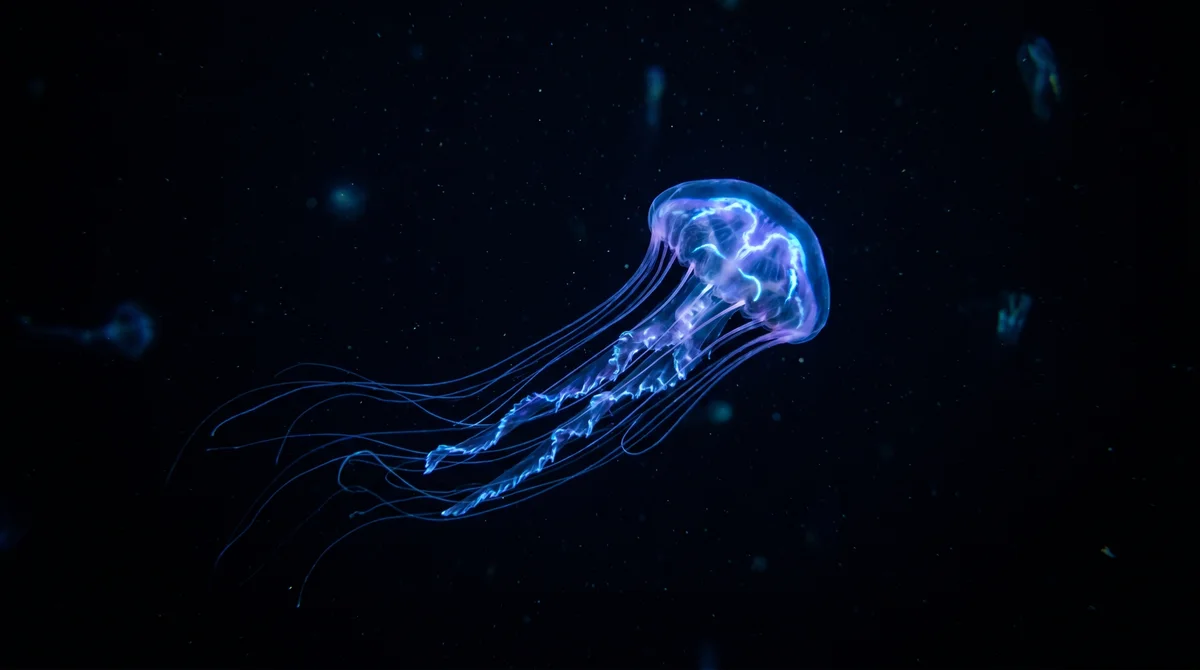
In the dark, many animals make their own light, an ability called bioluminescence. The anglerfish dangles a glowing lure to draw prey close; some squid squirt glowing 'ink' to confuse hunters; and many creatures glow on their bellies to erase their shadow from below. In the deep sea, light is a tool, a trap and a language all at once.
Crushing pressure and freezing cold
The deeper you go, the more the weight of water presses down. At the bottom of the deepest trench, the pressure is like having dozens of jumbo jets stacked on top of you, and the water hovers just above freezing. Deep-sea animals survive because they have soft, squishy bodies with no air pockets to crush, and special proteins built for the pressure. What would destroy us is simply home to them.
Weird and wonderful creatures
- Anglerfish — uses a glowing lure to fish in the dark.
- Giant squid — has eyes the size of dinner plates, the biggest in the animal kingdom.
- Gulper eel — can open a huge balloon-like mouth to swallow big meals.
- Dumbo octopus — flaps ear-like fins and lives deeper than almost any octopus.
- Vampire squid — not a hunter at all; it gently eats falling specks of food.
Life that lives on chemicals, not sunlight
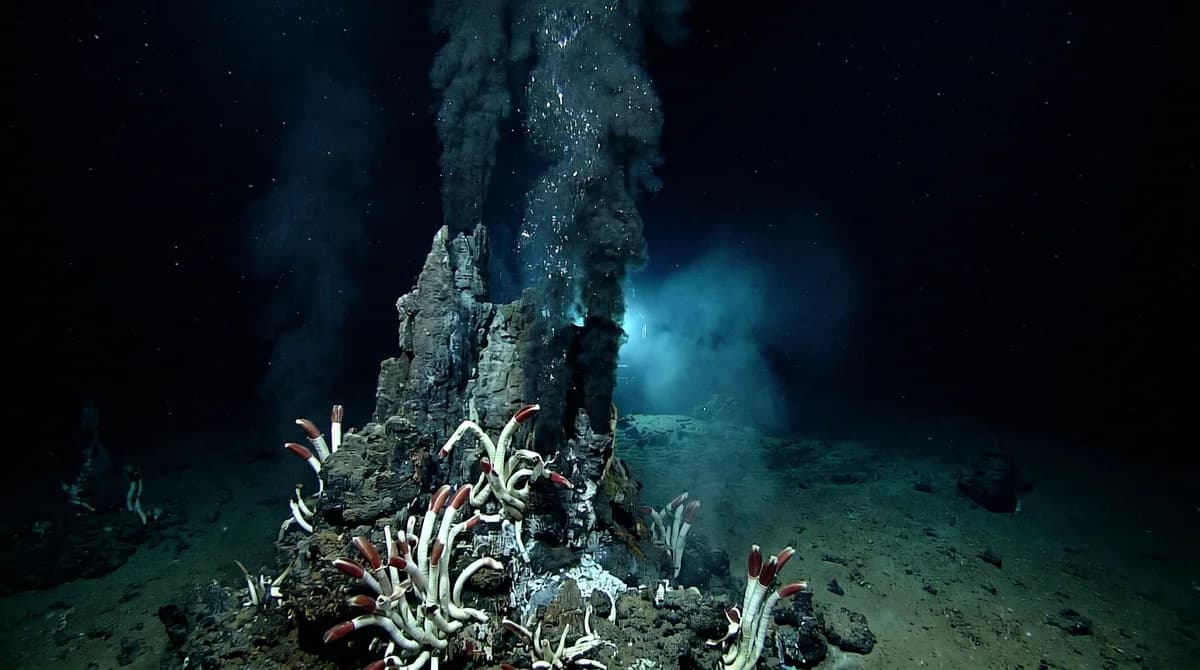
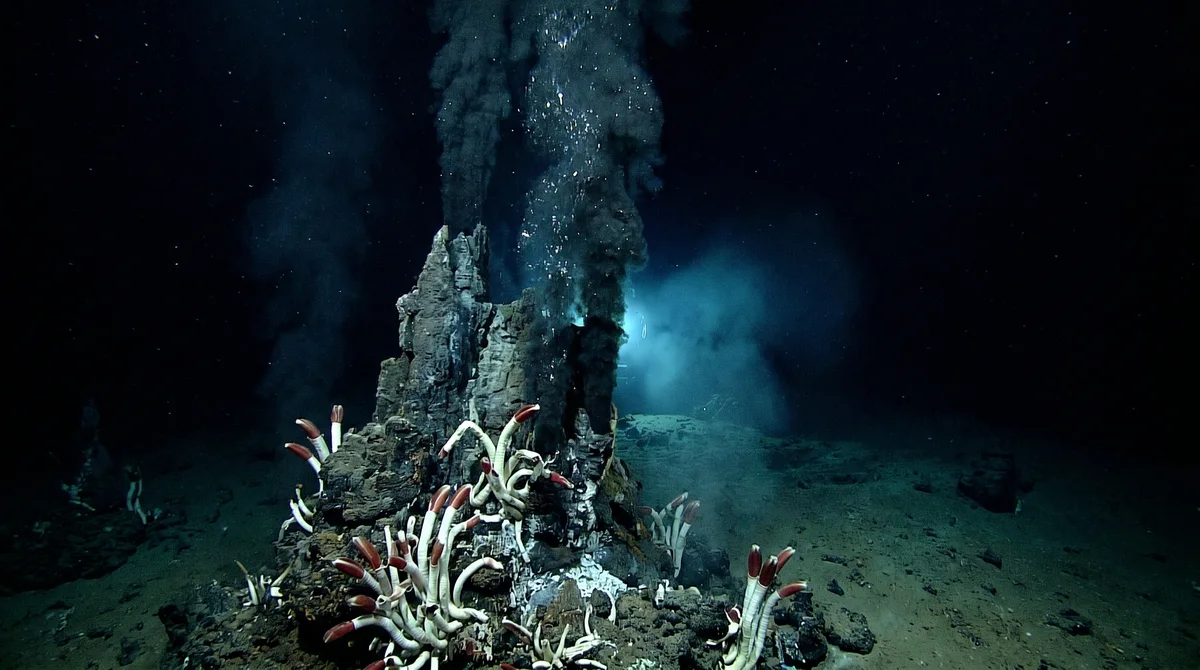
One of the greatest discoveries in ocean science: around hydrothermal vents — cracks in the seafloor that gush hot, mineral-rich water — whole ecosystems thrive in total darkness. Special bacteria turn the vent chemicals into food (a process called chemosynthesis), and giant tube worms, ghostly crabs and clams feed on them. It proved that life does not always need the sun (Woods Hole Oceanographic Institution).
The deepest place on Earth
The deepest known spot is the Challenger Deep in the Mariana Trench — almost 11 kilometres down. If you dropped Mount Everest into it, the peak would still be more than 2 km underwater. Only a handful of people have ever travelled there, far fewer than have been to space (NOAA Ocean Exploration).
The deep sea by the numbers
- Starts at: ~200 m (where sunlight ends)
- Deepest point: Challenger Deep, ~11 km
- Temperature: Just above freezing
- Light: None — animals make their own
- Biggest eyes: Giant squid (dinner-plate size)
- Explored: Only a tiny fraction
How do we explore the deep?
Because humans cannot survive the pressure unprotected, scientists explore the deep with submersibles (tiny crewed subs) and ROVs (robots on long cables, controlled from a ship). Their lights and cameras reveal a world no eye had ever seen — and almost every dive finds something new (NOAA Ocean Exploration).
Why the deep sea matters
The deep ocean is not just spooky and cool — it is important. It helps store carbon and control our climate, it may hold medicines we have not discovered yet, and it is full of species unknown to science. Protecting a place we barely understand is one of the big challenges of our time.
How do animals make their own light?
Bioluminescence is real, living chemistry. Inside special cells or organs called photophores, a substance named luciferin reacts with oxygen (helped by a molecule called luciferase) to produce light with almost no heat — far more efficient than a light bulb. Some animals make the chemicals themselves; others team up with glowing bacteria that live inside them and shine in return for a safe home. The result is a dark world sprinkled with living blue-green stars.
Bodies built for a world with no light
Deep-sea animals are shaped by the dark. In the dim twilight zone, many have enormous, super-sensitive eyes to catch the last hints of light. Deeper down, some have tiny eyes or almost none, 'seeing' instead by feeling vibrations and smelling chemicals in the water. A clever trick: many animals are coloured red or black, because red light never reaches the deep — so a red shrimp is effectively invisible down there.
Gentle giants and tiny terrors
The deep is a land of extremes. The colossal squid — the largest invertebrate on Earth, with eyes the size of footballs — drifts in the cold dark. Yet some of the fiercest hunters are tiny, like the fangtooth, a small fish with teeth so big it cannot fully close its mouth. In a world where meals are rare, every deep-sea animal is built to make the most of whatever it finds.
The deep sea and us
The deep ocean may feel far away, but it touches our lives every day. It helps store carbon and steady the climate; the internet travels along cables laid across the seafloor; and chemicals from deep-sea life have inspired new medicines. Some companies even want to mine the deep for metals — which is why understanding and protecting this hidden world matters more than ever (Woods Hole Oceanographic Institution).
Is the deep ocean empty?
People once believed the deep sea was a lifeless desert. They were spectacularly wrong — and the story of how we found out is a brilliant science lesson. Read is the deep ocean empty?
Marine snow: food falling from above
If sunlight cannot reach the deep, what do animals eat? A lot of them rely on marine snow — a constant drift of tiny dead plankton, droppings and bits of food sinking down from the sunlit surface. It looks like a gentle snowfall in a submersible's headlights, and it feeds countless deep-sea creatures. When a whole whale sinks to the bottom (a 'whale fall'), it can feed an entire community for years.
The biggest migration on Earth happens every night
Here is a fact that amazes scientists: every single night, billions of small animals swim up from the twilight zone to feed in the dark surface waters, then sink back down before dawn to hide. It is called the diel vertical migration, and it is the largest movement of animals on the planet — happening in every ocean, unseen, while we sleep (Smithsonian Ocean).
What lives at the very bottom?
Even the deepest trenches are not empty. Scientists have filmed pale, jelly-like snailfish swimming several kilometres down, and shrimp-like amphipods scavenging on the trench floor. These animals are perfectly built for a world of crushing pressure and endless dark — proof that life finds a way almost everywhere.
Dive deeper with Wild World: The Deep Ocean
Our 15-page science magazine for ages 8-14 explores the ocean zones, glowing creatures, the crushing trench and life without sunlight — plus a Myth-Busters spread, puzzles and a draw-along.
Ready to teach it? See how to teach kids about the deep ocean.
Sources and further reading
Facts in this article were checked against the public, expert sources above. Spotted something out of date? Tell us and we will fix it.
Frequently Asked Questions
How deep is the deep sea?
The deep sea usually means everything below about 200 metres, where sunlight fades out. It plunges down past 4,000 metres across the abyss, and reaches almost 11 kilometres in the deepest trench, the Mariana Trench.
Why do deep-sea animals glow?
Many deep-sea animals make their own light, called bioluminescence. They use it to lure prey, to confuse or scare predators, to hide their shadow, and to signal to mates in the dark.
How do animals survive the pressure?
Deep-sea animals have soft, flexible bodies with no air spaces to be crushed, and special proteins that keep working under pressure. Because they are built for it, the crushing deep is simply home.
Can anything live without sunlight?
Yes. Around hot vents on the seafloor, special bacteria make food from chemicals instead of sunlight, in a process called chemosynthesis. Whole communities of animals live on them.
What is the deepest part of the ocean?
The deepest known point is the Challenger Deep in the Mariana Trench, almost 11 kilometres down — deep enough to swallow Mount Everest with room to spare.
Have we explored the whole deep sea?
Not even close. Only a small fraction of the deep ocean has been seen in detail, and scientists discover new species on almost every expedition. It is one of Earth's last great frontiers.
Try our free critical thinking games!
Fun, colorful brain-building games for kids ages 6-14. No signup required.
Play Now