How to Teach Kids About the Deep Ocean: Activities & a Free Lesson
Key Takeaways
- ✓Start with wonder — glowing animals and a trench deeper than Everest hook kids instantly.
- ✓Use the ocean zones to teach layers, light and adaptation.
- ✓Hands-on demos (pressure, density, bioluminescence) make abstract ideas concrete.
- ✓Match activities to age: drawing and zone games for young kids; research and debate for older ones.
- ✓The deep sea is perfect for teaching that 'unexplored' is not the same as 'empty'.
A simple, mostly screen-free way to teach kids about the deep ocean — a 15-minute lesson, a hands-on pressure experiment, zone and creature activities by age, and resources that build real science thinking.
The deep ocean is pure wonder for kids — glowing animals, alien-looking creatures, and a trench deeper than Mount Everest is tall. It is also a brilliant way to teach real science: adaptation, evidence, and the difference between 'unknown' and 'impossible.' Here is a simple, mostly screen-free way to teach kids about the deep ocean, with a quick lesson and age-by-age activities.
Last updated 7 June 2026
Step 1: Start with wonder
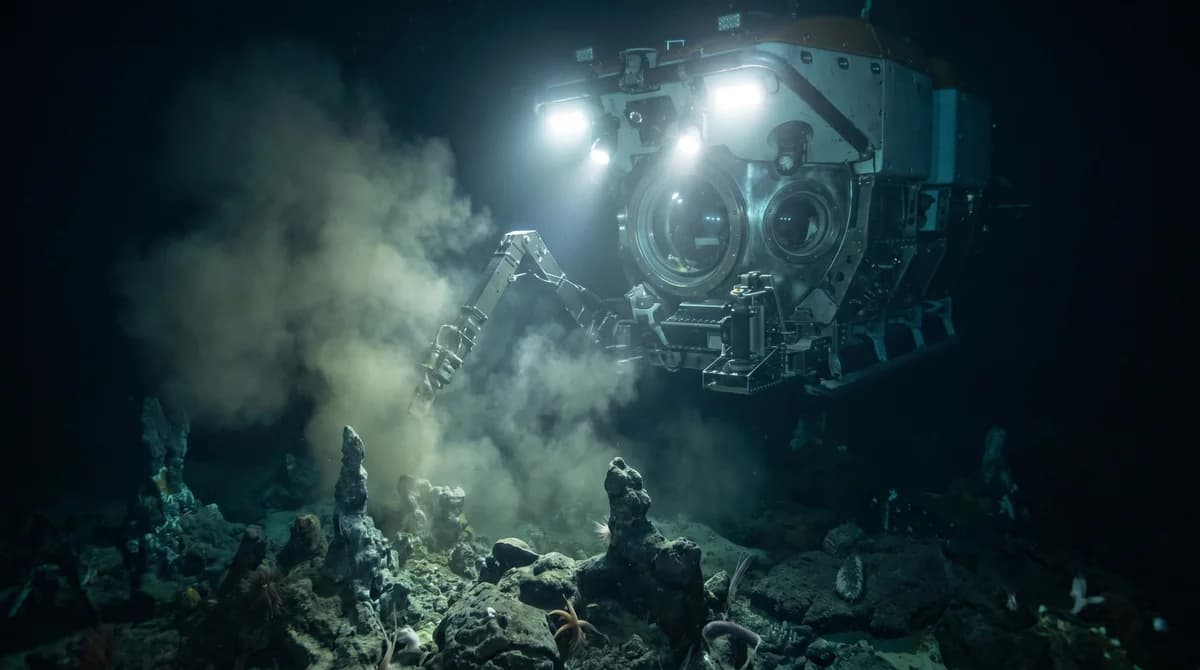
Open with something astonishing: some fish carry their own glowing lantern, the deepest trench could swallow Everest, and whole communities live on chemicals in total darkness. Wonder is the hook — and the deep sea has more of it than almost any topic.
A free 15-minute deep-ocean lesson
Works at the table or in class:
- Wonder (3 min): Share two amazing facts and ask, "What would it be like down there?"
- Zones (5 min): Draw the ocean layers and read about one together (try our deep sea facts for kids).
- Think (4 min): Ask, "Is the deep ocean empty?" and explore the surprise (see this post).
- Create (3 min): Invent a deep-sea creature and label one adaptation that helps it survive.
A hands-on pressure experiment
This makes deep-sea pressure click. Take an empty plastic bottle and carefully poke three holes up one side, then fill it with water. Water squirts hardest from the bottom hole, because there is more water pressing down there. Explain that the deep sea is this idea taken to the extreme — and that is why deep-sea animals have soft, squishy bodies with no air spaces to crush.
Step 2: Activities by age
Ages 4-7: Draw glowing fish on black paper, act out sinking through the ocean zones, and make an anglerfish with a torch for a lure.
Ages 8-11: Build a labelled ocean-zones poster, design a deep-sea creature with three adaptations, and do the bottle pressure demo.
Ages 12-14: Research how vent communities survive, then debate whether we should mine the deep sea — weighing new resources against protecting an unexplored world.
Ten quick deep-ocean activities
- Zone ladder — label sunlight, twilight, midnight, abyss, trench.
- Glow art — draw bioluminescent creatures on black paper.
- Pressure bottle — the squirting-holes demo.
- Everest in the trench — draw it to scale.
- Creature design — invent an animal with deep-sea adaptations.
- ROV pilot — steer a 'robot' (toy) to explore under furniture with a torch.
- Vent food web — draw who eats whom around a vent.
- Fact vs myth — sort kraken vs giant squid claims.
- Map check — discuss why we know the Moon's surface better than the seafloor.
- Teach-back — have your child explain bioluminescence to you.
Questions kids ask — and simple answers
- "Why is it so dark?" Sunlight cannot reach past about 1,000 m, so most of the deep is black.
- "Would I get crushed?" Without a sub, yes — the pressure is enormous. Deep-sea animals are built for it.
- "What's the biggest deep-sea animal?" The giant (and colossal) squid, with the largest eyes of any animal.
- "Are there sea monsters?" No monsters — but some real giants that inspired the legends.
Turn it into a project
For older kids, combine it: choose a deep-sea creature, research five facts and one busted myth, build or draw it with labelled adaptations, and present in three minutes. Our Wild World: The Deep Ocean magazine makes a ready-made fact 'starter pack,' and NOAA Ocean Exploration has real dive footage to extend the learning.
A 'why things sink' demo
Try a quick kitchen experiment to explore the ocean. Stir lots of salt into one glass of water and leave another plain, then gently lower a small object (or a drop of coloured water) into each. Things float more easily in salty water — a simple way to talk about how temperature and saltiness make ocean water form layers, and why the deep, cold, salty water sits at the bottom. Concrete, cheap and memorable.
Visit, watch and read
Bring the deep sea to life beyond the page. An aquarium lets kids see deep-water species up close; reputable sites such as NOAA Ocean Exploration and Smithsonian Ocean have real dive footage and kid-friendly guides. If you watch a documentary, give each child one job — spot a bioluminescent animal, or count how many species the dive finds. Active watching turns screen time into science.
Deep-ocean conversation starters
Great questions spark great thinking. Try these at dinner or in the car:
- If sunlight can't reach the deep sea, how do you think animals find food down there?
- Why do you think we've mapped the Moon better than our own ocean floor?
- Would you rather explore the deep sea or outer space — and why?
- People once said the deep was lifeless. What's something 'everyone knows' that might be worth checking?
Build a deep-sea diorama
Turn a shoebox into the deep ocean. Paint the inside black, then hang glowing creatures (use glow paint or yellow paper) at different depths, labelling the sunlight, twilight and midnight zones. Add a vent at the bottom with tube worms made from straws. It is a craft, a science lesson and a display all in one — and building each zone helps kids remember how light, cold and pressure change as you go down.
Cross-curricular links
The deep sea connects to almost every subject. Maths: draw the ocean zones to scale, or work out how many times Everest fits in the trench. Art: design bioluminescent creatures. Writing: keep a 'deep-sea explorer's log' describing a dive. Geography: find the deepest trenches on a world map. One topic, a whole week of learning.
Misconceptions to clear up
A few gentle corrections go a long way. The deep sea is not empty; deep-sea animals are not all huge monsters (many are small); it is not warm near the vents everywhere (the water around them is freezing, only the vent itself is hot); and the pressure does not 'crush' animals that are built for it. Each correction is a chance to ask, 'how do we actually know?'
Make it a mini-expedition project
For older kids, run a 'deep-sea expedition': choose a real trench or feature, research what lives there, plan an imaginary dive (what gear, what depth, what dangers), and present the findings as a mission report. It blends research, writing and presenting — and our Wild World: The Deep Ocean magazine makes a perfect briefing pack to start from.
Try a simple pressure experiment
Help kids feel why the deep is so hard to reach. Take an empty plastic bottle, poke three small holes up one side, fill it with water and watch: the water shoots out fastest and furthest from the bottom hole, because the water above pushes down harder the deeper you go. That is exactly how ocean pressure works — and why a sub needs to be strongest at the bottom of a dive. One bottle, one big idea.
Make a bioluminescence jar
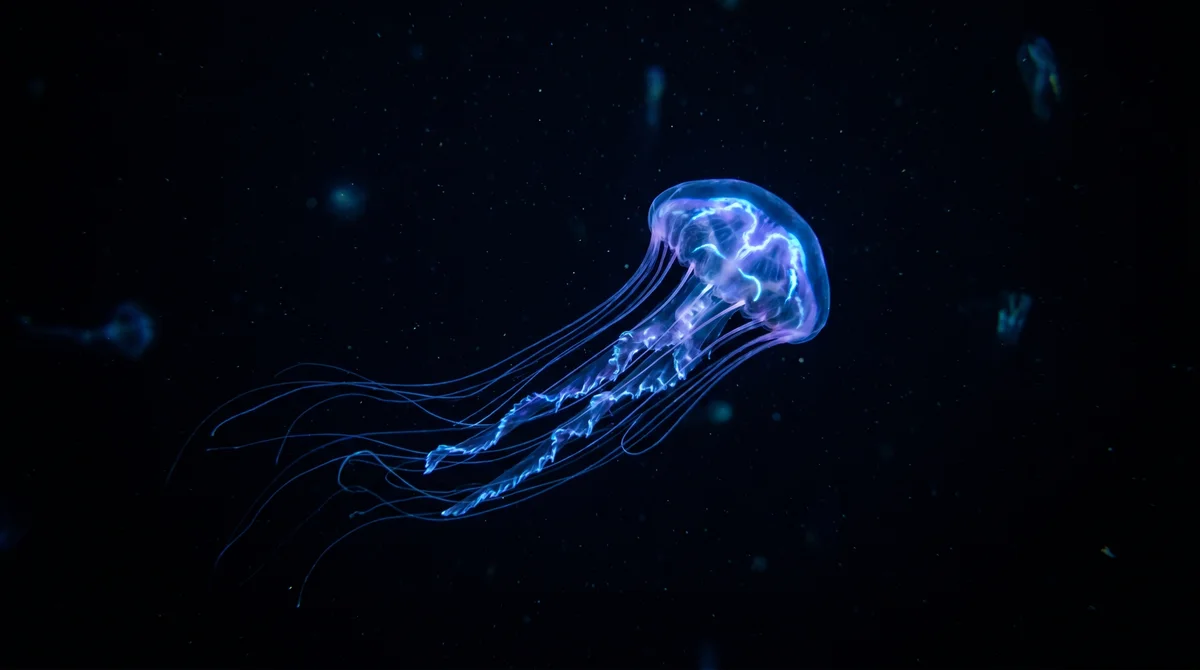
Recreate the glow of the deep with a jar, water and a snapped glow-stick (or glow paint). Turn off the lights and talk about how real animals make cold light with chemicals instead of plastic. Ask: if you lived where there was no sunlight, what would you use light for — finding food, scaring enemies, or sending signals? It is a craft and a thinking prompt in one.
A deep-sea reading and film list
Stretch the topic across a rainy weekend. Nature documentaries about the deep ocean are full of jaw-dropping footage; pair them with a good nonfiction book and the photo galleries on Smithsonian Ocean. Give each child a 'spotter's job' while they watch — count the glowing animals, or note every creature with huge eyes — so screen time turns into active, evidence-gathering science.
A done-for-you ocean lesson: Wild World: The Deep Ocean
15 pages of facts, a Myth-Busters spread, a draw-along and a quiz — built for ages 8-14. Read a free sample before you buy.
Start with the facts: 24 deep sea facts for kids.
Sources and further reading
Facts in this article were checked against the public, expert sources above. Spotted something out of date? Tell us and we will fix it.
Frequently Asked Questions
What age can kids learn about the deep ocean?
Any age — match the depth. Young kids love drawing glowing creatures and acting out the ocean zones; kids 8-14 enjoy researching adaptations, exploring chemosynthesis, and debating deep-sea mining.
How do I explain ocean pressure to a child?
Use a simple demo: poke holes up the side of a bottle and fill it with water — it squirts hardest from the bottom hole, because more water above means more pressure. The deep sea is the extreme version of that.
What are good deep-ocean activities at home?
Make a labelled ocean-zones poster, build a glowing 'anglerfish' with a torch, do a water-pressure bottle demo, or design an imaginary deep-sea creature with adaptations and explain why each one helps.
How does the deep ocean teach critical thinking?
Scientists once thought the deep was lifeless and were proven wrong. It is a perfect way to teach kids that 'we haven't looked yet' is different from 'nothing is there' — and that evidence updates ideas.
Where can kids learn more about the deep ocean?
NOAA Ocean Exploration and Smithsonian Ocean have superb kid-friendly pages and dive videos, and you can read a free sample of our Wild World: The Deep Ocean magazine online.
Try our free critical thinking games!
Fun, colorful brain-building games for kids ages 6-14. No signup required.
Play Now