Is the Deep Ocean Empty? What Really Lives in the Dark
Key Takeaways
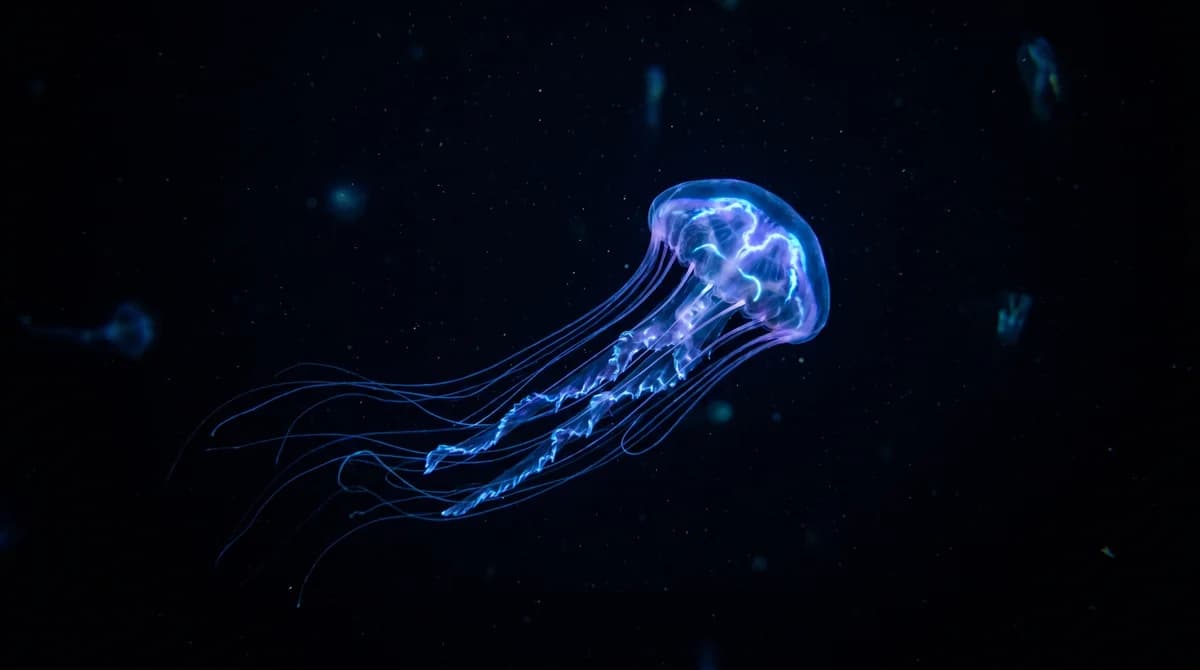
- ✓No — the deep ocean is full of life, from glowing fish to whole communities around hot vents.
- ✓In the 1800s some scientists believed the deep sea was lifeless (the 'azoic' idea); expeditions disproved it.
- ✓Around hydrothermal vents, life runs on chemicals (chemosynthesis), not sunlight.
- ✓We have explored only a small fraction of the deep, so 'we've never seen it' is not the same as 'nothing is there'.
- ✓It is a perfect lesson in how scientists change their minds when new evidence appears.
Is the deep ocean a lifeless desert? A fact-checked, kid-friendly answer: why scientists once thought so, the discovery that proved them wrong, and how life thrives with no sunlight.
Short answer: not at all — the deep ocean is bursting with life. It only looks empty because it is dark and almost impossible to reach. The real surprise is that for a while, even scientists thought the deep was a lifeless desert. How they discovered the truth is one of the best detective stories in science.
Last updated 7 June 2026
The old belief: a lifeless desert
In the 1800s, some respected scientists argued that below a certain depth the ocean must be completely lifeless — too dark, too cold and too crushing for anything to survive. The idea was so reasonable-sounding that many people simply accepted it. It is a useful reminder that even experts can be confidently wrong (Smithsonian Ocean).
What changed their minds
The evidence did. As ships began dredging and exploring the deep, they kept pulling up living animals from far below the supposed limit of life. Great ocean expeditions catalogued thousands of new deep-sea species. Faced with the catch in their nets, scientists had to drop the 'lifeless' idea. That is science working exactly as it should: evidence beats assumption.
Life with no sunlight at all
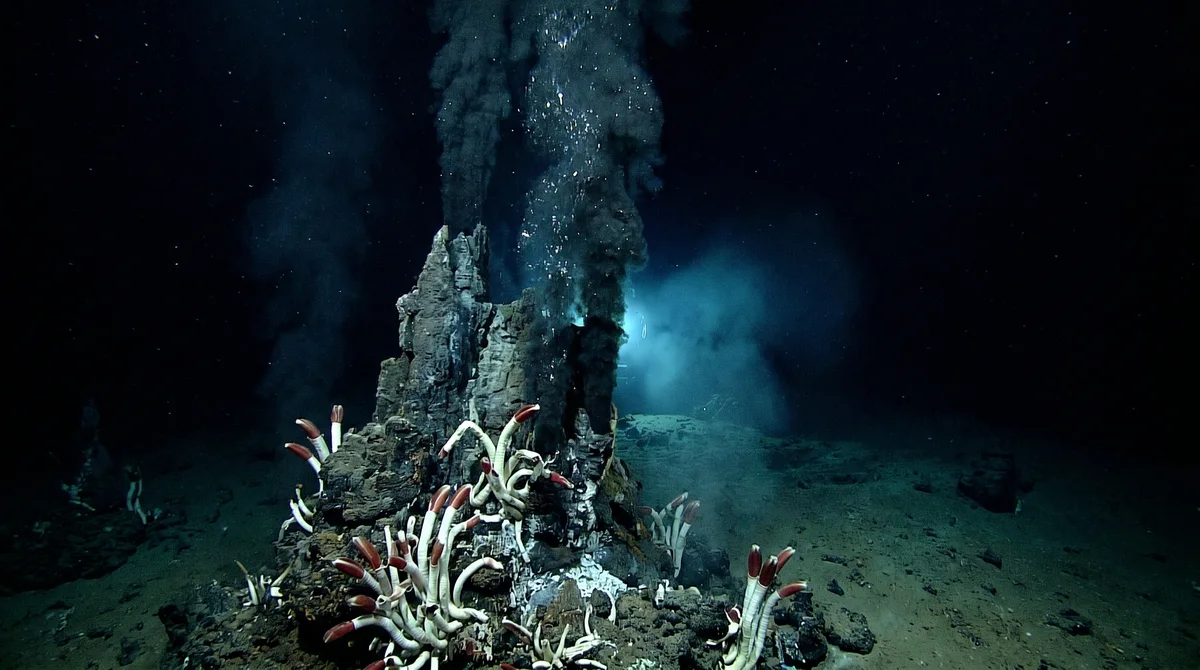
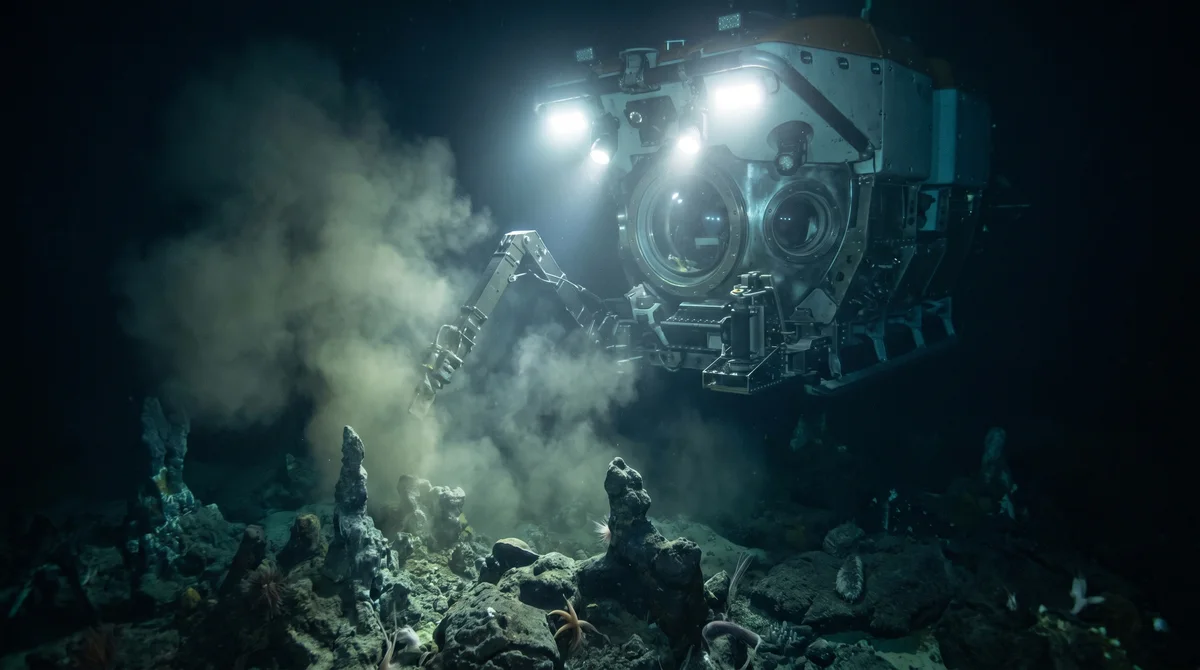
The biggest shock came in 1977, when explorers found hydrothermal vents on the seafloor surrounded by thriving life — giant tube worms, crabs and clams — in total darkness. The secret is chemosynthesis: bacteria make food from chemicals in the vent water instead of sunlight. It rewrote the rules of biology and even changed how scientists think about life on other planets (Woods Hole Oceanographic Institution).
'We haven't seen it' is not 'nothing's there'
Here is the key thinking move. We have mapped only a small part of the deep seafloor in detail — in some ways we have better maps of the Moon and Mars than of our own deep ocean. But "we have not explored it" does not mean "nothing lives there." Confusing those two ideas is exactly the mistake the old scientists made.
Monsters, krakens and giant squid
For centuries, sailors told tales of sea monsters like the kraken. It turns out there was a kernel of truth: the giant squid is real, with eyes the size of dinner plates. But it is a shy deep-sea animal, not a ship-sinking monster. Sorting the real animal from the legend is a perfect myth-busting exercise.
Think like a scientist
The deep ocean teaches one of the most valuable lessons in all of science: when someone says "there's nothing there" or "that's impossible," ask "how do we know? has anyone actually looked?" Again and again, the deep sea has rewarded the people who went and checked.
How explorers proved life was everywhere
The big turning point came with great ocean expeditions that lowered nets and dredges thousands of metres down — and kept hauling up living animals from depths where 'nothing' was supposed to live. Voyage after voyage, the catch told the same story. Scientists did not just argue about it; they went and looked, and the evidence settled the question. That is the heart of how science works (Smithsonian Ocean).
Life at the deepest point of all
Surely the very bottom of the deepest trench is empty? Nope. Even in the Challenger Deep — nearly 11 km down — explorers have found living amphipods (shrimp-like scavengers) and filmed delicate snailfish. If life thrives there, under pressure that would crush a submarine, the idea of an 'empty' deep ocean falls apart completely (NOAA Ocean Exploration).
New species, almost every expedition
Far from running out of life, the deep keeps revealing more of it. On many modern expeditions, scientists discover species never seen before — sometimes several on a single dive. An 'empty' place would not keep producing new animals. The deep ocean is, in fact, one of the richest and least-known habitats on Earth (Woods Hole Oceanographic Institution).
Why scientists keep going back
If the deep is so hard and expensive to reach, why bother? Because nearly every expedition pays off: new species, new clues about Earth's climate, even new medicines discovered in deep-sea life. The deep ocean also helps store carbon and shape our weather, so understanding it helps us look after the whole planet. 'Empty,' it turns out, was the opposite of the truth — the deep is one of the most valuable, surprising places we have (Woods Hole Oceanographic Institution).
We've mapped the Moon better than the seafloor
Here is a fact that stuns most people: we have detailed maps of the surface of the Moon and Mars, yet only a small fraction of our own deep seafloor has been mapped in fine detail. It is not that the deep is empty — it is that it is dark, vast and hard to reach. Saying 'we've never looked there' is completely different from saying 'nothing lives there,' and mixing the two up is exactly the mistake people keep making (NOAA Ocean Exploration).
Whole worlds nobody expected
Every time explorers look somewhere new, the deep surprises them. They have found cold seeps where life feeds on chemicals oozing from the seabed, eerie brine pools (underwater 'lakes' of super-salty water) ringed with mussels, and underwater mountains called seamounts covered in corals and fish. None of these were predicted — they were discovered by going and looking, which is the whole point.
New species, almost every time
The deep ocean is so under-explored that scientists routinely find animals new to science on a single expedition — sometimes dozens at once. A truly empty place would not keep handing us new life. The steady stream of discoveries is some of the strongest evidence of all that the deep is teeming, not barren.
'We haven't seen it' is not 'it isn't there'
This is the big thinking lesson, and it works far beyond the ocean. Not finding something yet is not the same as proving it does not exist — especially if you have barely looked. The old scientists declared the deep lifeless before anyone had properly explored it. Whenever you hear 'there's nothing there,' the sharp question is simply: have we actually checked?
Pressure, cold and darkness: the real challenges
The deep sea is not empty, but it is extreme — which is exactly why it took us so long to explore. For every 10 metres you descend, the pressure grows by about the weight of one extra atmosphere; at the bottom of the Mariana Trench it is over a thousand times the pressure at the surface, enough to crush an unprotected submarine. The water is near-freezing and pitch black. Life thrives there anyway — but humans need extraordinary machines just to visit.
The tools that finally opened the deep
Our picture of the deep changed as our technology did. In 1960 the Trieste carried two people to the deepest spot on Earth; today, crewed submersibles and remotely operated vehicles (ROVs) trailing long cables send back live video, while robot landers sit on the seabed for days filming whatever swims past. Each new tool has revealed more life, not less — the opposite of what 'empty' would predict (NOAA Ocean Exploration).
What we still don't know
The honest answer to 'what lives in the deep?' is: we are still finding out. Scientists think a huge share of deep-sea species have never been seen, named or studied. That is not a sign of emptiness — it is a sign of how vast and unexplored the deep really is. The mystery is the whole point, and it is what makes every expedition exciting.
Bust deep-sea myths in Wild World: The Deep Ocean
The issue's Myth-Busters spread asks kids to weigh evidence over legend — with glowing creatures, the Mariana Trench, puzzles and a quiz, for ages 8-14.
Want the fun facts first? Read 24 deep sea facts for kids.
Sources and further reading
Facts in this article were checked against the public, expert sources above. Spotted something out of date? Tell us and we will fix it.
Frequently Asked Questions
Is the deep ocean really empty?
No. The deep sea teems with life — glowing fish, squid, octopuses, and entire communities around hot vents. It only looks empty because it is dark and hard to reach, not because nothing lives there.
Did scientists ever think the deep sea was lifeless?
Yes. In the 1800s a popular idea (sometimes called the 'azoic theory') claimed nothing could live below a certain depth. Ocean expeditions kept hauling up living animals from the deep, and the idea was abandoned.
How can things live with no sunlight?
Around hydrothermal vents, special bacteria make food from chemicals in the water through chemosynthesis. Animals eat those bacteria, so whole food webs exist with no sunlight at all.
How much of the deep ocean have we explored?
Only a small fraction in detail. Much of the seafloor has never been seen up close, which is why scientists keep discovering new species on deep-sea expeditions.
Are there monsters in the deep sea?
Not monsters, but some giants — like the real giant squid, which likely inspired 'kraken' legends. The truth is stranger and more wonderful than the myths.
Why did people believe the deep was empty?
Because it is dark, cold and almost impossible to reach, it was easy to assume nothing lived there. It is a classic case of mistaking 'we haven't looked' for 'there's nothing to find'.
Try our free critical thinking games!
Fun, colorful brain-building games for kids ages 6-14. No signup required.
Play Now