Shark Facts for Kids: 25 Amazing Things to Know
Key Takeaways
- ✓Sharks are fish whose skeletons are made of bendy cartilage, not bone, and they have swum the oceans for over 400 million years.
- ✓Sharks sense prey with smell, a vibration-detecting lateral line, and special pores that detect the faint electricity of hidden animals.
- ✓The whale shark is the biggest fish on Earth (up to ~12 m) yet eats tiny plankton; the Greenland shark may live 300+ years.
- ✓Most of the 500+ shark species are harmless to people, and sharks keep ocean food webs healthy as top predators.
- ✓About a third of sharks and their relatives are now threatened, mainly from overfishing (IUCN).
Fun, fact-checked shark facts for curious kids aged 8-14 — how sharks sense prey with electricity, which shark is the biggest, how long they live, and why these misunderstood hunters matter for the whole ocean.
Sharks have cruised the world's oceans for more than 400 million years — long before there were trees, and long before the dinosaurs. They are some of the most successful and most misunderstood animals on Earth. Here are 25 amazing, fact-checked shark facts for curious kids, grouped so you can jump to your favourites.
Last updated 7 June 2026
What exactly is a shark?
A shark is a kind of fish, but a special one. Instead of bones, a shark's skeleton is made of cartilage — the same bendy material in your ears and the tip of your nose. That keeps sharks light and flexible. According to NOAA Fisheries — Sharks, there are more than 500 species of shark, from the dwarf lanternshark (smaller than your hand) to the enormous whale shark.
- Most sharks are cold-blooded, so the surrounding water sets their body temperature (a few, like the great white, can warm parts of their bodies).
- Their skin is covered in tiny tooth-like scales called dermal denticles that cut drag so they swim almost silently.
- Sharks never stop replacing their teeth — rows of spares sit ready behind the front teeth.
A shark's incredible super-senses
Sharks are famous for their senses, and the real science is more amazing than the myths. Sharks have an excellent sense of smell and a lateral line — a row of sensors along the body that feels tiny vibrations in the water. Most astonishing of all, jelly-filled pores on a shark's snout called the ampullae of Lorenzini can detect the faint electrical signals given off by a hidden animal's muscles. That means a shark can find a fish buried in the sand without seeing it at all (Smithsonian Ocean).
Meet some amazing sharks
There is no single "typical" shark. Here are a few record-holders kids love:
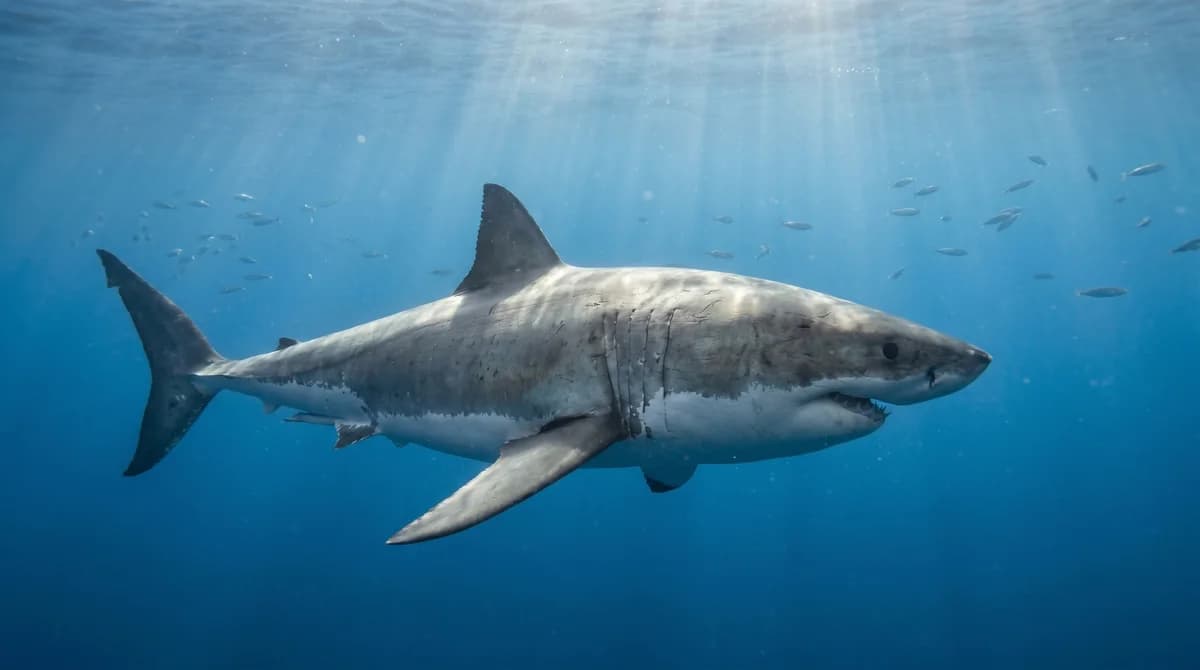
- Great white shark — a powerful hunter that can warm its blood to chase fast prey in cool water.
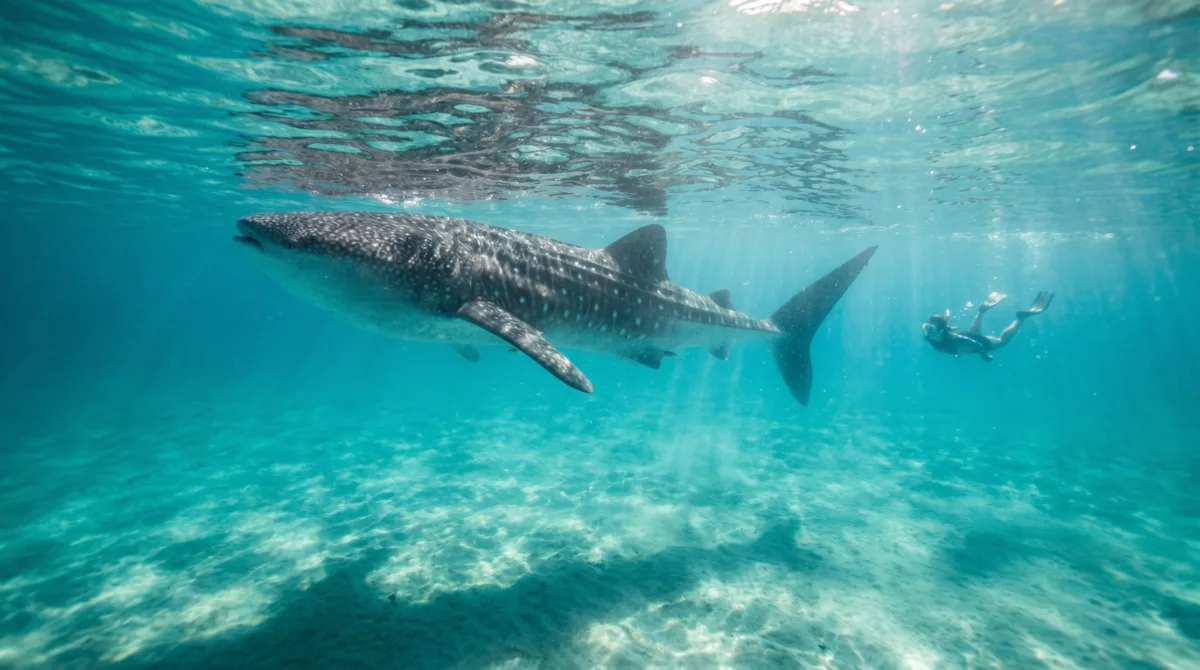
- Whale shark — the biggest fish on Earth, yet it eats some of the smallest food in the sea.
- Shortfin mako — the cheetah of the sea, swimming in short bursts around 45 km/h (about 30 mph).
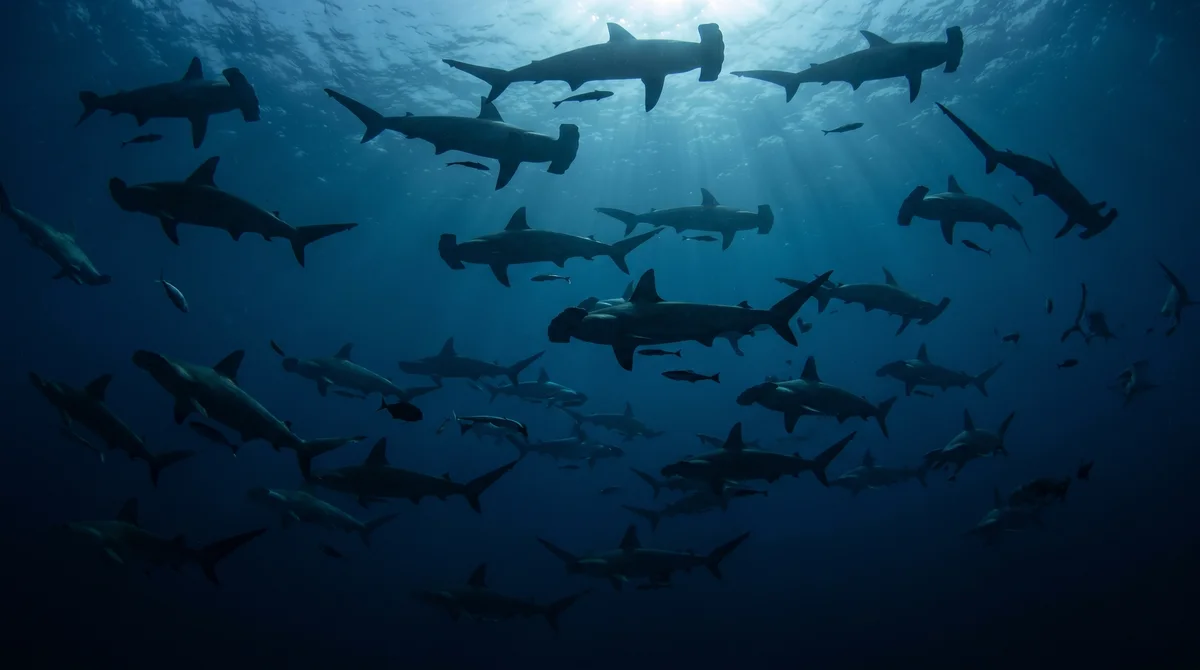
- Hammerhead — its wide, strange head improves its senses and steering.
- Dwarf lanternshark — only about 17 cm long, and it glows in the dark.
- Greenland shark — a slow Arctic giant and the longest-living vertebrate known.
Sharks by the numbers
- Species: 500+ kinds of shark (NOAA)
- Biggest: Whale shark, up to ~12 m
- Smallest: Dwarf lanternshark, ~17 cm
- Fastest: Shortfin mako, ~45 km/h in bursts
- Longest-lived: Greenland shark, est. 270-400+ years
- On Earth for: 400+ million years
How baby sharks are born
Here is a fact that surprises most people: not all sharks hatch from eggs the same way. Some sharks lay tough egg cases — washed-up ones are nicknamed "mermaid's purses." Others keep the eggs inside and give birth to live pups. A few even feed their growing young inside the body. However they arrive, baby sharks (called pups) can usually swim and hunt on their own straight away.
Why sharks matter
As top predators, sharks keep ocean food webs healthy. By catching slower, sick and weaker animals, they stop any one species from taking over and keep prey populations strong. When sharks vanish from an area, the whole web can fall out of balance — so protecting sharks protects the entire ocean (NOAA Fisheries — Sharks).
Are sharks in danger?
Sadly, yes — many are. The IUCN Red List of Threatened Species finds that around a third of all sharks, rays and their relatives are threatened with extinction, mostly from overfishing. The good news: when people learn the facts instead of the scary stories, they are far more likely to help protect these ancient, important animals.
Where in the world do sharks live?
Almost everywhere! Sharks live in every ocean on Earth — from warm coral reefs to the freezing Arctic, and from the sunny surface down to the pitch-dark deep sea. A few, like the bull shark, can even swim up rivers into freshwater. The Greenland shark cruises under polar ice while reef sharks patrol tropical shallows, so there is a shark suited to almost every watery home.
Sharks have surprising cousins
Sharks belong to a group of fish with cartilage skeletons called chondrichthyans. Their closest relatives are the rays, skates, sawfish and chimaeras — a stingray is basically a flattened shark cousin! That matters because these animals often face the same threats, so scientists work to protect them together (IUCN Red List of Threatened Species).
Five quick shark myths, busted
- Myth: all sharks must keep swimming or they drown. Many can pump water over their gills and rest on the seabed.
- Myth: sharks have terrible eyesight. Their vision is actually very good, even in dim light.
- Myth: sharks never get sick. Sharks can get diseases, including cancer — that old claim is false.
- Myth: every shark is huge. Most sharks are smaller than an adult human.
- Myth: sharks are mindless eating machines. They are curious animals that can learn, and aquarium sharks even recognise their keepers.
Want the biggest myth of all tackled properly? Read are sharks dangerous to humans?
How fast, how deep, and how far do sharks go?
Sharks are built for travel. The shortfin mako can sprint in short bursts of around 45 km/h (about 30 mph), making it the fastest shark. Others dive deep, hunting hundreds of metres down in near-total darkness. And many are long-distance travellers: great white sharks have been tracked swimming thousands of kilometres across whole oceans and back, returning to the very same spots year after year. Scientists learn this by fitting sharks with small electronic tags that report where they go (NOAA Fisheries — Sharks).
Do sharks sleep?
Sort of — but not the way we do. A shark cannot close its eyes, and some sharks must keep water moving over their gills to breathe, so they never fully switch off. Many have restful periods where parts of the brain slow down, and some species can lie still on the seabed while actively pumping water over their gills. So a shark "rests," even if it never curls up for a full night's sleep.
Slow to grow — and why that matters
Most sharks grow slowly, take years to become adults, and have only a few pups at a time — the opposite of fish that lay millions of eggs. That means if too many sharks are caught, their numbers cannot bounce back quickly. It is the main reason overfishing has put so many shark species at risk, and why protecting them is so important (IUCN Red List of Threatened Species).
Meet six real sharks in Wild World: Sharks
Our 15-page science magazine for ages 8-14 introduces the great white, hammerhead, whale shark and more — plus a Myth-Busters spread, puzzles and a draw-along.
Keep thinking like a scientist
Next time you hear a "fact" about sharks, ask the best question of all: how do we know that? Real shark science beats scary-movie myths every time — and it is far more interesting. For more, see how to teach kids about sharks, or settle the big one in are sharks dangerous to humans?
Sources and further reading
- NOAA Fisheries — Sharks
- Smithsonian Ocean
- IUCN Red List of Threatened Species
- International Shark Attack File (Florida Museum, University of Florida)
Facts in this article were checked against the public, expert sources above. Spotted something out of date? Tell us and we will fix it.
Frequently Asked Questions
What do sharks eat?
It depends on the species. Most sharks eat fish and squid; giant whale sharks and basking sharks filter tiny plankton; only a few large sharks hunt seals. As predators, sharks help keep ocean food webs balanced.
How many teeth does a shark have?
A shark can have hundreds of teeth at once, arranged in rows that move forward like a conveyor belt to replace ones that break off. Over a lifetime a shark may grow and lose thousands of teeth.
What is the biggest shark?
The whale shark is the biggest shark and the biggest fish in the world, reaching about 12 metres long (and sometimes more). Despite its size it is gentle and eats plankton.
Are sharks fish or mammals?
Sharks are fish. Unlike bony fish, their skeletons are made of cartilage — the same bendy material in your ears and the tip of your nose — and they breathe through gills.
How long do sharks live?
It varies a lot. Many sharks live 20-30 years, but the Greenland shark is the longest-living vertebrate known to science, with estimates of 270 to 400 years or more.
Are sharks endangered?
Many are at risk. The IUCN Red List finds that around a third of sharks, rays and their relatives are threatened, mostly because of overfishing. Protecting them helps keep oceans healthy.
Try our free critical thinking games!
Fun, colorful brain-building games for kids ages 6-14. No signup required.
Play Now