Are Sharks Dangerous to Humans? What the Evidence Really Says
Key Takeaways
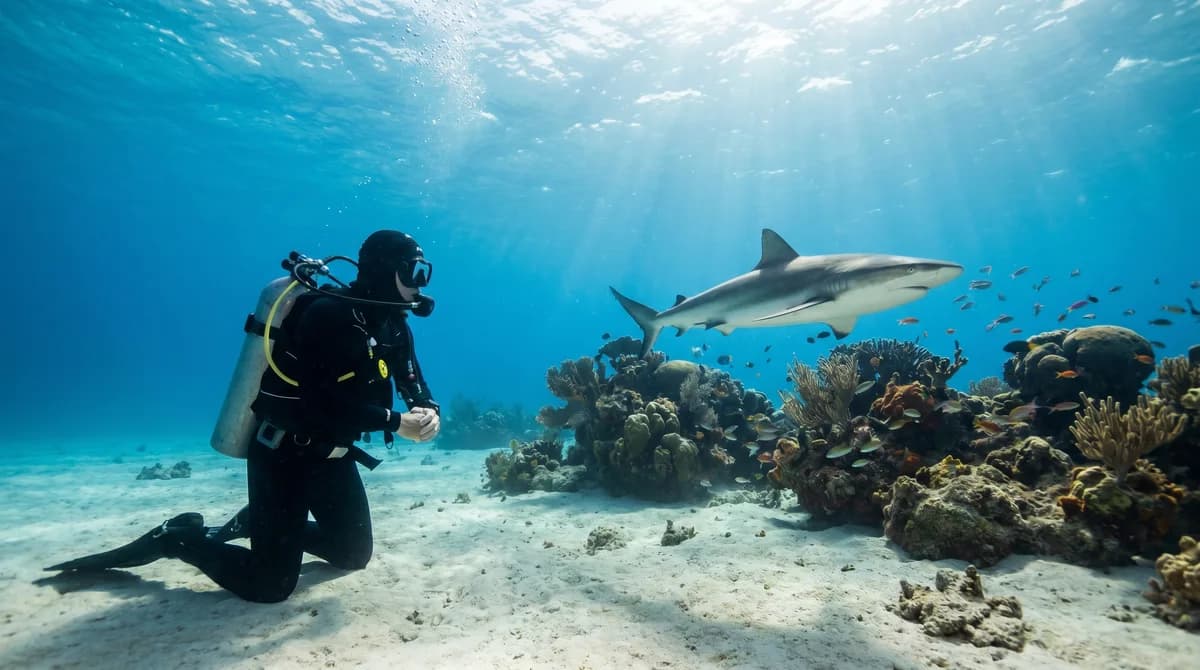
- ✓Serious shark bites are extremely rare: the International Shark Attack File records only about 70-100 unprovoked bites worldwide each year.
- ✓You are far more likely to be hurt by everyday things than by a shark; most shark species cannot harm a person at all.
- ✓Most bites are mistakes or curiosity, not hunting — sharks rarely see humans as food.
- ✓Fear usually comes from vivid stories (like one famous movie), not from the evidence — a key critical-thinking lesson.
- ✓The real danger runs the other way: people kill tens of millions of sharks each year.
A calm, evidence-based look at how dangerous sharks really are to people — the real numbers from the International Shark Attack File, why the myth is so powerful, and how kids can think clearly about risk.
Short answer: no — sharks are not the monsters that movies make them out to be. Out of more than 500 shark species, only a few have ever been involved in a serious bite, and bites are extremely rare. This is the perfect topic for practising a skill every kid needs: telling the difference between a scary story and the real evidence.
Last updated 7 June 2026
What the numbers actually show
Scientists at the International Shark Attack File (Florida Museum, University of Florida) carefully record shark bites worldwide. In a typical year there are only about 70 to 100 unprovoked bites, and just a handful are fatal. Compare that with everyday life: people are far more likely to be hurt in a car, by a fall, or in a bicycle accident. Millions of people swim in the ocean every year and almost never even see a shark.
- Most sharks are too small or too gentle to hurt a person at all.
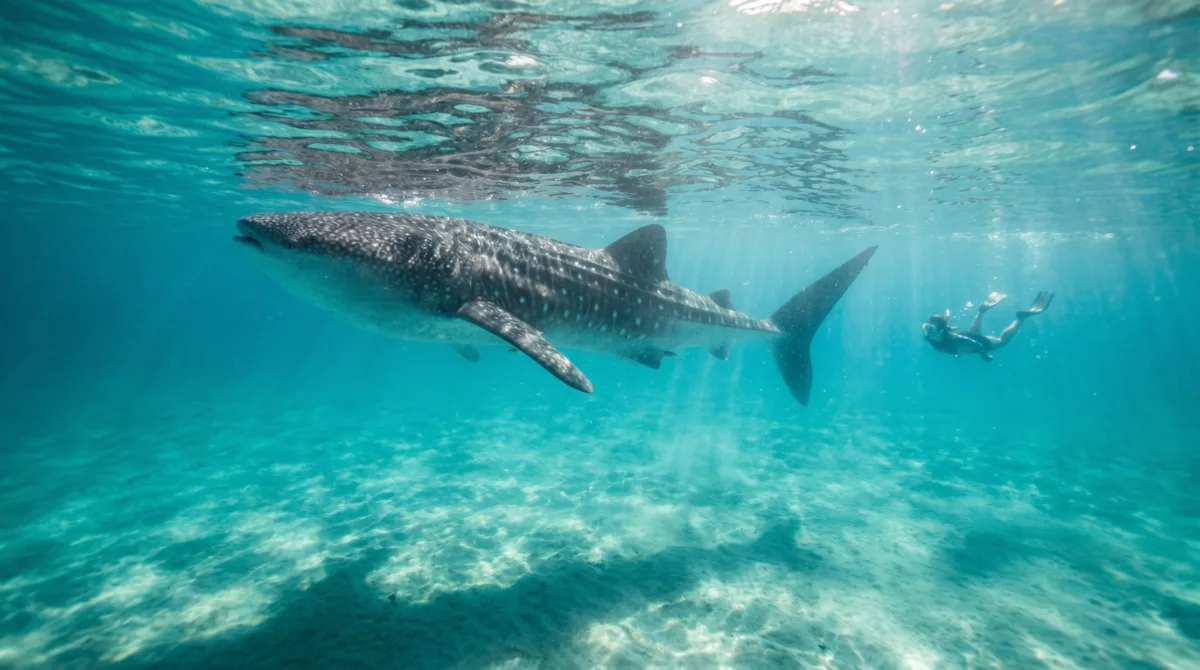
- The biggest sharks of all — whale sharks and basking sharks — are filter feeders with no interest in humans.
- When bites do happen, sharks usually let go once they realise a person is not their usual prey.
Why do bites happen at all?
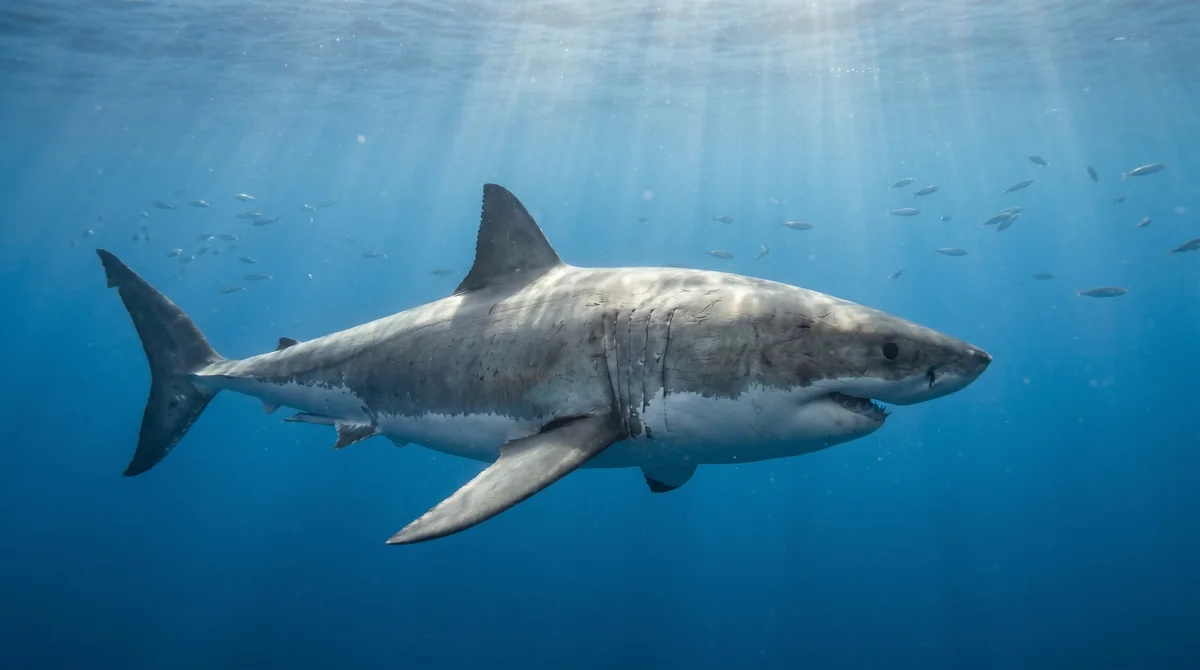
Sharks do not hunt people. Most bites are cases of mistaken identity — from below, a person paddling a surfboard can look a bit like a seal — or simple curiosity, because sharks investigate new things with their mouths the way we might with our hands. The sharks involved in most bites (great white, tiger and bull sharks) are large coastal species, but even for them, biting a human is a rare mistake, not a meal.
Why does the myth feel so true?
If sharks are so rarely dangerous, why are we so scared of them? Because our brains remember dramatic, emotional stories far more easily than dull statistics. One famous 1975 movie, plus a handful of scary headlines, can make the whole ocean feel full of danger. Scientists call this the availability bias: we judge how likely something is by how easily we can picture it, not by the real numbers.
How to think clearly about risk
This is where kids can practise real critical thinking. When something feels scary, try three questions:
- What does the evidence say? Look for actual numbers, not feelings.
- Where did my fear come from? A film? A headline? A friend's story?
- How does this risk compare with everyday things I'm not scared of?
Do that, and the shark fear shrinks down to its real, tiny size.
Sensible ocean safety
The risk is tiny, but a few habits make it tinier: swim at patrolled beaches, stay in a group, avoid swimming at dawn or dusk, and keep away from fishing lines or bait. Respect the ocean the way you would respect any wild place.
The real danger runs the other way
Here is the fact that flips the whole story: people are far more dangerous to sharks than sharks are to us. Researchers estimate that humans kill tens of millions of sharks every year. That is why around a third of shark species are now threatened (IUCN Red List of Threatened Species) — and why understanding sharks, instead of fearing them, really matters.
What to do if you ever see a shark
The chance is tiny, but it is good to know. The advice from marine experts is calm and simple:
- Stay calm and don't thrash about — sudden splashing can attract attention.
- Keep the shark in sight and slowly, smoothly move back toward the shore or boat.
- Stay with your group; sharks are far more wary of several people than one.
- Get out of the water calmly if you feel uneasy. Most sharks are simply curious and swim on.
Why protecting sharks protects us too
Because sharks are top predators, a healthy shark population usually means a healthy ocean — which gives us food, oxygen and a stable climate. Fearing sharks led people to harm them for decades; understanding them helps us keep the whole sea in balance (NOAA Fisheries — Sharks). Swapping fear for facts is good for kids and good for the planet.
How scientists actually count shark bites
One reason we can trust these numbers is that experts count carefully. The International Shark Attack File (Florida Museum, University of Florida) separates unprovoked bites (where the person did nothing to trigger it) from provoked ones (like trying to touch or feed a shark). Researchers investigate each case, confirm the details, and publish the totals every year. That careful method is exactly how science replaces rumour with evidence — and it is why we can say, confidently, that serious bites are rare.
Which animals are actually most dangerous to people?
If we rank real risk by the evidence, sharks are nowhere near the top. The tiny mosquito is considered the deadliest animal to humans worldwide because of the diseases it can spread. Even familiar animals like dogs and bees are linked to far more human harm each year than sharks. That is not meant to scare anyone — it shows just how far the shark's fearsome reputation sits from the facts.
What sharks quietly do for us
Sharks are not only harmless to most people — they are genuinely helpful. As top predators they keep fish populations healthy and balanced, which supports the fishing that feeds millions of people. A healthy shark population is a sign of a healthy ocean, and a healthy ocean helps produce much of the oxygen we breathe (NOAA Fisheries — Sharks). The animal so many people fear is quietly working in our favour every day.
Helping kids weigh risk — a real-life skill
Learning to compare a feeling of danger with the evidence of danger is one of the most useful skills a child can build, and sharks are a perfect low-stakes way to practise it. Next time your child worries about something, use the same three questions: what does the evidence say, where did the fear come from, and how does it compare with everyday risks? It works for sharks — and for far bigger worries later in life.
Sharks are older than the dinosaurs — and trees
Here is a fact that puts the fear in perspective: sharks have been swimming the oceans for more than 400 million years, long before the first dinosaurs and even before the first trees grew on land. They have survived several mass extinctions that wiped out countless other animals. A creature that ancient is not a movie monster — it is one of evolution's great success stories, beautifully fine-tuned to its world (NOAA Fisheries — Sharks).
The sharks you would never be scared of
When people picture a shark, they imagine one toothy giant — but there are over 500 species, and most break the stereotype completely. The dwarf lanternshark fits in your hand and glows in the dark. The wobbegong lies flat on the seabed looking like a carpet. The epaulette shark 'walks' across rock pools on its fins. Meeting the real variety of sharks is the fastest way to see past the single scary image in our heads.
Fear versus respect: a better way to feel about sharks
The goal is not to pretend sharks are cuddly — large predators deserve genuine respect. The goal is to swap fear (which is about feelings and often wrong) for respect (which is about facts and keeps us safe and calm). Respect says: these are powerful wild animals, worth admiring from a sensible distance and worth protecting. That is a far more accurate — and more useful — way to feel than fear built on a film.
Bust more shark myths in Wild World: Sharks
The issue's Myth-Busters spread asks kids to weigh evidence over fear — the same skill, with six real sharks, puzzles and a quiz.
Want the fun facts too? Start with 25 shark facts for kids, or try some shark activities at home.
Sources and further reading
- International Shark Attack File (Florida Museum, University of Florida)
- NOAA Fisheries — Sharks
- IUCN Red List of Threatened Species
Facts in this article were checked against the public, expert sources above. Spotted something out of date? Tell us and we will fix it.
Frequently Asked Questions
How many people are bitten by sharks each year?
The International Shark Attack File records only about 70-100 unprovoked shark bites worldwide in a typical year, and just a handful are fatal. With millions of people swimming in the sea, the chance for any one person is extremely small.
Why do sharks bite people if we are not their food?
Most bites are mistaken identity — from below, a surfer can look like a seal — or curiosity, since sharks explore the world with their mouths. They usually let go once they realise a human is not their normal prey.
Which shark is the most dangerous?
Great white, tiger and bull sharks are involved in the most bites because they are large and live near coasts. Even so, encounters are rare and these sharks are not 'man-eaters' — that is a myth.
How can I stay safe around sharks?
Swim at patrolled beaches, stay in a group, avoid swimming at dawn or dusk, and stay away from fishing or bait. Simple steps make an already tiny risk even smaller.
Are sharks more dangerous than other animals?
No. Far more people are harmed each year by everyday hazards — and even by other animals like dogs or bees — than by sharks. The fear is much bigger than the real risk.
Do humans hurt sharks more than sharks hurt us?
Yes, by a huge margin. Researchers estimate people kill tens of millions of sharks every year, while sharks cause only a handful of human deaths — which is why many shark species are now threatened.
Try our free critical thinking games!
Fun, colorful brain-building games for kids ages 6-14. No signup required.
Play Now