How to Teach Kids About Sharks: Activities, Facts & a Free Lesson
Key Takeaways
- ✓Start with wonder, not fear — lead with how amazing sharks are, then add the facts.
- ✓Match the activity to the age: drawing and sorting for younger kids; research and debate for older ones.
- ✓Use real evidence to gently replace shark myths — it builds critical thinking, not just facts.
- ✓A simple 15-minute lesson (wonder, facts, myth-check, create) works at home or in class.
- ✓Hands-on extras — draw-alongs, quizzes and myth-busting — make the learning stick.
A simple, mostly screen-free way to teach kids about sharks — a 15-minute lesson plan, activities by age, conversation starters, and the science resources that turn shark fear into shark fascination.
Few animals grab a child's imagination like sharks — and that excitement is the perfect doorway to real science. The trick is to start with wonder, then layer in the facts, and gently replace the myths. Here is a simple, mostly screen-free way to teach kids about sharks, with a quick lesson plan and activities organised by age.
Last updated 7 June 2026
Step 1: Start with wonder, not fear
Before any "danger" talk, share something amazing: sharks can sense electricity, the biggest one eats tiny plankton, and they have cruised the seas since before the dinosaurs. When a child feels fascinated, learning follows naturally — and there is far less room for fear.
A free 15-minute shark lesson
This works at the kitchen table or in a classroom:
- Wonder (3 min): Share two surprising facts and ask, "What do you already think you know about sharks?"
- Facts (5 min): Read about one shark together (try our shark facts for kids).
- Myth-check (4 min): Pick a scary claim and ask, "How could we find out if that's true?" (See are sharks dangerous?)
- Create (3 min): Draw a shark, or write one new fact and one busted myth.
Step 2: Activities by age
Ages 4-7: Draw a shark together, count the fins, and sort picture cards into "big" and "small" sharks. Cut shark-fin shapes from paper and act out a gentle plankton-eating whale shark.
Ages 8-11: Pick a favourite species and find three facts about it. Make "fact vs myth" cards and test a grown-up. Build a size line with string to compare a 17 cm dwarf lanternshark to a 12 m whale shark.
Ages 12-14: Research why sharks matter to the ocean, then hold a mini-debate: should beaches use shark nets? Weigh the evidence on both sides — protecting people and protecting wildlife.
Step 3: Replace myths with evidence
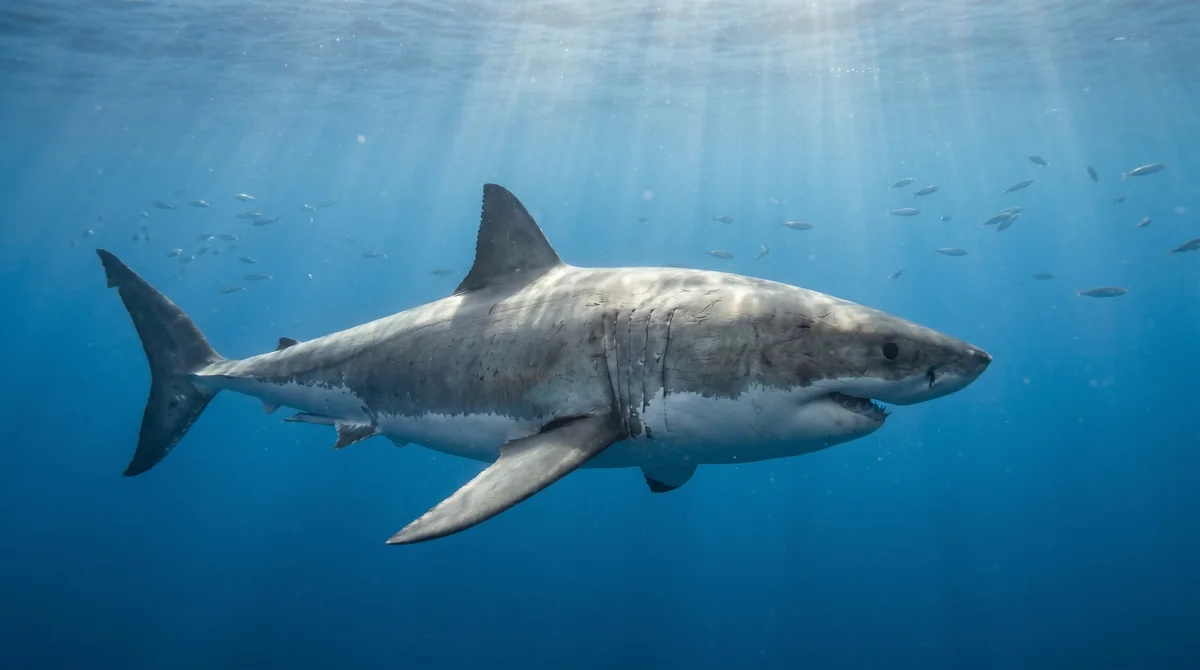
Shark fear usually comes from stories, not facts. Help kids ask "how do we know that?" and compare scary claims with real numbers from sources like the International Shark Attack File (Florida Museum, University of Florida). This turns a shark lesson into a critical-thinking lesson they can use everywhere.
Step 4: Make it stick
End with something hands-on: a draw-along, a quick quiz, or a "teach-back" where the child explains one fact to you. Children remember what they do and say far better than what they only hear.
Shark conversation starters
Great questions spark great thinking. Try these at dinner or in the car:
- If the biggest shark eats the tiniest food, what does that tell us about size and danger?
- Why do you think people are more scared of sharks than of cars?
- How could a scientist actually measure whether sharks are dangerous?
- What would happen to the ocean if all the sharks disappeared?
Extend the learning
Keep the curiosity going beyond one lesson:
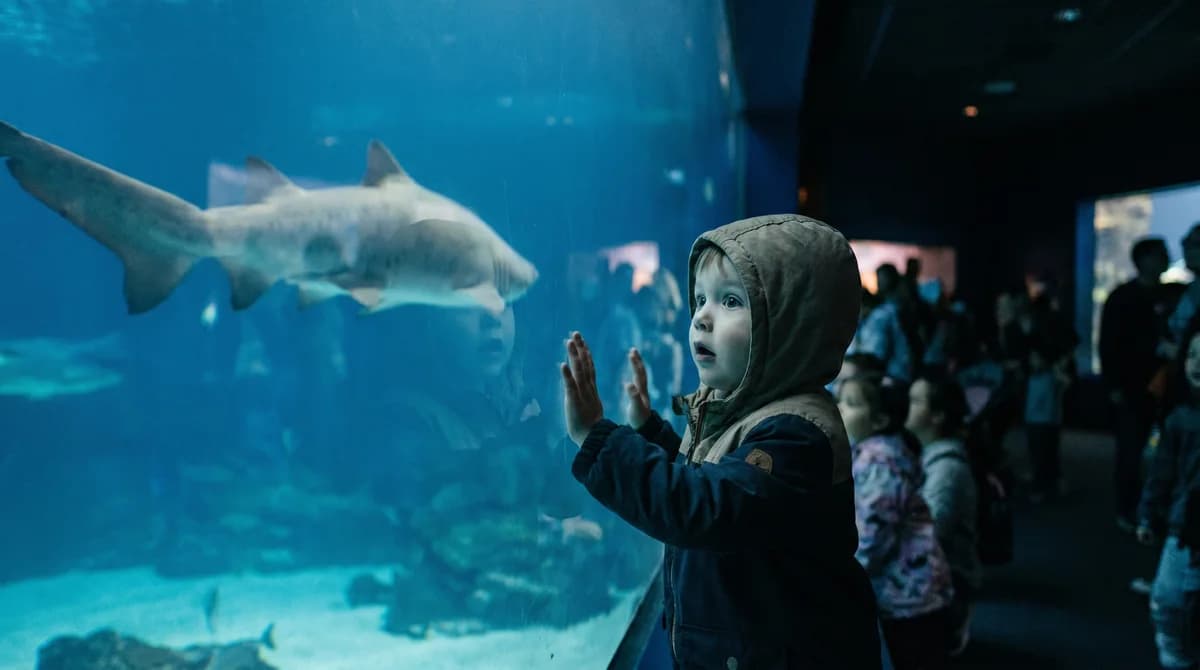
- Visit a local aquarium and watch how sharks really move and behave.
- Read kid-friendly facts from trusted sources like NOAA Fisheries — Sharks and Smithsonian Ocean.
- Create a mini shark fact-file or poster for the wall.
- Read together: work through our Wild World: Sharks magazine and take the quiz at the end.
Ten quick shark activities
Pick and mix — most take 10-20 minutes:
- Fact vs myth cards — write claims, then sort them into "true" and "busted."
- Size line — use string to compare a 17 cm dwarf lanternshark with a 12 m whale shark.
- Draw-along — sketch a shark and label the fins, gills and lateral line.
- Super-sense test — try finding something blindfolded, then talk about a shark's extra senses.
- Trading cards — make stat cards for five different sharks.
- Mermaid's purse hunt — look up shark egg cases and check if any wash up near you.
- Map it — mark where great whites travel on a world map.
- Mini-debate — should beaches use shark nets? List reasons on both sides.
- Headline check — find a scary shark headline and ask what evidence it actually gives.
- Teach-back — have your child teach you one fact and one busted myth.
Questions kids ask — and simple answers
- "Will a shark eat me?" Almost certainly not — serious bites are extremely rare, and most sharks are small or gentle.
- "Why do sharks have so many teeth?" They lose teeth often, so rows of spares move forward to replace them.
- "What's the biggest shark?" The whale shark — as long as a bus, yet it eats tiny plankton.
- "Are sharks dinosaurs?" No — sharks are even older, having been around for more than 400 million years.
Books, shows and trips
Stretch the learning beyond the page: borrow nonfiction shark books from your library (well-known kids' science publishers such as National Geographic Kids are a good start), watch a reputable wildlife documentary together, or visit a local aquarium to see how sharks really move. Pair any of these with a few good questions and you have turned screen time or a day out into real science.
Turn it into a project
For older kids, roll several activities into one mini-project: choose a shark, research five facts and bust one myth, draw or build a model, and present it to the family in three minutes. Projects like this build research, writing and confidence — and they make the learning stick far longer than a single lesson. Our Wild World: Sharks magazine works well as the "starter pack" of facts to build on.
Cross-curricular links
One shark topic can power your whole timetable. Maths: compare shark lengths on a number line, or graph how many bites happen a year versus everyday risks. Art: draw a shark to scale or design a conservation poster. Writing: write a news report that corrects a scary shark headline. Geography: track great white migrations across a world map. Sharks are a brilliant hook because they connect to almost every subject.
Misconceptions to clear up
A few gentle corrections do a lot of work. Sharks are not man-eaters hunting humans; the biggest sharks are gentle filter feeders; sharks are not 'just dumb eating machines' (they have keen senses and complex behaviour); and they are not fish we are better off without — they keep the ocean healthy. Each correction is a chance to model the key move: replace 'everyone says' with 'let's check the evidence.'
Adapting the lesson by age
The same topic flexes across ages. For 6-8s, keep it to wonder: how many teeth, how big, what they eat. For 9-11s, add the myth-busting and the risk comparison. For 12-14s, dig into the thinking skills — availability bias, reading statistics, and why people fear the wrong things. The magazine is written to work right across that range, so siblings can read the same issue at different depths.
Why sharks are the perfect critical-thinking topic
Of all the subjects kids love, few teach clear thinking as naturally as sharks. The gap between how scary they feel and how harmless they mostly are is huge, obvious, and backed by solid numbers — the ideal place to practise weighing evidence against emotion. Master that with sharks, and you have given a child a habit that protects them from far bigger fears and fakes for life.
A done-for-you shark lesson: Wild World: Sharks
15 pages of facts, a Myth-Busters spread, a draw-along, a word search, a crossword and a 10-question quiz — built for ages 8-14. Read a free sample before you buy.
Hungry for facts first? Grab 25 shark facts for kids to kick things off.
Sources and further reading
- NOAA Fisheries — Sharks
- Smithsonian Ocean
- International Shark Attack File (Florida Museum, University of Florida)
Facts in this article were checked against the public, expert sources above. Spotted something out of date? Tell us and we will fix it.
Frequently Asked Questions
What age is best to teach kids about sharks?
Any age works — just match the depth. Kids aged 4-7 love drawing sharks and sorting big vs small; kids 8-14 enjoy researching species, comparing facts to myths, and debating how to protect them.
How do I help a child who is scared of sharks?
Lead with wonder and facts. Show that almost all sharks are harmless, explain how rare bites really are, and let the child discover the evidence themselves. Understanding usually replaces fear.
What are good shark activities at home?
Draw-along a shark, make 'fact vs myth' cards, build a size line with string to compare a dwarf shark to a whale shark, or read a kids' science magazine together and take a quiz.
What should kids learn about sharks first?
Start with one or two amazing, true facts (like electro-sensing or the gentle giant whale shark). Wonder hooks attention far better than danger, and it opens the door to deeper learning.
How can teaching about sharks build critical thinking?
Sharks are surrounded by myths, so they are a perfect chance to practise asking 'how do we know that?' Comparing scary claims to real evidence is a thinking skill kids can use everywhere.
Are there free shark resources for kids?
Yes — reputable sites like NOAA Fisheries and Smithsonian Ocean have kid-friendly facts, and you can read a free sample of our Wild World: Sharks magazine online.
Try our free critical thinking games!
Fun, colorful brain-building games for kids ages 6-14. No signup required.
Play Now